🕷️🎁 A Gift, A Web, And A Very Fragile Plan
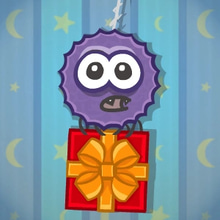
Gift Rush starts with a mission that sounds sweet and simple: deliver a present. That’s it. No war, no apocalypse, no giant boss screaming at you. Just a tiny spider with a big job and the kind of environment that looks cute until you realize it’s packed with angles, traps, and “oops” moments waiting to happen. On Kiz10, it plays like a physics puzzle game with a web-swing twist, where your brain is constantly doing that quiet math of distance, timing, and “if I attach here, will I slam into that wall like a cartoon?” Spoiler: sometimes yes. And you’ll still try again immediately.
The real charm is how it turns movement into a puzzle. You aren’t walking across a straight line. You’re hanging, swinging, snapping your web onto surfaces, and trying to guide the gift safely through a level that absolutely does not care about your feelings. It’s gentle-looking chaos, the best kind, the kind that makes you grin even when you fail because the failure is so obviously your fault.
🧠🕸️ The Web Is Your Controller, Not Just A Tool
In Gift Rush, the web isn’t decoration. It’s your steering wheel, your brakes, your emergency parachute, and sometimes your biggest mistake. You aim, you attach, you swing. That swing has weight. It has momentum. It has consequences. The game makes you feel the difference between a clean, controlled arc and a panic shot that turns your spider into a swinging wrecking ball.
At first you’ll treat web shots like quick fixes. Attach anywhere, swing, hope. It works for a bit. Then the levels start demanding intention. You begin reading the room differently. Walls aren’t walls anymore, they’re anchor points. Ceilings are opportunities. Corners are both helpful and dangerous, because corners can save you… or snag you in a weird loop where you’re stuck flopping like a confused pendulum.
And that’s where the puzzle brain kicks in. You start making plans. Short swing to avoid the obstacle. Longer swing to gain height. Release at the right moment to carry momentum into the next section. Suddenly you’re not “moving.” You’re performing controlled physics.
🎯⏱️ Timing Feels Like A Joke Until It Becomes Everything
Gift Rush has this sneaky way of making timing feel casual right up until it becomes the entire game. You’ll have moments where the correct move is just waiting. Not much, just a beat. Let the swing settle. Let the arc line up. Let the gift stop wobbling. Then shoot the next web.
But waiting is hard when you’re convinced you’re about to mess up. So you rush. You shoot early. You clip an obstacle. The gift bounces. Your spider flails. And you get that tiny internal scream, the one that sounds like “NOOO, I HAD IT.” The game doesn’t punish you with long reloads or dramatic setbacks. It punishes you with a clean reminder: timing matters. Then it hands the level back and basically says, “Try again, champ.”
When you nail the rhythm, it feels smooth in a way that’s oddly satisfying. Swing, attach, glide, release. The movement becomes almost musical. A gentle tempo of web shots and controlled arcs, like you’re threading a needle… except the needle is a hallway full of hazards and you’re a spider carrying a gift like it’s made of glass.
🎁💥 The Gift Is The Star, And It’s Also The Liability
Let’s talk about the present itself, because that little box changes everything. If you were swinging alone, the game would be playful. With the gift involved, every swing feels heavier. You’re not just protecting your character, you’re protecting the cargo. You start thinking like a delivery expert who is also, unfortunately, an acrobat.
You learn quickly that big swings can be tempting, but big swings create big problems. The gift can slam into obstacles, bounce in unpredictable ways, or throw off your control when you least want it. That turns each level into a balancing act between speed and safety. It’s a puzzle game with a “handle with care” sticker slapped right onto the gameplay.
And when you finally get the gift safely to the target, it feels like a clean win. Not flashy, not loud, just that warm satisfaction of “yes, that was a proper delivery.” Then you hit the next level and immediately ruin everything again, because confidence is a trap 😅.
🧩🏠 Levels Feel Like Little Machines You Have To Understand
Gift Rush doesn’t just throw random obstacles at you. Each level feels like a small contraption. A layout with a logic. A route that exists, but you have to discover it. Some stages want you to swing low and controlled, using short web shots and careful releases. Others want you to build height, get above hazards, and then drop into the safe zone with a controlled descent.
You’ll find yourself experimenting. “What if I attach higher?” “What if I use the ceiling instead?” “What if I swing wide and come back with more momentum?” Sometimes the answer is clever and you feel like a genius. Sometimes the answer is “don’t do that ever again” and you laugh because the spider just spun into a wall like it lost all dignity.
The best part is that improvement feels real. You don’t win because the game lets you. You win because you understand the space better. You learn where the safe anchors are. You learn when to release. You learn that a smaller swing can be stronger than a bigger one if it keeps control.
😵💫😂 Failing Is Part Of The Entertainment, Not A Punishment
Some puzzle games make failure feel annoying. Gift Rush makes failure feel like slapstick physics comedy with a purpose. A bad web shot often creates a chain reaction that’s absurd enough to be funny, especially when you realize it started with one tiny mistake. The swing goes wrong, the gift wobbles, you overcorrect, and suddenly everything is chaos. You can’t even be mad. You’re watching your own poor decision unfold in slow-motion.
And then the game gives you another chance immediately, which is dangerous, because it fuels that stubborn player instinct: “I was so close.” The levels are short enough to encourage retries, and the mechanic is satisfying enough to make those retries feel worth it.
🎮✨ Why Gift Rush Works So Well On Kiz10
Gift Rush is a perfect fit for Kiz10 because it’s easy to start, hard to master, and genuinely memorable in motion. It mixes physics, puzzle-solving, and web-swing control into a gameplay loop that feels both silly and smart. It’s not just clicking through levels. It’s learning how to move through space using momentum, timing, and clever anchor points.
If you like puzzle games that make you think without making you bored, physics games that reward experimentation, and skill-based challenges where a clean run feels earned, Gift Rush is a great pick. It’s cute, but it’s not soft. It’s funny, but it’s not mindless. It’s a delivery mission that turns into a little acrobatic nightmare, and somehow that’s exactly why it’s so fun 🎁🕷️🚀.



 3.4 (207 votes)
 Share
Share
 Embed
Embed


