🌅 Waking to waves and questions
The first sound is surf, the second is your own breath counting the seconds between foam and silence. Island Survival begins with a horizon that feels too wide and a backpack that feels too light. Your hands look capable, which is good, because the island isn’t interested in speeches—it answers only to effort. Sand sticks to wet clothes, gulls laugh in the lazy way gulls do, and in that small quiet you realize the tutorial is the shoreline itself. Pick up something sharp. Break something stubborn. Learn the difference between driftwood that behaves and driftwood that breaks your heart. Every step is a little contract with the place: you’ll pay attention and it won’t eat you. Probably.
🪵 First hours, first rules, first small victories
Gathering isn’t glamorous, but it feels like a beginning that belongs to you. Fibers from palm fronds turn into cordage; cordage convinces sticks to become a spear; the spear makes distance between you and problems with teeth. You learn to read rocks by color—darker for flint, lighter for breakage, glittering seams that promise metal later if you deserve it. A lean-to goes up crooked, then straighter when you figure out that stakes bite deeper in damp sand. A campfire hisses at sea breeze until you cup it with stones. Your first coconut tastes like triumph and terrible table manners. You write a recipe in your head: food plus water plus shade equals a night you can survive without bargaining with the moon.
🔥 Fire, shelter, and the stubborn science of comfort
Comfort is strategy disguised as kindness to yourself. Fire does more than cook; it steals fear from the dark and gives you time to think. Shelter does more than block rain; it turns weather into background noise instead of a headline. Place your bedroll where the wind forgets your name. Stack leaves above a ridge so rain chooses the ground instead of your bones. If you overbuild too early you’ll pay in hunger. If you underbuild you’ll pay in sleep. That balance is the rhythm of Island Survival—a conversation between your ambition and the island’s schedule.
🥥 Hunger, thirst, and the math your body teaches you
Meters aren’t numbers; they’re voices. Thirst whispers first, hunger complains later, exhaustion doesn’t bother to ask permission. You boil water because your stomach remembers the last time you didn’t. You smoke fish on a rack that looks like a bad idea until it isn’t, then store strips for a day when the tide is rude. Berries teach humility. Some stain your tongue purple and your day brighter; others stain your evening with regret and a short sprint to a whispered prayer. You fail once, you take notes forever. Soon you can read leaves like labels and your route through the grove looks like confidence instead of guessing.
🗺️ The island keeps secrets, and it is patient
Paths happen because you walk them, but the island keeps a few in its pocket. A notch in a cliff looks decorative until a careful climb rewards you with a cave that holds cool air and a trickle of sweet water. Tide pools glitter with tiny ecosystems—bait if you’re kind, breakfast if you’re honest. Following the gulls leads to a rocky shelf where the sea throws up treasures when the moon is in the mood: glass floats, tangled line, the occasional crate that smells like a story. You start mapping by memory, then by charcoal on driftwood, and the coastline becomes a clock you can read at a glance.
🛠️ Crafting that feels like ideas turning into hands
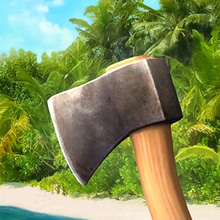
Crafting trees can be chores in lesser games; here they feel like a ladder you built while climbing it. A crude axe becomes a decent one, and suddenly fallen logs give boards instead of attitude. Boards suggest floors, then walls, then a roof you swear you’re not attached to until rain tries to test your commitment. Tools don’t just unlock recipes; they unlock plans. A loom means cloth means sails, which is not a boat yet but is a promise. A clay kiln means pots, and pots mean soups, and soups mean a morning where you feel clever before breakfast. Every upgrade is a whisper that asks what if, and you answer with a grin and a workbench.
🌧️ Weather has moods and you should respect them
Blue sky is permission, gray is a hint, purple at the horizon is a sermon. Wind carries smell long before it carries rain; you’ll learn to read the salt like punctuation. Storms turn your cozy camp into a theory under review. Lash the racks, lower the roofline, pull the drying lines, and secure the fire like it’s a secret. When lightning learns your name, remember: metal tools prefer the ground, and you prefer not to be the tallest thing nearby. The reward for prudence is morning—the kind that feels like a confession answered. Debris lines the beach, fish crowd the estuary, and you walk the shore with a collector’s eye, thanked quietly by the island for not being a fool.
🐟 Hunting, fishing, and the ethics of staying fed
The spear and the line will carry you farther than bravado. Fish have routes and you will memorize them. Night squid blink hello in shallow coves; crabs announce themselves by the angle of their retreat. Traps save time if placed with humility: in eddies where food collects, not just where you hope. Big game exists if your hands are steady and your legs quicker than your confidence. Boars can be meals or mistakes, and the difference is patience. You’ll track prints to water, you’ll practice throws on tree trunks, and on the day you earn the shot, you’ll waste nothing. Bones become needles, hide becomes water skins, and meat becomes salt-kissed memory hanging above the fire.
🧭 Signals, sails, and the question of leaving
At some point you will build a signal. A tower of dry wood, a mirror with a mean streak of sunlight, a beacon that says I’m here to anyone with wings or engines. That doesn’t mean you want to leave. It means you want the choice. The first time a distant shape answers, your heart sprints and your feet forget the path. Maybe it’s a storm mirage. Maybe it’s a ship that doesn’t care. You learn to tend the fire anyway. Meanwhile the sail you wove from stubborn cloth waits on a frame that looks almost like a raft if you squint and tell yourself good stories. Island Survival doesn’t tell you when you’re ready; it lets you decide what ready means.
🧠 Days become rituals, rituals become skill
Morning patrol for fresh drift and tide gifts. Midday shade work—fletching, cordage, patching shoes that exist only because you made them. Afternoon forage where the coconut palms argue softly with sky. Evening cook and plan by firelight while the map in your head gets sharper edges. The repetition isn’t grind; it’s practice, and practice is where fear goes to admit it was mostly excitement wearing a hat. The island stops feeling like an opponent and starts feeling like a teacher who uses weather as chalk.
🧩 Little stories the island tells when you listen
There’s a line of stones half buried in the north cove; kick at them and they arrange themselves into a path that leads to a lockbox with a compass that lies slightly less than the stars. A rope swing no one built hangs from a fig tree because wind can be generous; cross there at low tide and find a cave where handprints tell you you’re not the first to stand in the dark and smile at survival. A hillside of blackened trunks suggests an old burn; turn the soil and sweet roots volunteer. None of this is a quest log. It’s the planet writing notes to the patient.
🎮 Controls that let your intention talk
On desktop, mouse and keys translate curiosity into motion without scolding. Crafting snaps where it should and refuses when it must, the way a good tool does in real life. On mobile, thumb gestures feel like you’re leafing through a pocket field guide, quick and forgiving, with just enough tactile pop to make a placed stake feel like a decision. The interface keeps quiet so your senses can do the learning. When you miss, you know why. When you succeed, you feel it in your shoulders before the screen admits it.
🔊 Sound and sight, the quiet co-op partners
Waves are metronomes, cicadas are timers, gulls are gossip. You’ll learn to cook by ear—the shift in a pot’s simmer when the stew decides it’s ready. Rain on palm leaves tells intensity more honestly than any gauge. Visually, silhouettes stay readable at dusk, moonlight whispers along knife edges, and sunrise paints the beach with the kind of gold that makes you pause for no reason except being alive here is loud enough to deserve a pause. That sensory honesty is why tension feels fair and success feels earned.
🏆 Why you will keep choosing morning on Kiz10
Because survival becomes less about fear and more about craft. Because building a roof that doesn’t leak is a better victory than any scoreboard fireworks. Because the first night you sleep through a storm and wake to a camp that held makes you walk the beach like you own the day. Island Survival respects your time by turning small decisions into a life that works, then dares you to dream bigger—a smoke tower that can be seen for miles, a garden that forgives your clumsy first harvest, a raft that knows the language of the reef. You came to escape. You stay because competence feels like joy, and the island keeps handing you new ways to be competent. When you finally light that signal or push that sail into a dawn you prepped for, you’ll look back at your patch of sand, at the tools lined up like friends, and you’ll understand that leaving is just another skill you earned.





 4 (460 votes)
 Share
Share
 Embed
Embed


