🔪🌀 The spin starts, your finger gets confident, and that’s the trap
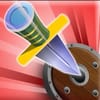
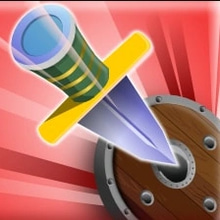
KNIFE CHALLENGE is the kind of arcade skill game that looks easy for exactly one second. A log spins. You have knives. You tap. A blade sticks with a satisfying thunk. Your brain goes, cool, I understand this. Then the rotation shifts, the gaps shrink, and suddenly you’re staring at the target like it’s mocking you. On Kiz10, this is pure timing pressure: throw one knife at a time, never hit an existing blade, and keep your rhythm steady while the game tries to bait you into panic taps.
It’s not complicated, and that’s why it works. There’s nowhere to hide behind “builds” or “stats” or “maybe my gear is bad.” If you miss, it’s you. If you collide, it’s your timing. If you clear a stage cleanly, it’s because you actually controlled the moment. That honesty makes every run feel personal, like the game is quietly judging your patience.
⏱️🎯 Timing is the whole weapon, not speed
Most players lose because they treat KNIFE CHALLENGE like a reflex spam game. It isn’t. It’s a rhythm game wearing a knife skin. The target rotates in patterns, sometimes smooth, sometimes twitchy, and you’re supposed to throw when the gap is truly safe, not when you wish it were safe. That tiny difference is where the tension lives. Your finger wants to move early because you’re afraid the window will disappear. The correct move is usually the opposite: wait a beat longer, let the rotation commit, then tap with confidence.
The funny thing is how the game teaches this without any speech. You don’t need a tutorial paragraph. The first collision is the lesson. The second collision is the reminder. By the third, you’re breathing differently. You’re watching the edges. You’re counting the beat in your head. You’re still tapping fast, but now it’s controlled fast, not frantic fast.
🪵🧠 The log is a puzzle that changes every second
A spinning target isn’t just a target. It’s a moving puzzle board. Every knife you place changes the board. Every placement creates a new obstacle you must avoid on the next tap. That’s what makes the game addictive: you’re not only reacting to the spin, you’re planning your future gaps. If you stack knives too close together, you ruin your own lanes. If you place them evenly, you create safe windows that feel generous. Suddenly you’re designing your own difficulty level while trying to survive it. Great idea. Terrible for your stress level 😅
You’ll also notice the game has a mean sense of humor with rotation speed. When the target spins slowly, you relax and tap early. Then it accelerates, and your early-tap habit becomes a disaster. When it spins fast, you tense up and hesitate. Then it slows down just enough to trick you into throwing late. It’s constantly shifting your comfort zone, and that’s why it stays exciting instead of becoming automatic.
🍎💥 Apples, rewards, and the greed problem
If apples or bonus targets appear, they’re there for one reason: to mess with your discipline. They sit on the spinning log like little shiny distractions, and your brain immediately wants them. “I can hit that apple and still clear the stage.” Sometimes you can. Sometimes that extra aim changes your timing by a fraction and you clip an existing knife. That fraction is the difference between a perfect run and a restart.
The trick is learning when bonus hits are safe. When you have wide open gaps and a stable spin pattern, take the reward. When the log is crowded and the rotation is unpredictable, ignore the shiny thing and focus on survival. That’s not just strategy, it’s emotional control. KNIFE CHALLENGE is secretly testing whether you can resist temptation while the target is literally spinning temptation in your face.
😬🌀 Boss patterns and the moment the game gets serious
The best knife-throw games always add a “boss” beat where the rotation becomes less friendly. The log might change speed mid-spin, reverse direction, or add awkward patterns that destroy your usual rhythm. That’s when KNIFE CHALLENGE feels like it levels up from casual to competitive. Your old timing doesn’t work anymore, and you have to adapt quickly.
This is where players either spiral or lock in. Spiraling looks like this: you miss one throw, panic, tap faster, collide instantly, restart annoyed. Locking in looks like this: you pause for half a second, study the spin, throw one clean knife, then another, and rebuild your rhythm from scratch. The game rewards the second mindset massively. It’s not about being fearless. It’s about being patient while the target tries to bully you.
🎮🧊 The calm zone: where your best runs are born
There’s a strange moment in KNIFE CHALLENGE where everything goes quiet in your head. The log spins. You stop overthinking. You tap on a steady internal beat. Knife lands. Gap opens. Knife lands again. You’re not guessing anymore. You’re timing. That calm zone is the real high score engine. It’s also fragile. One distracted thought, one “I’ll just tap faster,” and it shatters.
The fastest way to stay in the calm zone is to treat throws like commitments, not clicks. You don’t “try” a throw. You choose it. If you’re unsure, wait. Waiting feels scary, but waiting is often the correct play. The log will keep spinning, and the safe window will come back around. Your job is to meet it, not chase it.
🧨😅 The most common fail is the “almost done” curse
You’ll notice your worst losses happen near the end of a stage. The target is crowded. You’ve placed most knives. You can taste the finish. Your finger speeds up because you’re excited. That excitement is poison. The last two knives are always the hardest because the board is most crowded, and the spin feels tighter because your margin is gone.
So the game teaches a brutal rule: the closer you are to winning, the slower you should mentally move. Not slow throws, slow decision-making. Take the same care on the final knife that you took on the first, maybe more. The finish line isn’t where you relax. It’s where you prove you actually learned something.
🏆🔪 Why this game sticks on Kiz10
KNIFE CHALLENGE is built for quick sessions that turn into “why am I still here?” It loads fast, the loop is simple, and improvement is obvious. You can feel it in your hands. The first run is chaos. The fifth run is rhythm. The tenth run is you trying to be perfect because now you know perfection is possible and that knowledge is dangerous.
If you like arcade skill games, knife throwing timing challenges, and that clean “one mistake ends it” pressure that keeps your focus sharp, this is exactly your lane. Play KNIFE CHALLENGE on Kiz10, respect the spin, aim for clean gaps, and remember the game’s secret truth: your biggest enemy isn’t the log… it’s your finger trying to proves it’s faster than your brain. 🔪🌀😄








 4.5 (53 votes)
 Share
Share
 Embed
Embed