🥋🌆 Neon streets, bad choices, and a fist-first solution
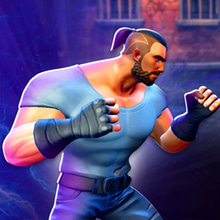
Kung Fu Fighting throws you into the kind of street where nobody asks questions and everybody answers with their hands. You’re dropped into a side-scrolling beat ’em up vibe that feels instantly familiar, but it doesn’t play sleepy or slow. It plays hungry. You step forward, the first enemy shows up, and suddenly the game is testing your timing like it’s trying to figure out whether you’re a calm martial artist… or a button-mashing tornado pretending to be one. On Kiz10.com, it’s that satisfying mix of quick action and gritty rhythm: move in, strike clean, back out, reset your stance, then dive again before the crowd closes in.
There’s a rough, punchy charm to how it escalates. The early fights teach you the basics without a lecture. You’ll learn what happens when you swing too early. You’ll learn what happens when you swing too late. You’ll learn that standing still is basically volunteering to get surrounded. It’s not a game about fancy menus, it’s a game about spacing, pressure, and those tiny “one step” decisions that decide whether you look like a master or a confused tourist who wandered into the wrong alley 😅.
👊⚡ The real combat is rhythm, not rage
At first, you want to attack constantly. Totally normal. You see enemies, you throw hands. But Kung Fu Fighting quickly makes it clear that nonstop aggression is expensive. If you overcommit, you get hit. If you get hit, the crowd gets brave. If the crowd gets brave, you get hit again, and suddenly you’re in that ugly loop where your character is always reacting and never controlling the fight. The best feeling in this game is breaking that loop and turning it around. You start landing hits at the right time, you start controlling space, and you feel the difference immediately. Enemies stumble. You breathe again. You’re not flailing, you’re choosing.
It’s not about memorizing thirty combos. It’s about the cadence of combat. Short strings when it’s safe. A heavier hit when you’ve created an opening. A step back when you feel the pressure stacking. The game rewards a player who can switch gears: calm for two seconds, explosive for one, then calm again. That stop-and-go rhythm is what makes beat ’em up games addictive, and Kung Fu Fighting leans into it hard.
🧤🧠 Defense is awkward, but it’s also your secret weapon
A lot of players lose because they treat every moment like it’s time to attack. But there’s a stealthy skill in knowing when not to swing. When enemies bunch up, you don’t want to be trapped in a long animation. You want to strike, reposition, and stay mobile. The smartest players aren’t always the most aggressive. They’re the ones who control the pace. They keep enemies on one side of the screen. They avoid letting threats slip behind them. They use the environment and spacing like invisible armor.
And there’s a psychological side too. When you get clipped, your instinct is to hit back instantly. That’s how you get clipped again. Kung Fu Fighting rewards the player who pauses for a heartbeat, re-centers, and then punches back with purpose. That tiny pause feels “slow” in the moment, but it’s actually speed, because it stops the chain of mistakes.
🗡️🪵 Weapons on the ground are invitations… and sometimes traps
One of the most fun parts is grabbing weapons mid-fight. There’s something satisfying about turning the tide by snatching a bat, a stick, or whatever the street conveniently provides. It changes the feel of combat instantly. Your range changes. Your damage changes. Your confidence changes. And then your confidence tries to get you killed, because now you’re tempted to rush forward swinging like you’re invincible. Spoiler: you are not invincible.
Weapons are powerful, but picking them up can be risky if you do it at the wrong moment. You’ll have times where you go for a pickup and eat a hit because you got greedy. Then you’ll learn the better habit: clear a little space first, then grab the weapon when you have breathing room. When you do that, the weapon becomes a real advantage instead of a comedy prop.
The best moments are when you chain it all together: knock someone back, grab the weapon, swing through a cluster, and suddenly the screen looks cleaner. Less pressure. More control. That’s the “I’m on top of this” feeling that keeps you replaying.
🏮🔥 Enemy waves feel like a moving crowd, not just targets
The game shines when multiple enemies are on you at once. That’s when it stops being “hit the guy” and becomes “manage the room.” You start watching the edges. You start noticing who’s about to step in. You start choosing which opponent to delete first so the fight becomes manageable again. In a good beat ’em up, the crowd is the challenge, not one single enemy. Kung Fu Fighting uses that crowd pressure to make every small mistake feel dramatic. One wrong step and you’re boxed in. One missed hit and the enemies stop respecting you.
But when you handle it well, it feels incredible. You pick a side. You push them back. You keep the group in front of you. You land hits that interrupt their advances. You’re basically herding danger while punching it. It’s messy, but when it clicks, it feels like you’re doing martial arts crowd control in a movie scene, except you’re also laughing because you know one bad swing could ruin everything.
🎬😵 The “boss” feeling: big threats, small openings
When tougher enemies show up, the game shifts. They don’t fall as easily, they punish mistakes harder, and suddenly you can’t rely on brute force. You have to take what the fight gives you. One opening at a time. That’s where patience becomes the difference between winning and spiraling. You bait an attack, you punish the recovery, you back out before the counter. It’s not glamorous, but it’s effective.
And the best part is that these moments make you feel smarter than you were five minutes ago. Because you start seeing patterns. You start recognizing when the enemy is about to swing. You stop attacking into their guard. You stop rushing the finish. You treat the fight like a sequence of small wins instead of one giant gamble. That’s when you start feeling like a real “kung fu fighter” instead of someone wildly windmilling in a hoodie 😅🥋.
💥🏁 Why you’ll keep coming back on Kiz10.com
Kung Fu Fighting is built for replay because every run feels like a skill check you can improve immediately. You don’t need to grind for hours to feel progress. You feel progress the moment you stop getting surrounded. You feel it when you start timing hits instead of spamming. You feel it when you grab a weapon safely instead of greedily. You feel it when you control the screen and the enemies stop controlling you.
It’s also a perfect quick-session action game. You can jump in, clear a few fights, feel the adrenaline, then leave satisfied. Or you can do the dangerous thing and chase “one cleaner run,” because the game constantly makes you believe you can do it smoother next time. Cleaner spacing. Better timing. Fewer hits taken. More control. More style.
If you like street brawlers, kung fu beat ’em ups, shadow fight vibes, and fast combat where your hands learn the rhythm before your brain fully catches up, Kung Fu Fighting hits that sweet spot. Step in, land the clean combos, grab the weapon, and keep moving forward like the street owes you respect. Just don’t get cocky. The street loves cocky 😈🔥.



 4.6 (32 votes)
 Share
Share
 Embed
Embed


