💡⚡ First Spark, Instant Obsession
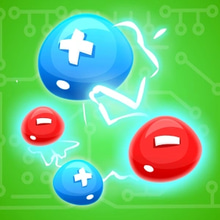
LIGHT THE LAMPS looks innocent for about five seconds. A few electrical parts, a few lamps sitting there like they’re bored, and a board that basically says “go on then, power me.” And you think, sure, easy. Then you realize the game is quietly demanding something very specific from you: clean connections, correct polarity, and a plan that doesn’t collapse the moment the level adds one extra piece. Kiz10 frames it simply as a very addictive puzzle game where you must join electrical parts from positive to negative until the lamps turn on, and that’s exactly the loop you’ll fall into.
It’s not a “solve one giant mystery” type of puzzle game. It’s a chain of little brain duels. Every level starts like a challenge to your confidence, and every level ends with either satisfaction or that annoyed little laugh you do when you realize you made it harder than it needed to be. You don’t need fast reflexes. You need the ability to look at a messy board and calmly say, okay… where does the power want to go?
🔌😵💫 Wires, Polarity, and That One Piece That Ruins Everything
The core idea is beautifully strict: electricity must flow correctly, and the game doesn’t care about your feelings. Positive and negative matter. You can’t just “connect stuff” and hope it works. If you do, you’ll create a pretty-looking circuit that powers absolutely nothing, like a decorative necklace for lamps that refuse to cooperate.
What’s fun is how quickly your brain starts treating the parts like characters in a drama. The positive side becomes the loud friend shouting “start here!” The negative side is the quiet exit you must respect. The connectors are the awkward middlemen that need to be placed just right. And the lamps? The lamps are the judges. They don’t clap. They either light up or they don’t, and they do it without apology.
As levels get harder, the board stops feeling like a simple puzzle and starts feeling like a cramped workshop. You rotate pieces, shift them, rethink routes, and sometimes you just stare for a second because the “obvious” path is a trap. Kiz10 even warns that each new level becomes more complicated, so you need to think through every movement, and that’s not a polite suggestion, it’s survival advice.
🧠💥 The Moment You Stop Guessing and Start Designing
There’s a turning point with games like this. Early on, you can brute-force a bit. Rotate, test, rotate again, test again. But later, brute force becomes exhausting because there are too many combinations and your brain starts melting into static. That’s when you begin designing instead of guessing.
You start tracing paths in your head before moving anything. You imagine the current traveling like a tiny glowing creature that hates dead ends. You check whether a piece is actually useful or just taking up space. You begin to notice patterns: the “bridge” that must be placed before anything else works, the “corner” piece that always causes confusion, the lamp that looks connected but is secretly isolated because one segment is flipped.
And suddenly the game becomes satisfying in a new way. It’s less “I finally found it” and more “I built it.” You’re not hunting a solution, you’re assembling one. It feels more personal, like you’re wiring a tiny logic machine and the board is your blueprint.
💡🌀 Levels That Feel Like Small Electrical Heists
Each stage is basically a mini heist where the treasure is light. You walk in, survey the situation, and decide the order of operations. Which connection matters first? Where can you afford to branch? Which lamp is the easiest win, and which one is going to be annoying because it’s positioned like a dare?
And yeah, the game can be mean in a very gentle way. It doesn’t punish you with loud failure screens. It punishes you by letting you waste time. You’ll think you solved it, then notice one lamp is still dark, sitting there like it’s disappointed in you as a person. You’ll follow the line back and realize you connected everything except the one segment that actually mattered. That’s LIGHT THE LAMPS in a nutshell: tiny mistakes, big consequences, maximum learning.
😅⚙️ Why It Feels “Addictive” Without Any Fancy Tricks
Some puzzle games try to hook you with rewards and flashy animations. This one hooks you with clarity. The goal is obvious: light the lamps. The feedback is instant: they’re on or they’re not. The progress is real: each level adds complexity and forces you to improve, not by grinding, but by thinking cleaner.
And because levels are bite-sized, you can slip into that “one more” loop effortlessly. One more because you almost had it. One more because the next stage looks doable. One more because now you understand the trick and you want to prove it. The game doesn’t need to scream for attention. It just sits there, quietly confident that your brain won’t let you leave a lamp unlit.
🔦🧩 A Smarter Way to Play When It Gets Spicy
When you hit a tougher stage, the best thing you can do is slow down for a moment and treat the board like a map. Start from the source. Trace toward a lamp. Ask yourself what’s mandatory and what’s optional. Don’t rotate everything like a tornado. Make one intentional change, then reassess. That tiny discipline prevents you from getting lost in your own edits.
Also, watch for false certainty. The most dangerous thought in this game is “this must be right.” Sometimes the “right” looking path is blocking a better route that powers two lamps at once. Sometimes the cleanest layout is not the shortest. Sometimes you need to route around a piece you keep trying to force into the center like it’s the main character. It’s not. It’s just a piece. Let it be background if it needs to be background.
✨💡 The Payoff: That Quiet, Perfect Glow
The best moment in LIGHT THE LAMPS is not a dramatic explosion. It’s a calm win. The second the last lamp turns on, everything looks… right. The board becomes neat. The logic becomes obvious. You get that tiny burst of satisfaction that only puzzle games can deliver, the kind that makes you sit back like, okay, yeah, I did that. Then you hit the next level and the game immediately tries to ruin your confidence again, and somehow you love it for that.
If you’re into logic puzzle games on Kiz10 that feel clean, clever, and oddly intense for something as simple as turning on lights, LIGHT THE LAMPS is exactly that kinds of brain snack. It’s electrical problem-solving with a playful edge, and once it gets its hooks in, you’ll be chasing perfect circuits like it’s your job.



 4.6 (9 votes)
 Share
Share
 Embed
Embed


