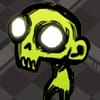
🧟♂️👑 The first minion is always the loneliest
Lord Of The Horde on Kiz10 opens with a deliciously dangerous promise: you’re not the hero. You’re the pressure. You’re the thing that grows. At the start, your “horde” feels almost embarrassing, like a rumor of power rather than power itself. A few followers, a few fragile moves, a map that looks calm in the way a storm looks calm from very far away. Then you take your first real win and everything changes. Not in a cinematic cutscene way, but in the more addictive way: the numbers shift, the momentum swings, and suddenly you’re not surviving a level, you’re building a machine.
This is one of those strategy games where progress isn’t a menu. Progress is the crowd behind you. The louder your horde gets, the more the world starts reacting. Paths that felt impossible start feeling “maybe.” Enemies that looked scary become… edible. And the best part is how fast your brain adapts to the new identity. Five minutes in, you’ll be making decisions like a commander with a plan. Ten minutes in, you’ll be making decisions like a commander who is one small mistake away from watching the whole army evaporate. Because yes, power is real here, but so is punishment.
🗺️⚔️ A map that turns into a feeding ground
The gameplay thrives on movement and control. You’re guiding your forces through contested spaces, picking fights you can actually win, and trying to avoid the classic strategy trap: expanding faster than you can hold. Because “horde” doesn’t mean “invincible.” A horde is fragile when it’s spread thin. A horde is terrifying when it’s concentrated. Lord Of The Horde quietly teaches you that lesson over and over. If you rush into every fight like you’re unstoppable, you’ll get thinned out. If you choose your battles, keep your forces tight, and snowball from safe wins, you start feeling like the map belongs to you.
And the tension is constant. Strategy games are at their best when they make you feel clever for being patient. Here, patience is literally power. Sometimes the smartest move is backing off for two seconds, letting your horde regroup, then striking when the enemy is out of position. It feels almost unfair when you do it right… which is exactly the point.
🧠🔥 Decisions that look small until the screen is on fire
Lord Of The Horde doesn’t need a thousand mechanics to create chaos. It just needs pressure and consequences. Do you chase a weak target and risk walking into a trap? Do you farm safer wins to grow steadily, even if it feels slower? Do you split your horde to grab more territory, knowing you might lose both halves if trouble arrives? These choices aren’t complicated on paper, but they feel heavy in motion because the game is always moving. You’re never making decisions in a quiet room. You’re making them while something is happening.
That’s why it feels so alive. The game makes you read situations quickly. Where’s the opening? Where’s the danger building? Which lane is about to collapse? It becomes a rhythm: expand, clash, recover, reinforce, push again. When you’re playing well, it feels like conducting chaos with a grin. When you’re playing poorly, it feels like watching your own plan unravel in real time while you whisper “no no no no” at the screen like that helps. 😭
🧟♂️🧲 The horde fantasy: growth that you can feel in your hands
The best “horde” games deliver a very specific satisfaction: the moment you stop being a unit and become a force. Lord Of The Horde nails that vibe by making your army feel like momentum. Early on, you’re careful. You’re picking targets like a thief. Later, you’re moving like a storm cloud. And the switch is intoxicating because it’s earned. You didn’t get it for free. You built it from smart choices and clean wins.
And because the horde grows, your priorities evolve. At first you care about survival. Later you care about efficiency. Later still you care about style. Not visual style, but tactical style. You start thinking in waves: soften, surround, finish. You start thinking in map control: block routes, deny resources, keep enemies from stabilizing. You stop reacting and start dictating. That’s when the game becomes dangerously replayable, because once you taste that feeling, you want it again. Every run becomes “can I snowball faster this time?”
⚠️🛡️ The enemy isn’t the army, it’s overconfidence
Here’s the funny truth: most runs don’t end because the enemy is stronger. They end because you get greedy. You push when you should stabilize. You chase a target that isn’t worth it. You split your forces for “just one more objective” and suddenly you’re defending two places with half the strength, which is basically defending nothing. The game punishes ego in a very clean way: it shows you the consequence immediately.
But that’s also what makes it satisfying. When you lose, you usually know why. It’s not mysterious. It’s tactical. And tactical mistakes are the best kind of mistakes in games, because they make you want a rematch. You can fix them. You can play smarter. You can be calmer. You can stop chasing shiny wins and start building guaranteed wins. Then you do… and it works… and you feel like a mastermind for doing something that is technically just “not panicking.” 😅
🕯️🩸 Dark atmosphere, simple goal, addictive pressure
Even without drowning you in story, Lord Of The Horde gives off that grim, hungry vibe where the world feels like it’s decaying and you’re the thing accelerating it. The mood matters because it makes the loop feel more intense. You aren’t just “growing a team.” You’re building a threat. You’re becoming the reason the map feels unsafe. And that’s a fun role reversal, especially in a browser game on Kiz10 where you can jump in instantly and start causing problems without a long setup.
This is the kind of strategy action game where the best moments aren’t scripted. They’re earned. That clutch push where you barely survive and then suddenly your horde doubles. That narrow escape that turns into a counterattack. That perfect timing where you pull back, bait the enemy, then collapse on them from the side like a closing door. Those moments stick because they feel like your decisions, not the game’s generosity.
🏁👑 Why you’ll keep coming back
Lord Of The Horde is built around the most dangerous promise in gaming: “Next run, you’ll do it cleaner.” You’ll start thinking about early routes. You’ll start remembering which fights are worth taking first. You’ll start optimizing your growth like it’s a science. And even when you lose, you’ll restart because you can already see the better timeline in your head. The one where you didn’t overextend. The one where you stayed tight. The one wheres your horde didn’t just grow… it rolled.
If you’re into horde games, strategy survival pressure, dark fantasy conquest vibes, and that satisfying snowball feeling where every win makes the next win easier, Lord Of The Horde is exactly the kind of Kiz10 game that turns “quick try” into “why am I still playing, I just need one more clean run.” 🧟♂️🔥👑





 4.2 (9 votes)
 Share
Share
 Embed
Embed