🀄✨ The quietest game that still makes your brain sweat
Mahjong Titans doesn’t kick the door in. It doesn’t scream for attention. It just sits there on Kiz10 like a neat little stack of secrets, tiles arranged with the confidence of something that knows you’ll underestimate it. And then you start playing. One match becomes another. Your eyes begin to hunt patterns automatically, like a scanner at a checkout line, except the price is your concentration and the receipt is either victory or a board that slowly locks itself into an awkward silence 😅
This is classic mahjong solitaire energy: you’re not battling opponents with trash talk, you’re battling the layout, the rules of what counts as “free,” and that tiny greedy voice that keeps saying, take the obvious pair, it’s fine, it’s fine, it’s definitely fine… until it isn’t. Mahjong Titans is basically a calm surface hiding a small strategic storm. It’s soothing, but it also has teeth, the kind that bite you only when you stop paying attention.
🧩👀 Free tiles, trapped tiles, and the art of seeing what’s missing
The heart of Mahjong Titans is the rule that decides everything: you can only match tiles that are free. Free means no tile on top of them and at least one side open. Sounds simple, right? It is, until you realize half the board is a layered puzzle pretending to be decoration. You’ll spot a pair instantly, match it, feel satisfied… and then notice you just covered up your future by removing the wrong “support” tiles. That’s the funny part. Mahjong isn’t just matching, it’s sculpting the board.
You start learning to look for key tiles, the ones that unlock others. Sometimes it’s a tile that’s blocking two different stacks. Sometimes it’s a tile that looks useless but is actually the hinge holding an entire side of the layout. When you remove the right hinge, the board opens up and you feel like a genius. When you remove the wrong one, the board tightens and you feel like you just threw away the only key you had while smiling about it 😭
🌒🧠 Pattern hunting with a weirdly cinematic rhythm
Mahjong Titans has this slow-burn cinematic quality, not because it’s flashy, but because your attention becomes the soundtrack. Your eyes slide across the tiles like a camera pan. Your brain starts building a little story: bamboo here, circles there, characters stacked in the back, seasons hiding under that layer, dragons waiting like dramatic villains. You make a move, the board changes, and suddenly the whole scene feels different. A pair that didn’t exist two seconds ago is now staring at you like it’s been waiting all day.
And the emotions are surprisingly real for a tile-matching board game. There’s relief when you free a cluster. There’s irritation when you realize you’ve got three of the same tile exposed but the fourth is buried under the entire universe. There’s that little aha snap when you notice a pair you missed ten times because your eyes were tired. And yes, there’s also the petty satisfaction of clearing a tricky section and thinking, okay, board, try that again 😌🀄
🧨🫖 The classic trap: playing fast because it feels good
Speed feels delicious in Mahjong Titans. You spot a pair, click, click, gone. Another pair, click, click, gone. It becomes a rhythm. And rhythm is dangerous, because rhythm makes you stop thinking. The board loves when you stop thinking. That’s when it sets up the classic mahjong ambush: you remove easy pairs early, and later you discover you needed those easy pairs to avoid a dead end. Now you’re staring at a board full of tiles that can’t be touched, like they’ve formed a silent union and decided you’re not welcome.
The trick is to play with a little restraint. Not slow, not hesitant, just awake. Before you remove a pair, glance at what it frees. Does it open one tile or two? Does it expose a tile that already has a visible match elsewhere? Does it reduce a risky stack or just remove something harmless? These micro-questions are what separate a lucky clear from a consistent clear. Mahjong Titans rewards players who treat every match like it matters, because it does.
🧠🎭 The little mind games you play with yourself
There’s a specific internal dialogue that happens in this game. It’s not formal. It’s more like: okay, I can take these two, but then I’ll expose that… wait, if I expose that, I might finally get the matching tile for the one that’s been haunting me… but if I do that, I’ll also block the side… hmm. And suddenly you’re negotiating with yourself like you’re planning a heist.
Sometimes you’ll deliberately ignore an obvious pair because it’s acting like a buffer that keeps the board flexible. Other times you’ll take a pair that seems boring because it unlocks the next layer cleanly. The board is constantly asking, are you thinking ahead or are you just clicking because clicking feels nice? And it’s a fair question. Clicking does feel nice 😅
🧿🀙 Tile sets, recognition, and that oddly satisfying familiarity
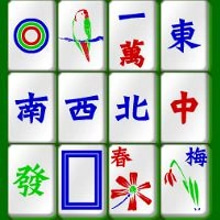
Part of what makes Mahjong Titans so replayable is how quickly your brain learns the tile language. At first, the symbols look like noise. Then they become distinct. Bamboo feels different from circles. Characters feel heavier, more serious. The special tiles pop out like little postcards: seasons, flowers, those dramatic dragons with their “I’m important” energy 🐉
Once you recognize tiles instantly, the game becomes less about decoding and more about choice. You’re no longer asking, what is that tile? You’re asking, what does removing it do to the board? That shift is huge. It’s where Mahjong Titans stops being a simple puzzle and starts feeling like a strategy board game with a calm face.
🧯😵 What to do when the board starts feeling tight
You’ll know the moment. Fewer free tiles. Fewer obvious pairs. The layout feels like it’s holding its breath. This is where players either panic-click or get clever. The calm approach is to scan for pairs that unlock multiple options, not just one. If you can remove a pair that frees two new tiles, you’re expanding the board’s air supply. If you remove a pair that frees nothing useful, you’re basically spending a move for vibes.
Also, shift your scanning method. Don’t stare at one area too long. Sweep the whole board, then sweep again with a different focus. Look for one tile type at a time. Sometimes your eyes miss pairs because you’re searching too generally. Narrow the search and the hidden pair suddenly appears like it teleported in, even though it’s been there the entire time 🙃
🏁🌟 Why clearing the final tiles feels embarrassingly good
The endgame in Mahjong Titans is pure satisfaction. The board gets sparse, the remaining tiles are exposed, and each match feels like cleaning the last messy corner of a room. When you finally remove the final pair, there’s this quiet click of completion that hits way harder than it should. It’s not just level complete. It’s your brain celebrating order. It’s your attention being rewarded. It’s the game saying, yes, you stayed sharp long enough.
That’s why Mahjong Titans works so well on Kiz10. It’s the perfect reset-your-mind puzzle game that still gives you real tension when the layout gets tricky. It’s classic, it’s readable, it’s mentally crunchy without being exhausting, and it has that timeless loop: see, plan, match, breathe, repeat. You can play it casually with a coffee, or you can play it like a focused mission where every click is a decisions. Either way, it stays fun, because the board is always ready to surprise you with one more hidden problem and one more satisfying solution 🀄✨
















 4.2 (7 votes)
 Share
Share
 Embed
Embed