🐷💣 War got weird, and somehow that makes it better
Mine Swine is the sort of game that sounds like a joke until the first smart move lands and suddenly you are taking pig warfare extremely seriously. The whole idea is gloriously strange in the best possible way. A battlefield full of hidden bombs, rival armies, bluffing, memory, and little pig soldiers marching into danger with way more confidence than they probably should have. It is silly on the surface, sure, but under that goofy skin there is a sharp little strategy game waiting to punish anyone who stops paying attention.
That is what makes Mine Swine work so well. It is not just a war game, and it is not just a puzzle either. It lives right in the uncomfortable middle. Every turn feels like a dare. You are always asking yourself the same rude question: is this square safe, or am I about to make the dumbest move on the board? That tension is fantastic because it turns even a tiny action into something dramatic. One step forward can be progress, genius, catastrophe, or all three in the same match.
And honestly, the pig theme helps more than you would think. A grim minefield strategy game could easily feel stiff or cold. Mine Swine avoids that by leaning into its own absurdity. It lets the battlefield stay playful without becoming soft. You still have to think. You still have to remember. You still have to read the other player like they are trying to hand you a trap with a smile. But the visual flavor keeps the game entertaining instead of dry. It is war, yes, but it is war with pig snouts and a very unhealthy relationship with hidden explosives.
🧠⚔️ Memory matters more than bravado
The real heart of Mine Swine is not aggression. It is memory. That is where the pressure comes from. A lot of games let you recover from sloppy attention. This one sounds like the kind of game that quietly stores your mistakes and waits for the perfect moment to embarrass you with them. Forget where danger probably is, and the whole board starts feeling hostile. Lose track of your opponent’s likely bomb placements, and suddenly every move has the energy of a bad last-minute decision.
That is such a strong design choice because it turns the board into a psychological space instead of just a physical one. The battlefield is not merely made of squares. It is made of suspicion. Each move carries the ghost of earlier information. You are always trying to remember what matters, what changed, what looked safe, what only looked safe because you were too confident at the time. That makes the game feel tense in a very specific way. Not loud. Not frantic. Tight. Sharp. Quietly threatening.
And when your read is correct, the reward must feel incredible. Not because of giant explosions alone, but because your brain won the exchange. You tracked the threat. You called the bluff. You avoided the obvious bait. Those moments are why games built around hidden information can feel so satisfying. Victory feels clever. Even better, it feels personal.
Of course, the opposite is also true. Step onto the wrong square, trigger the trap you absolutely should have predicted, and now the game becomes a tiny private humiliation machine. Great for replay value. Terrible for your ego.
🎲🔥 Strategy with just enough uncertainty to hurt
One of the smartest things about a concept like Mine Swine is that it does not become a sterile logic exercise. There is always uncertainty hanging over the board. That is important. Purely deterministic strategy can be satisfying, but a game with hidden danger and incomplete information has a different kind of pulse. Every move has a little emotional static around it. You can make the smartest decision available and still feel your nerves tighten because “smartest available” is not the same thing as “guaranteed safe.”
That is where the drama lives.
The game becomes more than a sequence of optimal moves. It becomes a confrontation. You versus the opponent’s mind. Your memory versus their trap placement. Your confidence versus the possibility that you are walking directly into a mistake with a straight face. That blend of tactical thinking and imperfect certainty gives the whole thing more life. You are not just solving. You are risking.
And risk makes strategy memorable. You remember the obvious move that turned out to be a disaster. You remember the ridiculous guess that somehow worked. You remember the bluff that scared your opponent into giving up ground they did not actually need to surrender. Those little stories are what make compact board-style games stick in the mind. They create tension without needing huge systems or giant maps. A small board is enough when every move feels loaded.
There is also a nice emotional rhythm to games like this. Early turns are cautious. Then someone gets bold. Then the whole board tightens. Safe paths become suspect. Dangerous-looking paths start to feel like bait. The match gains character because information is never fully complete. The longer it goes, the more both players start reading each other instead of just reading the tiles. That shift is beautiful. It turns the game from tactics into mind games.
🌍🐽 Tiny armies, big attitude
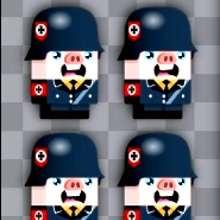
The pig-war framing gives Mine Swine a lot more personality than a generic hidden-bomb strategy game would have. It sounds funny at first, but it is exactly the kind of choice that makes a title easier to remember. You are not just pushing anonymous pieces around a grid. You are commanding ridiculous little armies in a conflict that looks playful while still demanding careful thought. That matters. Theme does not need to be serious to be effective. It just needs to make the game feel like its own thing.
And this one definitely feels like its own thing.
The battlefield becomes more inviting because the presentation softens the pressure without removing it. You can laugh at the pigs and still care deeply about not walking into a bomb like a complete amateur. That contrast is strong. It keeps the game from becoming too dry for casual players while still giving strategy fans enough tension to chew on. It is colorful, but not mindless. Funny, but not empty. Weird, but in a deliberate way.
There is something very browser-game about that balance too. The best smaller strategy games often rely on a bold central idea and a memorable tone. Mine Swine has both. Hidden mines and pig armies are already enough to create curiosity before a match even begins. Then the tactics do the rest.
And if there is a head-to-head element involved, that only makes the whole thing better. Bluff-based games always become louder with another human involved. Suddenly every move feels spiteful in a way AI can rarely match. Every bomb feels personal. Every safe square feels suspicious because the other player chose to leave it that way. A friend across the board can turn one hidden mine into a full psychological attack. That is a very good sign.
🧨😵 The best moments happen right before disaster
What I love most about games like Mine Swine is that the best turns are usually the ones balanced right on the edge of catastrophe. You think you have the read. You think the route is clear. You step forward, hold your breath for half a second, and then either feel brilliant or instantly regret your whole personality. That tiny pause before the result lands is where the game becomes addictive. It is suspense in miniature.
And because the rules are compact, every mistake stays visible. You are not buried under fifteen systems trying to figure out what went wrong. You know. You got greedy. You got lazy with your memory. You trusted a line that had no business being trusted. That clarity is incredibly useful because it makes the next match feel winnable. Smarter. Cleaner. Less embarrassing. Probably.
That is why this kind of strategy game can be so sticky. It creates a loop of learning without ever becoming overwhelming. You do not need an hour to understand what happened. One reveal is enough. One wrong step is enough. Then you queue up another round because now you need to prove that the previous disaster was not an accurate reflection of your tactical skill. Even if, deep down, it maybe was.
🏆🐷 Why Mine Swine sticks in the brain
Mine Swine sounds like exactly the kind of game people underestimate at first and then end up respecting later. The name is silly. The concept is odd. The pigs are obviously ridiculous. But that is what makes the real strategy hit harder. Hidden bombs, memory pressure, bluffing, battlefield reads, careful movement, all of that gives the game real bite underneath the humor.
So what is Mine Swine, really? It is a tactical memory war game disguised as pig nonsense, which is probably why it works so well. It is about stepping carefully, remembering more than your opponent, and realizing too late that one harmless-looking square was never harmless at all. Funny on the outside, sharp in the middle, and exactly the sort of game that can turn one tiny move into a full emotional event.





 4.4 (24 votes)
 Share
Share
 Embed
Embed