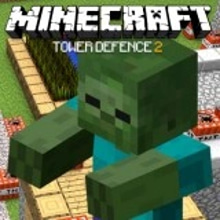
The house is small, the world is loud, and the night is coming. You can feel the pressure in the grass as if the dirt itself is warning you to hurry. Minecraft Tower Defense 2 drops you in that delicious moment before the first wave when everything is possibility and panic in equal measure. Your job is simple to say and tricky to do: draw the path to your base, force the monsters to walk exactly where you want them, and seed that road with the kind of turrets that turn arrogance into dropped loot. It is strategy with a shovel, a blueprint scrawled in dirt, and a rhythm you learn one wave at a time.
🧭 Path First Then Power
Most tower defense games hand you a fixed road and ask you to decorate the margins. Here you pick up the pen. You carve a route that snakes, doubles back, and wastes enemy time like a polite villain. Every bend is a decision. A long straight lets arrow turrets chew efficiently. A tight S turn turns splash towers into happy artists painting damage in wide arcs. Early on you will draw pretty loops because loops feel safe. Later you will draw mean corridors that funnel enemies through kill zones and you will grin at your own audacity. The path is your first weapon and your most personal signature on the map.
🏹 Turrets With Attitudes
Arrow towers are reliable and smug about it, the dependable friend that shows up early and leaves late. Splash towers love crowds and reward you for compressing routes. Slow towers are the secret sauce, the patient traffic cops that turn a sprint into a trudge and make every other turret look smarter. Later tech adds specialist toys that erase armor or pop flyers and suddenly your build has a theme. Do you become the wall of needles that wins by a thousand tiny cuts. Or do you invest in a few heavy hitters that delete minibosses with savage punctuation. Both are valid, both feel different in your hands, and the best days are when you change your mind mid run and the map still bends to your plan.
💎 Economy Is A Personality Test
Coins drip in with each fallen enemy and your heart starts making small negotiations with your brain. Do you upgrade that corner tower now for a clean damage spike or drop two cheap slows and trust the future to pay you back with interest. Greed is fine if you can defend it. Caution is noble until it starves your late game. The loop rewards players who treat spending like a conversation with the next three waves rather than a reaction to the current one. You will make mistakes. You will buy a shiny upgrade and immediately wish you had two more bodies on the field. The good news is that recovery is part of the fun. Tighten the path, sell a poorly placed turret, and write a better sentence with your next coins.
🧟 Enemies With Petty Habits
The early waves are polite about dying. Then the personalities arrive. Fast creeps mock slow towers until you learn to stack slows in pairs and teach them manners. Armored units laugh at arrows until a piercing upgrade wipes the smile. Flyers refuse your beautiful maze and fly straight for your roof, which is your cue to layer anti air along diagonals. The best lesson the game teaches is that counters are not one-offs: they are ecosystems. Add a slow not just for fast enemies but because it doubles splash value. Add splash not just for crowds but because it softens armor for your snipers. Each wave becomes less of a surprise and more of a conversation you’re happy to keep having.
🧪 New Maps New Rules
“New levels” isn’t just fresh wallpaper. Each layout changes what a clever path even looks like. A valley map gives you long sight lines where arrows sing. A compact cave forces short, mean zigzags where splash towers rule. Snowy boards nudge you to plan for slips in your timing and trust layered slows. Desert maps dare you to cluster towers around oases and defend resource nodes that make the midgame bloom. You stop chasing a single perfect build and start building a small library of instincts. You walk onto a new map and your hands already know where the first bend should go.
🎯 Micro Plays That Add Up
Tiny choices echo loudly here. Set the first bend just outside your base so enemies take the long way twice. Offset splash and slow so blobs get chilled before they enter the burst radius. Place anti air slightly behind your main line so flyers eat damage while they cross two or three other fields of fire. Upgrade the tower at the exit corner earlier than feels natural; anything that escapes still has to walk past it last, and that final correction prevents heartache. None of these are rules. They are little truths you test until they feel like muscle memory.
🛠️ Upgrades That Change Your Voice
There is a delicious moment when you shift from being a general contractor to a specialist. Maybe you lean into crit builds where arrows spike unpredictably and keep you cackling. Maybe you choose burn-on-hit and watch health bars melt as enemies walk away from your towers and discover the damage followed them. Maybe you extend slow duration until the entire road looks like morning traffic. Upgrades aren’t just bigger numbers. They’re filters on your personality. The same map feels new when your toolkit speaks a different dialect.
🧱 Emergency Tools And Late Game Calm
Panic happens. A miniboss shrugs off your best corner. A flyer squad sneaks through a gap you forgot to cover. Smart maps keep pockets open for emergency placements, those little spare pads near the base where you can drop a last-second slow or a quick burst tower to finish the job. The first time you save a run with a single clutch placement you’ll feel like you got away with something fancy. Later you’ll plan those pockets on purpose and the late game will stop feeling like a coin flip. Calm is a build too.
🌙 Night, Noise, And The Satisfying Math Of Survival
Audio matters more than you expect. The crisp thwip of arrows, the whomp of splash, the ping of coins they become a quiet metronome that keeps you in flow. You start hearing efficiency. A long lull between shots tells you a tower is underutilized. A messy overlap of sounds tells you a kill zone is paying rent. The screen glows with pixel dusk and your maze lights up with impact flashes. It’s cozy apocalypse energy, the kind where the world ends politely and you deny it with better geometry.
🧠 Teaching Without Talking
The game respects you. Tooltips are there, but the best lessons arrive when a wave embarrasses your plan just enough to encourage a redo. No idle grind, no filler mobs for fifteen minutes: you get meaningful tries and visible improvement. That loop makes learning feel like play rather than homework. You will find yourself restarting a map not in frustration, but in the kind of excitement that belongs to puzzles you’re close to solving.
🎮 Controls That Disappear
Drag a path, tap to place, click to upgrade, right back to planning. Inputs are honest and snappy, which means you spend your brain on choices instead of wrestling a UI. On desktop or laptop the rhythm becomes draw, place, watch, tweak, a small circle that spirals upward into mastery. It is exactly as simple as it needs to be, no simpler.
🏆 Why You Will Keep Coming Back
Because there is nothing quite like watching a plan survive its critics. Because squeezing one more second out of a slow field feels like stealing time from the universe. Because new maps keep remixing your favorite toys, and because a path you drew five minutes ago can still surprise you with how clever it looked in hindsight. Most of all, because this is the kind of strategy you can open for five minutes or fifty and always come away with a story about the wave that almost had you and the tiny adjustment that didn’t let it. You will close the tab satisfied and then open it again tomorrow because your brain wants to test a different bend near the lake and see what happens. That’s the mark of a classic loop, and it lives comfortably on Kiz10.





 Share
Share
 Embed
Embed


