𝗪𝗘𝗟𝗖𝗢𝗠𝗘 𝗧𝗢 𝗧𝗛𝗘 𝗘𝗡𝗗 𝗢𝗙 𝗧𝗛𝗘 𝗪𝗢𝗥𝗟𝗗, 𝗠𝗔𝗬𝗕𝗘 🌪️🌋
Obby Brainrot: Escape from Natural Disasters is exactly the kind of title that tells you two important things immediately. First, nothing here will stay calm for long. Second, survival is going to be loud, messy, and probably a little ridiculous. That is good news. On Kiz10, this game turns natural disaster chaos into a fast-moving Roblox-style survival obby where every round feels like a sprint through a collapsing toy universe.
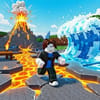
The setup is simple in the best way. You are dropped into dangerous maps where disasters can strike from all directions, and your only real job is to stay alive until the event ends. Easy sentence. Not easy experience. One moment you are looking for a safe platform, the next a tsunami is swallowing the map, meteors are crashing from above, or acid rain is turning the entire area into a giant “wrong choice” simulator. It becomes a game of movement, awareness, and fast panic-management. You know, healthy things.
That immediate clarity is part of the appeal. There is no need for heavy explanation. Survive. Adapt. Keep moving. If the floor is dangerous, leave it. If the sky is dangerous, stop admiring it. If everything is dangerous… congratulations, now you understand the game.
𝗘𝗔𝗖𝗛 𝗗𝗜𝗦𝗔𝗦𝗧𝗘𝗥 𝗖𝗛𝗔𝗡𝗚𝗘𝗦 𝗧𝗛𝗘 𝗪𝗔𝗬 𝗬𝗢𝗨 𝗧𝗛𝗜𝗡𝗞 ⚠️🌊
What makes Obby Brainrot: Escape from Natural Disasters work is that survival is never just about running in one direction forever. Different disasters demand different reactions. A tornado makes you think about position and exposure. A volcanic eruption turns the map into a danger puzzle where timing and elevation matter. A tsunami forces speed, route reading, and the ability to recognize safe spots before the wave arrives like an angry wall with no patience. Acid rain changes how you use open spaces. Meteor showers make standing still feel like signing your own defeat certificate.
That variety keeps the game from becoming repetitive. It is not one survival trick copied across every round. It is a rotating series of disasters that force you to stay alert and improvise. The game keeps asking, “Okay, but what if safety works differently now?” That question is what makes each session feel alive.
And because the maps change too, you are constantly reading terrain while reacting to threats. Stairs, rooftops, ledges, corners, structures, open platforms… everything can become useful or useless depending on what kind of disaster is currently trying to erase you from existence. That interaction between map design and disaster mechanics is where the game gets its replay value.
𝗧𝗛𝗜𝗦 𝗜𝗦 𝗡𝗢𝗧 𝗝𝗨𝗦𝗧 𝗔𝗕𝗢𝗨𝗧 𝗦𝗨𝗥𝗩𝗜𝗩𝗜𝗡𝗚. 𝗜𝗧’𝗦 𝗔𝗕𝗢𝗨𝗧 𝗠𝗢𝗩𝗜𝗡𝗚 𝗪𝗘𝗟𝗟 🏃💨
At the center of the game is classic obby movement. Run, jump, climb, turn the camera, read the environment, and react before the disaster reaches you. That sounds obvious, but movement is everything here. A natural disaster survival game only feels good when traversal feels sharp enough to support split-second decisions. Obby Brainrot: Escape from Natural Disasters understands that. The control set is clean, readable, and built for momentum.
On PC, movement with WASD feels immediate, the mouse lets you scan the map quickly, jumping is direct, and sprinting adds urgency when hesitation is no longer an option. That matters because this game lives on micro-decisions. Do you climb now or keep running? Do you cut across the open area or head for higher ground? Do you risk the shorter path or take the safer route? When the controls respond well, those decisions become exciting instead of frustrating.
On mobile, the touch controls keep the same core rhythm. The left joystick handles movement, the jump button keeps traversal active, and the right-side camera control helps you stay aware of where the danger is coming from. That is important in a survival obby game, because the disaster is rarely polite enough to attack only from directly in front of you.
𝗥𝗢𝗕𝗟𝗢𝗫-𝗦𝗧𝗬𝗟𝗘 𝗖𝗛𝗔𝗢𝗦 𝗪𝗜𝗧𝗛 𝗔 𝗟𝗢𝗧 𝗢𝗙 𝗣𝗘𝗥𝗦𝗢𝗡𝗔𝗟𝗜𝗧𝗬 🧠🎮
The Roblox-inspired style gives the game a lot of energy. Everything feels exaggerated in a fun way. The hazards are dramatic, the movement is readable, and the maps have that playful obstacle-course feeling that makes even pure danger look oddly inviting. You are not surviving in a bleak realism simulator. You are surviving in a colorful world where disaster has been turned into a game of reflexes, route planning, and very rapid regret.
The “Brainrot” element adds extra flavor to the progression too. Instead of making survival the only reward, the game gives you more to chase. You can level up your character, collect rare Brainrot rewards, and earn Pets. That is a smart move because it makes every run feel useful, even when you fail in some spectacular way. Maybe you got flattened by a meteor. Tragic. But did your session still contribute to progression? Excellent. Now the disaster feels slightly less disrespectful.
Pets and collectible progression also help create long-term motivation. You are not just surviving because the current round is intense. You are building toward something. New unlocks, better status, more reasons to re-enter the chaos. That extra layer turns the game from a simple survival loop into something with stronger retention and more personality.
𝗧𝗛𝗘 𝗕𝗘𝗦𝗧 𝗠𝗢𝗠𝗘𝗡𝗧𝗦 𝗔𝗥𝗘 𝗣𝗨𝗥𝗘 𝗣𝗔𝗡𝗜𝗖 𝗔𝗡𝗗 𝗣𝗨𝗥𝗘 𝗝𝗢𝗬 😄🔥
There is a special kind of fun this game creates. It happens when you barely survive something that should have absolutely ruined you. You see the wave coming. You sprint. You jump to a platform with almost no margin for error. The camera swings. A meteor lands somewhere behind you. You climb one final ledge. The disaster ends. You live. For about two seconds, you feel like a genius.
That rhythm of pressure and relief is what makes the game so easy to replay. Every disaster round is a short story of bad circumstances and desperate decisions. Sometimes you win because you planned well. Sometimes you win because instinct kicked in at the perfect moment. Sometimes you lose because you trusted a platform that clearly looked suspicious from the beginning, which, frankly, is on you.
The important part is that the game makes those outcomes entertaining. Failure is quick. Success feels dramatic. The next round is always inviting you back with another “okay, try surviving this one” challenge.
𝗪𝗛𝗬 𝗢𝗕𝗕𝗬 𝗕𝗥𝗔𝗜𝗡𝗥𝗢𝗧: 𝗘𝗦𝗖𝗔𝗣𝗘 𝗙𝗥𝗢𝗠 𝗡𝗔𝗧𝗨𝗥𝗔𝗟 𝗗𝗜𝗦𝗔𝗦𝗧𝗘𝗥𝗦 𝗦𝗧𝗔𝗡𝗗𝗦 𝗢𝗨𝗧 🏆🌩️
On Kiz10, this game stands out because it combines several strong ideas without overcomplicating them. It has the instant accessibility of a survival game, the movement-driven tension of an obby platformer, the map-reading challenge of an action runner, and the progression appeal of unlockable rewards and pets. That combination makes it easy to start and hard to stop.
If you like Roblox-style obby games, natural disaster games, parkour survival games, or chaotic online challenges where adaptation matters more than perfect planning, this one delivers. It feels fast, unpredictable, and constantly alive. Every round asks for reflexes, awareness, and a little courage. Or a lot of panic disguised as courage. Same result, really.
Obby Brainrot: Escape from Natural Disasters is about staying alive in a world that keeps trying very hard to make that impossible. And somehow, that makes it ridiculously fun. 🌪️🌊☄️







 Share
Share
 Embed
Embed


