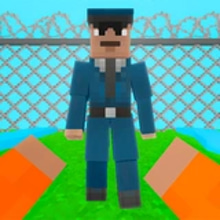
The siren blips, then gives up, like even the alarm knows you’re already halfway gone. Obby: Tower of Hell 2 doesn’t ask if you’re ready; it shoves you out of the cell with a wink and a puddle of questionable water reflecting flickering lights. You’re in a parody flavored, Roblox style parkour escape where every platform has attitude and every guard is a rumor with shoes. The goal is brutally simple. Break out. The method is everything you invent between one jump and the next.
You start in a box that pretends to be a prison cell. The floor hums. The wall grates whisper. The camera sits at a clean angle that says go on, try it, you won’t. So you do. First jump is timid. Second jump dares to lean. Third jump becomes a running joke with gravity, and now you’re moving. The controls feel sticky in the best way, like sneakers that grip the platform right before letting go, just enough to throw you forward without drama. Soon you’re stitching together ledges, like threading a needle with adrenaline.
🚧 Vents that Breathe Back at You
There’s something uniquely funny about crawling through a vent that clearly wasn’t designed for human shoulders. The game plays it up with tight corners and a clank that echoes a little too loudly when you bonk the edge. You learn to pivot, to micro hop, to slide sideways in a sliver of space. Every time you pop out into a new corridor, the air feels different. Warmer near the laundry exhaust. Damp near the showers. Cold and metallic right before the maintenance bay. The vent puzzles never overstay; they flirt, they tease, they toss you back into sprinting like a coach with a stopwatch and no patience.
💡 Platforms that Teach Without Talking
The best teachers don’t lecture; they stage surprises. Disappearing tiles wait a heartbeat longer than you expect, then blink with a smug little sparkle. Conveyor belts invite you in, then nudge the timing off by a fraction so you learn to lean into momentum rather than fight it. Swinging hammers introduce themselves with a shadow first, tapping your instincts before the metal shows up to test them. The game speaks fluent visual hint. You can read the room from the color temperature, the hazard stripes, even the way particles drift in the air. When the platform glows faintly, it means patience. When it buzzes, it means go now and don’t look down unless you enjoy comedy falls.
🧠 Panic Brain vs. Parkour Brain
There’s a moment when the part of your mind that panics at edges argues with the part that calculates jump arcs. The trick is to make Parkour Brain slightly louder. You start counting silently. One for crouch, two for push, three for release. It becomes music. A rhythm game disguised as an escape plan. Sometimes you blow it. That’s fine. The checkpoints are placed like quiet lifeguards. You respawn with a tiny shake of the head and a laugh you didn’t mean to make, because yes, you did actually try to land on the narrow pipe while waving the camera around like a selfie stick. Lesson learned. Next run cleaner, tighter, kinder to your future self.
🤡 The Comedy of Failing Forward
Nothing breaks the tension like a pratfall that is entirely your fault. You clip a low pipe while waving at an imaginary audience. You launch into a perfect arc, then bonk a ceiling you didn’t notice because you were thinking about snacks. The game lets you be ridiculous without punishment that lingers. Quick reset, sharper focus. Even the hazards lean into the joke. A spurting sewer vent times itself like a comedian’s beat, pause, spray. You’ll swear the platform tilted just to mess with you. It didn’t. But it feels alive because your own mistakes give it personality. The run becomes a sitcom with stunts, and you’re the lead who never learns but somehow always gets better.
🌧️ Sewers, Steam, and the Good Kind of Grit
The escape routes push you into the undergut of the prison where pipes cross like tangled headphones. Steam bursts in steady pulses. You start reading the heartbeat of the room. Three soft hisses, one long sigh, jump on two, dash on four. The camera catches glints on wet metal and that shine is its own warning label. You pivot sooner on slick edges, you keep your feet light, and when the floor tries to throw you, you thank it for the dance and move on. It’s grimy without being gross, stylized grime, the kind that makes you feel fast because you’re brighter than the background.
🧗♂️ Climb Now, Redo Later, Brag Forever
Vertical segments are where the Tower of Hell spirit takes a bow. Ladders that end a step too soon, wall jumps with just enough distance to demand a deep breath, narrow ledges that ask for calm feet and even calmer thumbs. You scan up, then you commit. When you chain four precise moves in a row, you get that lovely heat behind the eyes that says you earned this. If you fall, you fall through two layers of set pieces and land on a safe platform that quietly says try again champ. And you do, because your ghost run is already taunting you from thirty seconds in the future.
🎮 Feel in the Fingers, Laugh in the Throat
Controls are the soul. Here they are crisp without feeling robotic, forgiving without being mushy. Inputs translate into motion with that satisfying snap at the end of a jump where your character lands, shoulders settle, and the next sprint is ready to spring. Tiny dust puffs, little spark trails, a sound cue that clicks when you hit the perfect timing window. It all stacks to make short sessions feel productive and longer sessions feel like training montages. The humor threads through it, like the game is nudging you with a grin saying you can do that cleaner and you know it.
🧭 Routes Within Routes
Speedrunners will see the lines immediately. Casual players will feel them without naming them. A side pipe cutting five seconds off a zigzag. A risky diagonal across moving platforms that saves you two ladder hops. A crouch slide beneath a swinging hazard that looks flashy and is. The map hides micro opportunities for valor. The more you play, the more those opportunities turn into standard practice. You keep a backup plan in your pocket for when a jump goes weird, and the discipline of recovery becomes part of the fun. You stop restarting runs and start salvaging them with sly grins.
🔥 Little Story, Big Escape
There isn’t lore in a bookish sense. The story is your route. The narrative is told in breath and stumble and that final clean sprint where the camera widens just a little as if to acknowledge that yes, you earned the view. You break out not because the cutscene said so, but because you learned the grammar of this place and wrote a sentence the guards couldn’t read in time. When you emerge topside with the night spread out like a reward screen, the game doesn’t pat you on the back. It nudges you toward another tower, another variation, one more ridiculous segment that will make you cackle and then immediately queue for a rematch.
🏁 Why You’ll Keep Loading It
Because a good obby feels like meditation that forgot to sit still. Because the jokes land exactly when the jump does. Because every section that made you frown yesterday will make you smirk today, and that slow transformation is the entire point. You’ll come back to shave seconds, to try a riskier route, to teach a friend the vent twist you invented, to scream when they do it faster on the first try. It’s prison break as a personality test, a platformer that doesn’t take itself seriously while taking your skill very seriously. And when the next tower blinks into view with that smug little glow, you’ll roll your shoulders, inhale, and sprint.





 Share
Share
 Embed
Embed


