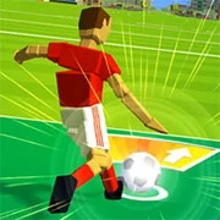
The first thing you see in Orbit Kick is not a stadium full of screaming fans or a referee waving a card in your face. It is just a player, a ball and a ridiculous amount of sky waiting to be used. No formations, no coaches yelling instructions, no ninety minutes of running in circles. One kick, one clean hit, and suddenly the ball is carving its own story across the horizon while you sit there thinking, did I really do that or did physics just feel generous for a second
Orbit Kick on Kiz10 turns the classic dream of the perfect shot into something you can chase over and over without ever getting tired of it. Every attempt is a small gamble with timing, a tiny duel between your reflexes and the power meter. Miss the sweet spot and the ball dribbles away like a lazy pass in a park. Hit it just right and that same ball becomes a tiny rocket, bouncing across the world like gravity has decided to take the afternoon off.
⚽ First kick that refuses to land
Your very first shot is humbling. You line up, wait for the bar to fill, tap or click with too much confidence, and watch the ball travel a distance that feels more like an enthusiastic warm up than a legendary strike. It flies, sure, but it does not exactly scream highlight reel. That is when the loop grabs you. You see the coins trickling in, notice the small upgrade icons blinking with possibility and feel that familiar itch of just one more try. The game does not taunt you with failure screens or dramatic sound effects; it simply dares you to do better next time and hands you the tools to make that happen.
🌍 A field that stretches into the world
Orbit Kick has that satisfying illusion of endless space. The more you improve, the more the environment feels like it is opening up in front of you. Early kicks barely clear the first few markers and bump along simple terrain. After a while the ball starts gliding over new backdrops, traveling further than you thought possible a few minutes earlier. The world becomes a series of distance milestones you want to smash, one after another. Each stretch of land hints at the next big goal, whispering that somewhere out there is a record with your name on it if you can just time everything a little better.
💸 Coins, upgrades and that quiet sense of progress
Nothing in Orbit Kick screams at you to grind, yet you keep coming back to nudge your stats higher. Every kick, even the embarrassing ones, feeds you coins. Little by little you pour them into power so your shots feel heavier, into bounce so the ball stays alive longer when it hits the ground and into that delicious feeling of passive earnings that stack up while you are away. You start to notice small differences. A shot that used to die after the first impact now pops back into the air for one more arc. A tiny buff to power turns what was once a decent kick into something that sails past your old record like it was nothing. It is progress that feels earned rather than handed to you.
🎯 Timing that messes with your head in a good way
On paper, the main mechanic is simple. Wait for the right moment, tap or click and watch the result. In practice, your brain turns it into a miniature obsession. The meter slides back and forth, tempting you to hit early or gamble on that last fraction of power. You tell yourself to be calm and measured, then blow it because your finger twitched. The best part is that even the almost perfect hits teach you something. You learn where the ideal zone really sits, how long it lingers, how it feels just before you lock it in. Moments later you are back on the line saying okay, this time for real, fully aware you have said that ten times already.
🚀 When the ball becomes a stubborn comet
There is a turning point where Orbit Kick stops feeling like a basic soccer game and starts feeling like a distance obsession. Your upgrades stack up, your instincts sharpen, and one magical attempt just clicks. The ball rockets upward, catches the right angle and hits the ground with so much energy that it skips along the surface instead of stopping. You watch it bounce again and again, scraping extra meters out of every impact. It crashes into ramps, rolls off slopes and finds strange paths you did not expect. That is when you lean closer to the screen and start talking to the ball like it can hear you, begging it to stay airborne for one more ridiculous hop.
📈 Chasing numbers without feeling like homework
If you have ever played a game that turns distance or scores into a checklist, you know how quickly it can start to feel like a job. Orbit Kick avoids that trap by making each run short, punchy and full of small surprises. You might fall just short of a new record and instantly feel the urge to adjust your upgrades. Maybe you throw a few coins into bounce to see what happens. On the next attempt the ball hits a hill at a slightly better angle and suddenly your old best seems tiny. There is data there if you care about it, meters and milestones and stats, but they are wrapped inside runs that last just long enough to be satisfying and just short enough to invite another shot.
🤔 Small decisions that actually matter
Behind the simple controls hides a layer of quiet strategy. Do you invest all your coins in raw power, hoping to brute force your way to absurd distances, or do you balance power with bounce so your shots have more life after that first impact You might even favor offline earnings for a while, letting the game reward you when you come back later. None of these choices are complicated on their own, but combined they give each player a slightly different style. One friend might brag about heavy shots that smash through early obstacles, while another flexes with a setup built around long, stubborn bounces that keep rolling well after everyone else has stopped.
😅 Fails that are funny instead of frustrating
Orbit Kick understands that not every attempt will be glorious. Sometimes you tap far too early and launch a weak little chip that barely clears the starting zone. Sometimes you overshoot the timing, hit full power at a useless angle and send the ball into a tragic low arc that lands with a dull thud. The game lets these failures be funny. You might laugh, shake your head and mutter something about your reflexes betraying you, but you do not feel punished. You grab the coins anyway, tweak an upgrade, and line up the next kick with that stubborn feeling that the perfect shot is close, almost within reach, if you can just stop blinking at the wrong time.
✨ Bite sized sessions that fit anywhere
One of the silent strengths of Orbit Kick on Kiz10 is how well it fits into any moment of your day. You do not need to commit to long matches or complicated tutorials. You open the game, take a few kicks, maybe unlock a new location or push your record a little further and then step away if you want. It feels perfect for quick breaks, small windows of free time or that dangerous phrase just five more minutes before doing something else. The controls are intuitive, the feedback is instant and the satisfaction of watching the ball fly farther than before never really goes away.
🌐 Why Orbit Kick feels at home on Kiz10
Kiz10 is full of fast, addictive browser games, and Orbit Kick slides into that lineup like it was built for it. You get everything the concept promises in seconds: a casual soccer distance game, simple controls, constant upgrades and that one more try energy that keeps you locked in. There is no need for downloads or complicated setups. You just visit Kiz10, fire up Orbit Kick and start chasing the sky, one perfectly timed shot at a time. Whether you are a soccer fan, a distance game addict or just someone who loves watching numbers climb, it becomes dangerously easy to lose track of time while your ball keeps rolling toward the next impossible record.



 4 (164 votes)
 Share
Share
 Embed
Embed