🐷🧠 Cute cards, mean little mistakes
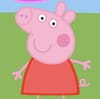
Peppa Pig Memory Test is exactly the kind of game that looks harmless until the timer starts making your memory feel much less impressive than it did five seconds ago. Kiz10’s own page keeps the idea wonderfully simple: this is a Peppa Pig memory game where you must find two identical images from Peppa’s friends and family and score as many points as possible before time runs out. That is the whole hook, and honestly, it is a very good one.
Because memory games work best when they do not overcomplicate the mission. Flip, remember, match, repeat. The tension does not come from giant mechanics. It comes from your own brain deciding, with stunning confidence, that a card was definitely in the top left when it absolutely was not. That is why Peppa Pig Memory Test works so well. It takes a very familiar matching-pairs structure and wraps it in a bright, family-friendly Peppa Pig skin that makes the whole experience more playful without making it less challenging.
And on Kiz10, that tone fits perfectly. The page places the game among Cute Games, Games for Kids, and Games for Girls, which tells you immediately what kind of mood it aims for: friendly visuals, easy controls, and quick puzzle sessions built around concentration rather than stress. It is the sort of game a player can understand in seconds and still replay because memory games always carry that tiny little promise that next time your brain will behave better.
🎯⏳ The timer is the only rude character here
The timer changes everything. Without it, Peppa Pig Memory Test would still be a pleasant matching game. With it, the whole board starts feeling just a bit more demanding. Kiz10’s page explicitly says to find the pairs and do it before time runs out, which means the game is not only about recognition. It is also about speed under pressure.
That is where the fun sharpens. On your first few flips, you are gathering information. Where is Peppa? Where is George? Which card had that family image you just saw? Then the board starts talking back in the usual memory-game way: one match feels easy, another pair vanishes from your mind instantly, and suddenly you are clicking cards while trying to pretend you are fully in control. You are not. But the game is kind enough to keep the rules simple while your brain does the dramatic part.
And that simplicity is a strength. There is something satisfying about a puzzle where the only real enemy is forgetfulness. No weird controls. No hidden systems. Just visual attention, recall, and the little thrill of turning a random-looking board into something you can finally read cleanly.
🌈🐽 Why Peppa makes the memory loop more fun
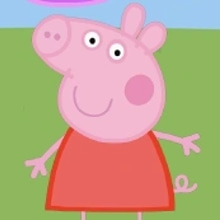
The Peppa Pig theme does more than make the board look cute. It gives the puzzle immediate personality. Matching games can sometimes feel abstract if the symbols do not matter. Here, the images come from Peppa’s world, which makes every correct pair feel a bit more lively and recognizable. Kiz10’s page specifically says the cards feature Peppa’s friends and family, and that gives the whole memory task more charm than plain geometric icons ever could.
That matters a lot for younger players and for family-friendly browser gaming in general. Recognizable characters make the board easier to care about. They also make the puzzle more approachable. A child may not get excited about matching random shapes, but Peppa’s world already has familiarity built in. That lowers the barrier to entry while still leaving enough challenge in the memory mechanic itself.
And because this is a classic Flash-era Kiz10 page from December 10, 2015, the game carries that older browser-puzzle energy where the concept is clean, the objective is obvious, and the replay value comes from improving your own focus rather than unlocking a mountain of extra systems. That kind of design still works because the core loop is timeless.
🃏✨ Matching pairs should not feel this personal
One of the funniest things about memory games is how quickly they become personal. You miss a pair and immediately feel betrayed by your own brain. You flip two cards that you know you have seen before, just not where, and suddenly the whole board feels smug. Peppa Pig Memory Test absolutely lives in that space. It is light, yes, but it still knows how to create that tiny puzzle tension that keeps people clicking.
Kiz10’s broader kids-game catalog supports exactly this kind of title, and the site currently also features Peppa Pig - Peppa Memory, another live Peppa-themed matching game, plus Peppa Pig - Pattern Party, which sits in a related memory and pattern-recognition lane. Those live pages show that Peppa-themed brain games are clearly an active part of Kiz10’s family-friendly catalog. That makes Peppa Pig Memory Test feel right at home there.
It also means the game is easy to recommend to anyone who likes matching pairs, visual memory games, timed puzzle boards, or simple kid-friendly challenges that still reward concentration. The objective is pure. The theme is warm. The frustration is mild but very real. Which, for a memory game, is pretty much perfect.
🏆🐷 Why Peppa Pig Memory Test fits Kiz10 so well
Peppa Pig Memory Test works because it combines one of the most reliable casual puzzle formulas around with one of the most recognizable kid-friendly cartoon worlds. Kiz10’s live page confirms the core identity directly: find matching images of Peppa’s friends and family, score as many points as possible, and beat the timer. That is an excellent browser-game recipe. Easy to learn. Easy to replay. Hard enough to keep your attention once the clock gets involved.
And because Kiz10 already hosts other related Peppa memory pages and family-focused puzzle games, the game sits naturally inside a very active section of the site rather than standing alone. So if you want a Kiz10 game that feels gentle, recognizable, and just demanding enough to make your brain work a little harder than expected, Peppa Pig Memory Test absolutely earns its place.












 Share
Share
 Embed
Embed