🤖🌍 A dead world, a living machine, and too many questions
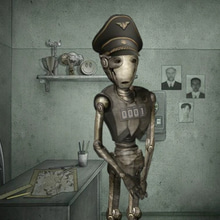
Robots Invasion opens with a premise that already feels a little unsettling in the best way. Humanity is gone. The Earth is still there, but the ones walking across it now are the machines humans left behind. And you are one of them. That alone gives the game a different kind of atmosphere from the usual robot action game. It is not just about lasers, noise, and mechanical chaos. There is mystery in the air. Quiet. Space. The strange feeling of waking up in a world that still exists, but no longer belongs to the people who made it. Kiz10’s own page frames it exactly that way, describing a world inhabited by robots after humans disappeared, with the player solving its mysteries.
That setup matters, because it changes the emotional temperature of the whole experience. A title like Robots Invasion could easily sound like pure destruction. Massive attacks, endless enemies, sparks everywhere, dramatic metal screaming. But this game feels more thoughtful than that. There is tension, yes, but it is the tension of discovery. Of walking forward and wondering what happened here. Of looking at the environment and sensing that every object, every route, every encounter might be part of a bigger answer. It gives the adventure game structure a stronger personality right away.
And that is where the charm starts digging in. You are not just controlling a robot because robots look cool, though to be fair, they do. You are controlling a robot in a world shaped by absence. That is a very different flavor. The game has room for exploration, for uncertainty, for that low-key sci-fi mood where silence can be more interesting than chaos. Even before the challenges fully build up, the setting already does half the work. It makes the player curious, and curiosity is dangerous. Curiosity is how a “quick test” becomes a full session.
🔩🕵️ Steel footsteps and the feeling that something is wrong
The best part of a game like Robots Invasion is that it can turn simple movement and discovery into something much heavier. A hallway is not just a hallway. A platform is not just a platform. A mechanical ruin is not just decoration. Everything feels like it might be part of the answer. Why are the robots still here? What exactly happened to the humans? Are you alone in the useful sense, or in the scary sense? That is the kind of energy the game can pull from its premise, and it makes even small actions feel more loaded.
It also helps that robot-centered games naturally carry a built-in sense of contrast. Machines are usually associated with control, logic, precision. But place one inside a broken or abandoned world and suddenly all that cold design becomes weirdly emotional. A robot crossing a ruined landscape feels lonelier than a human would. More fragile, somehow. More out of place. Robots Invasion can lean into that mood beautifully because the core idea is already strong enough to support it.
And then there is the pure player experience of it all. You move, explore, react, test what the world allows, and slowly piece together how this strange reality works. That loop is satisfying because it does not rely entirely on speed. Reflexes matter, sure, but awareness matters more. You have to pay attention. The game invites you to notice things instead of just surviving them. That gives it a slightly more immersive feel than louder arcade robot games.
Of course, there is still danger in the design. A world called Robots Invasion does not exactly suggest a peaceful garden walk with soft music and emotional closure. There is pressure. There are threats. There are probably moments where your nice calm exploration gets interrupted by something mechanical and deeply unfriendly. Good. That friction is important. Without it, mystery games drift. With it, the world feels alive.
🌌⚙️ Sci-fi atmosphere does a lot of heavy lifting here
What really sets Robots Invasion apart from a generic robot platformer or action title is the atmosphere built into its concept. Post-human Earth is a strong image. It gives the game its own visual imagination even before you play it. Empty places. Machine presence. A sense of old systems still running for reasons nobody fully understands. That kind of science-fiction tone always helps a browser game feel bigger than its actual size. The screen might be small, but the implied world feels huge.
That is a smart advantage for Kiz10. A game does not need endless cutscenes or giant production values to feel memorable if the premise does enough work. Robots Invasion has one of those titles that instantly builds a mood. You can almost picture the setting before the first level begins. Metal structures. Ruined spaces. Mechanical life continuing after its creators are gone. It is eerie without trying too hard. Cool without forcing it. A little lonely. A little dangerous. Very effective.
There is also something fun about playing as the machine instead of fighting only against them. That choice adds texture. You are not the outsider looking in. You are part of the world’s new logic, whether you understand it yet or not. That opens the door to a different kind of identification. Not hero versus robot. Robot inside robot world, trying to make sense of the silence. That is good science-fiction territory. Unexpectedly thoughtful, too.
And because the game sits in that space between adventure and mystery, it can appeal to players who want more than just constant action. Sometimes the best browser games are the ones that let the player breathe a little. Walk, observe, wonder, then react. That pacing can be far more gripping than nonstop explosions. It makes each threat feel more meaningful because the world around it has been allowed to exist first.
🧠🚪 Curiosity, caution, and the urge to keep going
This is where Robots Invasion becomes quietly addictive. Mystery-driven games have a special kind of grip. You do not always keep playing because the challenge is hard. Sometimes you keep playing because you need to know what is around the next corner. That pull is powerful. It sneaks past logic. You tell yourself you will stop after one more section, but then the game reveals one new detail, one new route, one new strange clue, and now your brain is involved.
That makes the pacing feel more human, which is funny considering the game’s premise. One section might feel exploratory, almost meditative. Another might sharpen into tension. Another might make you pause and think. That variation helps a lot. It keeps the experience from feeling repetitive and gives the robot world more character. Different moments can lean into curiosity, unease, or challenge depending on what the game wants from you.
It also creates a nice SEO fit for Kiz10 without sounding forced. This title naturally sits near robot adventure game, sci-fi mystery game, robot exploration game, futuristic platform game, and browser adventure game. Those ideas belong around it because the theme supports them. The player is not just moving through random levels. They are moving through a robot-dominated future with narrative tension baked into the background. That gives the page stronger identity and gives players a clearer reason to click.
And honestly, the premise sticks. Humans are gone. Robots remain. You are one of them. That is the kind of setup that lingers in the mind even after you stop playing. It gives the game a little extra weight. Not too much, not enough to become heavy or self-important, just enough to make the experience feel distinct.
🛠️👁️ A robot game with more mood than noise
Robots Invasion works because it does not have to scream to keep attention. The setting already carries intrigue. The mystery gives movement a purpose. The sci-fi atmosphere turns simple exploration into something richer. And once the dangers start interrupting that calm, the game gains a strong push-and-pull rhythm between discovery and survival. Kiz10 describes it as a mystery-solving robot adventure in a world left behind by humanity, and that foundation gives the whole game a sharper identity than a generic action title would have.
For players who enjoy robot games with a little more atmosphere, a little more curiosity, and a little less mindless chaos, this one has real appeal. It still has tension. It still has challenge. But it also has that lovely eerie science-fiction feeling of stepping into a future that kept going without us. That is a strong hook.
So yes, Robots Invasion sounds dramatic, and it is, but not only in the explosive way. It is dramatic in the quieter way too. The lonely way. The “what happened here?” way. The “why am I still moving through this empty world?” way. And that is exactly why it stands out. On Kiz10, it feels like a robot adventure game with mystery in its circuits and just enough danger in the air to make every new area worth chasing.




















 Share
Share
 Embed
Embed


