First Bell, Fast Heartbeats 🏫🔔
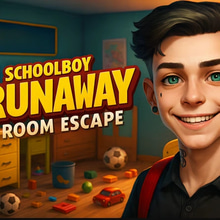
The door clicks, the clock laughs, and the fluorescent hum turns the classroom into a tiny arena where every scrape of your sneaker sounds guilty. You are not a troublemaker, you’re a strategist in training with a backpack full of nonsense and a plan that is equal parts genius and panic. The teacher’s note said “detention,” the hall monitor said “no passes,” and the bell said “you’re already late.” Schoolboy Runaway begins with a simple dare: get out without getting caught. The air smells like dry-erase ink and opportunity. Somewhere, a key exists. Somewhere else, a camera blinks too slowly to be paying attention. You grin. Time to major in escape.
Hall Passes & Line-of-Sight 🎒👀
Stealth here is readable and a little theatrical. Adults patrol on loops that make sense; cones of vision sweep like lazy lighthouses; footsteps tap a rhythm you can learn in three beats. Slip behind a bookshelf, freeze as a counselor glides past, then tiptoe between trophy cases while the janitor wrestles a mop. Sprinting is a privilege you earn by planning—burst across open tile only when you can slide home behind a locker bank. The trick isn’t invisibility; it’s timing mixed with nerve. A cough covers a button press, a locker door thunks at the exact second a camera pans away, and you feel like you got extra credit in physics.
Chalk Dust & Clues In Plain Sight ✏️🧩
Puzzles wear school clothes. A chalkboard fraction points to shelf numbers, which point to book spines that spell a locker combo. A science poster hides resistor values that match the keypad tones you heard in the lab. The art room’s color wheel isn’t decoration—it’s the order for the stained-glass levers in the courtyard hall. Nothing is random; everything is fair once you stop being loud in your head. The best moments are little “oh!”s when a corny riddle turns into an actual door opening and you try not to fist-pump because cameras exist.
Lockers That Gossip 🔐📓
Every corridor hums with metal and secrets. Some lockers rattle; some breathe; one has a sticker that matches the homeroom seating chart, which tells you whose birthday is today, which is somehow the last digit of a code. You can shim a stuck latch with a paperclip, but only after you’ve bent it on a radiator for that perfect spring. Inside you’ll find the sacred junk of adolescence: rubber bands, gum wrappers, a half-finished zine, and the exact hex key the maintenance panel refuses to live without. Each locker feels like a loot box designed by a guidance counselor with mischief in their heart.
Faculty Bosses With Fair Rules 🧑🏫🗝️
Adults aren’t monsters; they’re puzzles you have to solve with respect and trickery. The vice principal travels in a predictable triangle and hates squeaky doors—oil one hinge and his route widens for a minute. The hall monitor loves whistles; trigger the gym’s scoreboard and he sprints to investigate, leaving a stairwell unguarded. The janitor carries keys but won’t drop them unless you create a small mess near the art sink; then he sets them down to find the right rag, and your fingers do the rest. Patterns are readable; windows are tight but generous. Failures feel like lessons, not lectures.
Gadgets From Junk You Swear Isn’t Useful 🧷🧰
Crafting leans delightfully low-tech. Binder clips become wire clamps; a magnet-on-a-string becomes your best friend; a roll of duct tape is basically a minor degree. Combine a gum wrapper and a battery to spoof a sensor for exactly three seconds—long enough to slip past. Tape a ping-pong ball inside a trash can lid and suddenly you have a muffled rolling decoy that steals a camera’s attention. None of this breaks rules; it bends them with schoolyard logic you’ll be smug about all week.
Routes, Detours, And The Map In Your Head 🗺️🚪
The building is a character with moods. The library is quiet but full of sightlines; the gym is loud, echoey, and kind to sprinting; the cafeteria is a maze of tables that turn into cover when a lunch cart squeals by. Doors color-code their behavior: green means puzzle-locked, amber means key-dependent, blue means “there’s a vent nearby if you stop acting cool and look up.” Shortcuts fold back onto themselves in satisfying loops, and every unlocked door makes the next pass feel like speedrunning a rumor.
The Bell Is Your Clock ⏳🔔
There’s a timer, but it’s not cruel—it’s a metronome for choices. Homeroom buzzers buy you thirty seconds of louder ambient noise; class changes flood the halls with student ghosts who obscure you for a breath; fire drill practice (you didn’t start it, the school did, what a coincidence) freezes cameras on safe mode for exactly one corridor. You learn to surf the schedule rather than race it. When you exit a wing just as the bell erupts and a sea of backpacks hides your tiny victory, you feel like a magician who knows the registrar personally.
Mini Stories Between Doors 📖🎭
You’re not escaping into a void; you’re slipping through scenes. A drama rehearsal argues about a prop key and leaves the real one under a sandbag. The chess club taped a cipher to a trophy because of course they did. The nurse’s office has a portable fan that calms a smoke detector you were definitely not planning to annoy. Notes on corkboards are whispers, not lore dumps: “Coach’s new padlock—thinks 24 is lucky.” You chuckle, pocket the fact, and five rooms later it becomes a door opening like it always wanted to.
Tiny Habits, Big Wins 🧠✨
Face the next door before you interact so you exit into momentum. Walk, don’t run, past open classrooms—footstep audio matters. Keep one slot of inventory empty; half the puzzles reward you for picking up a thing you didn’t know you needed. If a code pad has worn keys, try the combination that an overconfident senior would set. When a patrol feels unfair, stop and count; it never is. Breathe at corners. Laugh after close calls. Your hands get steadier when your head isn’t narrating doom.
Sound, Color, And The Click Of A Good Plan 🔊🎨
Audio does stealth’s heavy lifting. Sneakers squeak louder on polished tile, soft on carpet, celebratory on gym mats you bounce across like a heist movie for kids. Lock picks tick with a sweet little metronome; cameras buzz when they move; a photocopier coughs just in time to hide a clumsy bump. Visuals are bright and readable: danger warms to amber, safety cools to blue, secret paths glint with a chalk-line shimmer that feels like a friend whispering “psst.” When a mechanism finally accepts your shenanigans with a satisfying clack, the grin arrives on schedule.
Setpieces That Earn Your Story 🎬🚸
There are rooms you’ll remember. The music room where you tune the metronomes to open a panel. The trophy hall where reflective glass doubles patrol cones and you use a mirror to blind a camera for half a second. The roof access where a gust of wind steals your paper map and you navigate by murals you didn’t notice until you had to. The last hallway where the exit sign blinks like a heartbeat and you time your strides to the principal’s echo because your legs have learned courage by osmosis.
Why You’ll Keep Escaping On Kiz10 🌐💙
Because Schoolboy Runaway captures that delicious blend of clever and chaotic, where a paperclip feels like a lightsaber and a calendar feels like a secret superpower. Because adults act like systems, not villains, and the building rewards curiosity over brute force. Because puzzles are school-smart without being smug, stealth is fair without being slow, and every solved room turns into a shortcut you can’t wait to use again. Mostly because the moment the final latch clicks, the sun stripes the hall with window light, and you step outside exactly as the bell rings—yeah, that feeling. Load it on Kiz10, tighten your backpack straps, and write your own hall pass with a plan that shouldn’t work and absolutely will.









 Share
Share
 Embed
Embed


