🐇 Thin legs, bad odds, keep moving
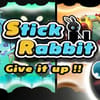
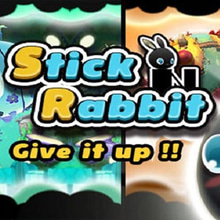
Stick Rabbit sounds like the kind of game that should be simple. A rabbit, maybe drawn in a minimal stick style, bouncing through danger, collecting things, dodging traps, trying not to turn one tiny mistake into a full collapse. I was not able to verify a clear standalone public page for this exact title, but the name fits very naturally into Kiz10’s rabbit-platformer lane, where games like Rabbit Samurai, Rabbit Teloporter, Forest Secret, and Rabbit Planet Escape all revolve around quick movement, obstacle survival, and cute characters dropped into situations that are much less cute than they deserve.
That makes Stick Rabbit easy to imagine in the best possible way. Not as some giant cinematic fantasy, but as a sharp little action platformer where movement is the whole personality. A rabbit hero already gives you speed, agility, and that wonderful “small creature against an unfair world” energy. Add the word stick and suddenly everything feels even scrappier. Lighter. Simpler. More direct. This is not a heavily armored beast charging through battlefields. This is a lean little survivor trying to stay alive through timing, jumps, narrow platforms, and whatever rude nonsense the level designer hid five steps ahead.
And honestly, that is a great setup for Kiz10.
Because browser platformers do not need huge stories when the movement feels alive. They need rhythm. They need readable danger. They need that one more try feeling where a missed jump is annoying for two seconds and motivating for ten minutes. Stick Rabbit sounds built for exactly that kind of loop. Small hero, quick reactions, lots of trouble. Perfect.
🥕 A platformer with more nerves than muscle
What makes rabbit games so naturally fun is that the fantasy is built into the animal itself. Rabbits are made for platform games. Fast starts, quick hops, sudden changes of direction, nervous energy, tiny body, huge commitment. Kiz10’s own rabbit-related games show different versions of that idea, from the grappling-hook action of Rabbit Samurai to the teleport puzzle format of Rabbit Teloporter and the lane-dodging runner feel of Rabbit Planet Escape. Even when the mechanics change, the rabbit theme keeps the gameplay fast and reactive.
Stick Rabbit would fit that identity beautifully.
The fun in a game like this comes from fragility. You are not bulldozing through the level. You are surviving it. Every jump matters because the character feels small enough that danger always looks bigger than it should. A spike pit becomes dramatic. A moving platform becomes suspicious. A gap becomes an argument with gravity. That is one of the nicest things about platformers with tiny animal heroes: the world automatically feels more hostile and more playful at the same time.
And if the “stick” part of the title reflects a more minimal visual style, that would actually help a lot. Stick-style games often feel clearer. Cleaner. The shapes are readable, the movement is the star, and the danger pops instantly. That is great for a platform challenge because the player should always know what the threat is. The real difficulty should come from timing, not visual confusion.
🪤 Cute hero, rude level design
The best platform games always pull the same little trick. They make the hero look harmless, then make the world behave like it has unresolved issues. Stick Rabbit almost begs for that contrast. You imagine soft ears, quick feet, maybe a simple black-line body, and then suddenly the path ahead is full of blades, gaps, collapsing ledges, weird enemies, or badly placed hazards clearly designed by somebody who hates optimism.
That contrast is where the charm lives.
A rabbit platform game works best when the movement feels light but the punishment feels immediate. Jump late, you fall. Jump early, you hit something sharp. Trust the wrong platform, you learn a lesson. That clean risk-reward loop is why games like this stay satisfying. The player always knows improvement is possible. The hero is quick enough to feel capable, but vulnerable enough to keep every level tense.
And the rabbit theme gives the game a natural collectible language too. Carrots, gems, keys, coins, little hidden pickups, secret routes tucked behind the obvious path — all of it fits. Kiz10’s Forest Secret page, for example, shows how rabbit-led platformers often pair movement with light collection and hidden-path energy. Stick Rabbit would feel right at home with that structure. Not overloaded. Just enough extra reward to make players look twice at the level instead of only sprinting through it.
That is a strong formula. Run, jump, survive, grab what you can, discover something you missed, go again.
⚡ Why the pacing matters so much
A game like Stick Rabbit should never feel heavy. The whole point is lightness. Quick restart. Quick movement. Quick punishment, yes, but also quick recovery. That is one of the reasons rabbit games fit browser platforms so well. They benefit from short, sharp pacing. You fail, you instantly understand why, and the next attempt begins before frustration has time to become dramatic.
That pacing creates a wonderful emotional rhythm. At first the level looks manageable. Then a trap appears slightly earlier than expected. Then the next platform is narrower than it looked. Then you start over, now a little wiser and a lot more suspicious. The game becomes a conversation between instinct and memory. Can you trust the route now? Can you react before the next trick hits? Can you stay calm long enough to stop ruining perfectly good runs with one panicked jump?
That is the real core of this kind of platformer. Not storytelling. Not spectacle. Execution. Tiny corrections. Quiet improvement. The best moments are usually not flashy. They are clean. You finally clear the awkward section. You land the jump that looked impossible ten minutes ago. You chain movement together without hesitation, and for a few seconds the game stops feeling cruel and starts feeling elegant.
Then, of course, the next obstacle reminds you not to get comfortable 😅
🌿 Why Stick Rabbit fits Kiz10 naturally
Even without a clearly verifiable standalone page for this exact title, Stick Rabbit makes immediate sense as a Kiz10 game because the site already supports the exact ingredients that would make it work: rabbit protagonists, fast movement, platform timing, obstacle-heavy stages, and compact replay-friendly loops. Rabbit Samurai is all about movement precision and trap survival. Rabbit Teloporter leans into puzzle-platform timing. Forest Secret uses a rabbit hero for classic platform exploration. Rabbit Planet Escape turns a bunny into a reflex-based runner.
Stick Rabbit sits comfortably among those ideas.
From an SEO angle, that is also useful. The game title naturally fits searches like rabbit platform game, stick rabbit game, bunny jump game, animal platformer, cute trap game, and fast reflex platformer. The name is short and memorable. The concept is readable. The imagery is strong. Players already know what mood they are entering: something cute, quick, and probably a bit mean.
And that clarity matters. On Kiz10, games that explain themselves instantly tend to do very well. Stick Rabbit explains itself almost before you click. Rabbit hero. Platform action. Fast movement. Trouble.
That is enough.
🎮 Final thoughts from someone who definitely trusted the wrong ledge
Stick Rabbit feels like the kind of title that wins through speed and personality. Even though I could not verify a distinct public page for that exact standalone game, the title aligns extremely well with Kiz10’s proven rabbit-action and rabbit-platform style: small hero, precise jumps, bright danger, quick retries, and a world that treats innocence as a weakness. Comparable Kiz10 rabbit titles consistently lean into that mix of agility, timing, and obstacle pressure.
If you like platform games where cute design hides real challenge, where movements is clean and failure is immediate, and where a tiny animal hero keeps turning impossible little jumps into progress, Stick Rabbit is exactly the kind of game that belongs on Kiz10. Fast feet, long ears, bad odds, great energy.









 4.6 (7 votes)
 Share
Share
 Embed
Embed