🍬 A candy path is never just a candy path
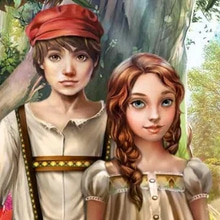
Sweet Treats starts with one of those storybook setups that sounds charming for about ten seconds. Hansel and Gretel lose their way in the forest, then a beautiful trail of candy and chocolate appears in front of them like the world is trying to be helpful for once. Kiz10’s own page presents exactly that premise: the two children get lost while playing, find a delicious-looking path, follow it, and then realize they no longer know how to get back. That is already a great beginning because it carries the right kind of tension. It looks sweet. It feels wrong. And that contrast is where the whole game begins to work.
What makes Sweet Treats more interesting than a generic puzzle game is that it borrows from fairy-tale logic, and fairy tales are never truly safe even when everything is covered in sugar. A candy trail does not just mean temptation. It means danger disguised as comfort. It means curiosity getting louder than caution. So from the first moment, the atmosphere already has a strange pull to it. You are not walking into a bright little food game. You are walking into a puzzle adventure dressed in sweets, and that costume makes the mystery feel much more memorable.
That mood matters a lot on Kiz10. Browser puzzle adventures work best when the player instantly understands the hook but still feels a little uneasy about where it is going. Sweet Treats has exactly that energy. The setup is readable in seconds, but the implications around it feel much larger. A forest, lost children, candy, a way forward that looks too convenient. Nothing about that combination says “relax.” It says “keep going, but maybe don’t trust anything.”
🌲 The forest is soft on the eyes and dangerous everywhere else
A game like Sweet Treats lives or dies on atmosphere, and the forest setting is doing a lot of the heavy lifting. Kiz10 categorizes it as an adventure game with puzzle and room escape tags, which is a very useful clue about the type of experience it offers. This is not some fast arcade sprint through the woods. It is much more about exploration, clue-solving, and finding your way through a setting that keeps feeling more suspicious the longer you stay inside it.
That makes the forest more than a backdrop. It becomes the problem itself. Trees, paths, sweets, hidden details, strange spaces, and the lingering sense that the wrong object may matter far more than it first seems. Good puzzle adventures always teach the player to stop looking at scenery as scenery. In Sweet Treats, that lesson fits naturally. The world is built from temptation and confusion, which means observation becomes your only real weapon. You cannot simply run forward and expect things to fix themselves. You have to read the environment. You have to notice what is off.
And that is where the game becomes satisfying. The better you get at seeing the forest as a puzzle instead of a picture, the more the path forward begins to reveal itself. Little clues stop looking random. Sweet decorations stop feeling harmless. The setting starts behaving like a fairy-tale maze with logic hidden inside it. That shift from wandering to understanding is the real pleasure here.
🧩 Sugar on the surface, puzzles underneath
The title Sweet Treats sounds playful, but the actual gameplay category tells a more interesting story. Kiz10 places it in adventure, puzzle, and room escape territory, which means the real core is not food or decoration. The real core is problem-solving. That is a great twist, honestly, because it uses the sweetness of the premise as camouflage for a more thoughtful experience.
Puzzle games wrapped in fairy-tale themes tend to work especially well because the setting naturally supports mystery. A trail of candy is already a clue. A missing route home is already a problem. A childlike world that begins to feel dangerous is already a story. So the game never has to force meaning onto the player. The meaning is already there. You are helping Hansel and Gretel through a place that looks inviting but behaves like a trap. Every puzzle solved feels like a small act of resistance against that trap.
That gives Sweet Treats a stronger emotional pull than a generic hidden-object or room-escape title. You are not only solving because the game told you to solve. You are solving because there are children in trouble, the path home is gone, and the entire forest keeps whispering that something is off. A good browser adventure does not need massive stakes if the local stakes feel personal enough. This game has that.
🍫 Why fairy-tale danger always hits harder
There is a special kind of tension that only fairy-tale games can create. It is not the loud kind. Not machine guns, monsters jumping from ceilings, or giant explosions. It is quieter and somehow stranger. It comes from the feeling that the world is operating on symbolic rules. Candy means temptation. The woods mean getting lost. A beautiful path means you probably should not trust it. Sweet Treats benefits hugely from that language because it lets even simple scenes feel loaded with meaning.
And because the game is older in origin but currently listed as HTML5 on Kiz10, it also fits that classic browser-adventure style where atmosphere and concept do much of the work. It does not need giant mechanical complexity to stay engaging. It only needs a world that makes players curious enough to keep clicking, searching, and connecting clues.
That is exactly why this sort of game is easy to keep playing. You are always chasing the next piece of understanding. What happened here? Where does that path lead? Why does this object matter? How do these children get out? The answers pull you forward, and the sweetness of the setting makes the danger underneath it feel even sharper.
🕯️ The best part is the feeling of escaping the trap
At its core, Sweet Treats is a game about being lured somewhere and then trying to think your way back out. That is a very strong structure for a browser puzzle adventure. It gives the player a clean emotional arc. First, curiosity. Then confusion. Then suspicion. Then the gradual pleasure of solving the place and reclaiming control from it. Kiz10’s short premise already captures that full arc with surprising efficiency: Hansel and Gretel get lost, follow the candy path, and can’t find their way back.
That setup makes every small breakthrough feel important. A puzzle solved is not just progress for the sake of progress. It is another step out of a bad story. Another move away from the trap hidden beneath all the sweetness. And that is what gives Sweet Treats its charm. It is beautiful, strange, inviting, and just a little bit sinister without needing to become grim. It is a fairy-tale puzzle that understands the oldest trick in the book: the safest-looking road is often the worst one to trust.
For Kiz10 players who enjoy adventure games, room escapes puzzles, storybook mystery, and browser games with a darker fairy-tale edge, this one lands in a really nice sweet spot. It is gentle enough to feel approachable, but clever enough to stay in your head after the first few screens. Candy, chocolate, lost children, and a forest that clearly knows more than it should. That is more than enough to make the whole thing memorable.





 4.1 (5 votes)
 Share
Share
 Embed
Embed