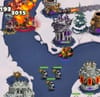
CROWNS, PANIC, AND A WALL THAT MUST NOT FALL 👑🏰
The King Of Towers 2 throws you into that classic fantasy nightmare where everyone expects the king’s defenses to hold… and you’re the one actually doing the holding. This is a tower defense strategy game, but it doesn’t feel like a sleepy “place a tower and go make coffee” situation. It’s more like a steady escalation of pressure where the battlefield keeps asking, “Cool plan. Can it survive the next wave?” Enemies don’t arrive politely. They swarm, they stack, they show up in mixed groups that force you to make decisions fast, and the moment you relax, something slips through and you feel your soul leave your body for half a second 😅
What makes it addictive is the way it balances calm planning with sudden urgency. One minute you’re thinking about economy, upgrade timing, and positioning. The next minute you’re staring at a chokepoint that’s getting chewed apart and you’re scrambling to fix it before your whole run collapses. It’s that satisfying kind of chaos where you learn by failing, then come back smarter, tighter, and a bit more stubborn.
THE MAP IS A PUZZLE THAT HATES YOU (IN A FRIENDLY WAY) 🧩🔥
A good tower defense game isn’t really about towers. It’s about routes. The King Of Towers 2 makes you think in paths and seconds. Every enemy step is a countdown. Every bend in the road is an opportunity. Every open lane is a mistake waiting to happen. Early levels lull you into confidence, like “oh, I can handle this.” Then the game starts layering threats. Faster enemies. Tougher ones. Mixed waves where the small quick units distract you while the tanky ones soak damage and keep marching like they’re late for a meeting.
You’ll find yourself obsessing over tiny details: where do enemies bunch up, where do they spread out, where can you keep them under fire the longest. A strong defense doesn’t just hit hard, it hits for a long time. It turns the path into a slow cooker. And the moment you start thinking like that, you stop playing randomly and start playing like a commander who actually wants to win.
TOWERS FEEL LIKE TOOLS, NOT DECORATIONS 🗼⚙️
The fun part is building your “personality” through your tower choices. Some towers feel like reliable workers, consistent damage, always doing their job. Others feel like specialists, the kind you place when you’re trying to solve a specific problem, like fast units slipping through or big enemies refusing to die. The game rewards you for combining roles instead of spamming one tower type and praying. Pure damage looks great until you realize you have no control. Pure control looks clever until you realize nothing is dying fast enough. The sweet spot is a defense that feels like a system.
And upgrades are where the addiction really kicks in. Upgrading isn’t just “bigger numbers.” It’s momentum. It’s that feeling of turning a barely surviving defense into something confident. You’ll remember the moment you finally upgrade the right tower at the right time and suddenly a wave that used to crush you just melts. It’s like flipping a switch from panic to dominance 😈✨
GOLD MANAGEMENT IS THE QUIET BOSS FIGHT 💰🧠
Here’s the truth nobody wants to admit while playing: the real enemy is often your own spending. The King Of Towers 2 is full of tempting upgrades, and it’s easy to blow your gold early because it feels good to power up immediately. Then the mid-game arrives, the waves thicken, and you realize you upgraded the wrong thing or upgraded too wide instead of deep. Now you’re underpowered right when it matters.
The game rewards players who treat gold like strategy fuel. Sometimes the best move is not building a new tower at all. Sometimes it’s upgrading one key tower that anchors your entire defense. Sometimes it’s saving for a critical moment so you can respond instantly when a new threat appears. It creates that delicious tension: spend now and feel safer, or save and risk getting punished, but unlock a stronger response later. You’ll make the wrong call sometimes. That’s normal. That’s how this genre teaches you.
WAVES THAT FEEL LIKE STORIES ⚔️🌪️
A great run in The King Of Towers 2 feels like a mini war chronicle. The early phase is scouting and setup, laying down your foundation and learning the enemy rhythm. The middle phase is pressure and adjustment, where the game forces you to refine your plan instead of sticking to a script. The later phase is survival drama, where the screen starts filling, the timing windows shrink, and you’re locked in that focused state where you barely blink because you’re watching for the one crack that will ruin everything.
And when bosses or heavy units show up, the entire mood changes. Suddenly it’s not about handling a crowd, it’s about stopping a threat that refuses to go down. You’ll feel the difference immediately. Your towers that looked strong a minute ago suddenly feel… small. That’s when placement and upgrade order matter most. That’s when you learn to keep a few “answers” in your build instead of only one type of damage. It’s tense, but it’s the good kind of tense, because when you win, you know exactly why you won.
THE “SECOND GAME” INSIDE YOUR HEAD 😅🎯
There’s a funny mental game that happens while you play: you start predicting your own mistakes. You’ll catch yourself thinking, “If I ignore this lane, I’m going to regret it,” and then you ignore it anyway because you’re greedy for an upgrade, and then you regret it exactly as predicted. Classic. But that’s also why it’s satisfying. You’re not being carried by luck. You’re improving your decision-making. Each retry is cleaner because you’re learning what actually matters on that map.
You’ll also develop personal habits. Some players build safe and steady, spreading defenses evenly. Others build a brutal kill zone, one terrifying choke point that everything must pass through. Both approaches can work, but the game encourages flexibility. When the enemy mix changes, your plan has to change. That’s what keeps it replayable. It’s not a single solution puzzle. It’s a living problem.
WHY IT FEELS SO GOOD ON Kiz10.com 🎮🏆
The King Of Towers 2 fits perfectly as a browser strategy game because it gives you meaningful progress without asking for endless commitment. You can play a few rounds, test a build idea, and feel that “okay, I got better” satisfaction quickly. Or you can sink in, chase cleaner clears, and push deeper until your defenses are a masterpiece of controlled violence.
If you like tower defense, castle defense, fantasy strategy, and that constant loop of building, upgrading, adjusting, and surviving, this game scratches the itch hard. It’s not just about placing towers. It’s about defending a kingdom with your brain, your timing, and your willingness to learn from chaos. And when you finally survive a wave that used to destroy you, it feels less like luck and more like authority. Like, yes, this tower stands because I decided it would 🏰🔥👑






 4.3 (45 votes)
 Share
Share
 Embed
Embed