👻 The house already knows you should not be here
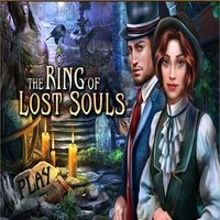
The Ring of Lost Souls has exactly the kind of title that makes a promise immediately: this is not going to be a cheerful little walk through a harmless old house. Kiz10’s page frames it as a haunted-house puzzle adventure where a family buys a house in the center of the city without knowing it has a dark history, and then goes looking for people who deal with the paranormal. It was released on Kiz10 on August 2, 2015 as a Flash browser game.
That setup is strong because it gives the game real atmosphere before you even click anything. A haunted house is never just a building in a game like this. It is a machine for secrets. Every room feels suspect, every object feels like it may be hiding something, and every silence feels slightly too intentional. That is where The Ring of Lost Souls gets its grip. It is not trying to win you over with speed. It wins with unease. With curiosity. With that excellent feeling that the next clue might solve a mystery or make the whole situation ten times worse.
And honestly, that is exactly what a browser ghost puzzle should do. It should make you stare a little longer at ordinary objects. A lamp is not just a lamp. A painting is not just decoration. A cabinet is not merely furniture. In haunted hidden-object games, everything carries the possibility of meaning, and that possibility is what keeps the player moving.
🕯️ The real enemy is what you failed to notice
At the heart of The Ring of Lost Souls is the slow, satisfying pressure of observation. Kiz10 classifies it with puzzle-oriented tags, and the description leans into the paranormal mystery around the house rather than direct combat or action. That means the challenge is not about reflexes. It is about seeing properly. Which sounds easy until the room fills with creepy details and your brain starts making bad decisions.
That is the great trick of haunted puzzle adventures. They force you to become suspicious of everything. You stop looking at the house as scenery and start reading it like evidence. Why is that object there? Why does that corner look wrong? Why does this room feel like it wants me to notice one thing while hiding another? A good hidden-object mystery does not only ask you to search. It asks you to search with intent.
And that makes every breakthrough feel personal. When you find the needed clue, open the blocked path, or connect two details that looked unrelated before, it is not loud or explosive. It is sharper than that. More intimate. The house was keeping a secret, and for one brief moment, you were smarter than it.
🔍 Haunted houses are just puzzle boxes with better lighting
What makes this game appealing is how naturally the haunted-house theme supports puzzle design. A normal room can hold clues. A haunted room can weaponize them. It can make harmless objects feel threatening, ordinary spaces feel loaded, and every discovery feel like part of a larger curse you are slowly peeling back layer by layer.
The Ring of Lost Souls seems built around exactly that kind of structure. The premise on Kiz10 is not about surviving a monster chase. It is about entering a house with a long reputation for shadows and strange sounds, then dealing with the paranormal mystery inside it. That gives the game a stronger mood than a generic hidden-object title. It is not only about finding things. It is about finding them inside a place that already feels wrong.
That difference matters. It turns each clue into part of a story instead of just another checkbox on a puzzle list. The game stops being “spot the item” and becomes “understand what happened here.” That is a much richer kind of tension. It makes progress feel meaningful.
💀 Why ghost stories make puzzles better
A puzzle game can be satisfying on logic alone, sure. But add restless souls, a cursed house, and a family that clearly made a terrible real-estate decision, and suddenly the logic has flavor. Horror flavor. Mystery flavor. The kind that makes even slow gameplay feel dramatic because the context around every interaction is unsettling.
That is one of the nicest things about The Ring of Lost Souls. Even in its older Flash-era format, the concept carries weight. Haunted-house adventures do not need huge systems when the atmosphere is doing this much work. A locked space plus a buried secret plus paranormal hints is already enough to keep the player engaged. Kiz10’s description gives that core clearly: this house was avoided, neighbors heard sounds and saw shadows, and now someone has to deal with what lives inside.
There is also something deeply satisfying about a game that lets fear and curiosity coexist. You want to move forward, but you also know the next room may answer a question with three new problems. Great mystery games live on that trade. So do haunted-house ones.
🏚️ The house is the story
The strongest haunted puzzle games always understand one thing: the location itself must matter. The house cannot just host the story. It has to be the story. The Ring of Lost Souls has that advantage built in. Its entire premise revolves around a specific house that nobody wanted, a place already marked by rumors and fear before the player arrives.
That means every clue found inside the building feels tied to the place instead of floating loose in a generic spooky backdrop. The walls remember something. The rooms are holding onto it. Your job is not merely to search objects but to decode the logic of the haunting. That gives the game a nice slow-burn pull. You are not rushing through a haunted attraction. You are peeling open a curse.
And that is why a game like this stays interesting even without fast action. It lets the tension come from space, implication, and discovery. Every room is a question. Every object is a possible answer. Sometimes the answer is useful. Sometimes the answer just makes the silence feel worse. Both are valuable.
🌘 Why this one sticks
The Ring of Lost Souls works because it combines three things that fit together perfectly: a cursed house, a paranormal mystery, and puzzle-focused exploration. Kiz10’s official page makes the premise clear and confirms the release date, platform support, and Flash technology. The rest is atmosphere, and atmosphere is exactly where this kind of game becomes memorable.
For players who enjoy haunted-house adventures, hidden-object mysteries, and browser puzzle games with a creepy edge, this is the right kind of title. It is not trying to overwhelm you with noise. It wants to pull you into a house that already has a reputation, then make you earn every answer one eerie clue at a time.
That is the real charm of The Ring of Lost Souls. Not speed. Not spectacle. Just a cursed houses, a buried story, and the constant feeling that the next discovery might finally explain everything — or make the whole place feel even more haunted.





 Share
Share
 Embed
Embed