📡 Quiet game, loud brain activity
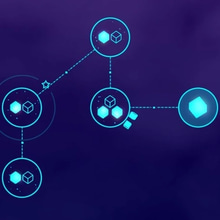
Transmission is the kind of puzzle game that looks almost too calm to be dangerous. A few circles, a few lines, a clean board, soft glowing signals, and the illusion that everything will be simple. Then the first level asks you to build a network properly, and suddenly the whole experience becomes a sharp little argument between your planning skills and the board in front of you. The strongest public descriptions all agree on the core identity: Transmission is a minimalist puzzle game about creating communication networks by connecting transmitters and receivers and moving information through increasingly complex layouts.
That setup is exactly why it works so well. It removes almost everything except the important part. No giant story. No noisy spectacle. No fake urgency screaming at you from the edges of the screen. Just the puzzle itself. The official descriptions specifically note that there is no score and no time pressure in the way many arcade games use them. Instead, the challenge comes from pure structure: can you connect the right nodes, route the information correctly, and make the network actually function without wasting your moves or breaking the flow?
🧠 Not action, not trivia, just elegant problem-solving
The heart of Transmission is not speed. It is clarity. Reviews and official pages consistently describe the game as one where each level represents a communication network, and your job is to make the right links so information can travel where it needs to go. Some descriptions explain it through circles that transmit and squares that receive, while others frame it more generally as weaving connections across a growing system. Either way, the real challenge is the same: understand the structure first, then solve it cleanly.
That design choice makes the game surprisingly satisfying. A lot of puzzle games try to impress the player with complexity too early. Transmission does something smarter. It keeps the rule set clean and lets the difficulty come from the layouts themselves. That means every solved level feels earned instead of accidental. You are not guessing. You are reading the board, seeing patterns, anticipating bottlenecks, and slowly turning a messy system into something elegant. It is the kind of game that makes you feel intelligent in a very quiet, very dangerous way. Dangerous because once one level clicks, you immediately want the next one.
🔗 Why connecting things feels so good
There is a very specific pleasure in puzzle games where the board visibly transforms from confusion into order. Transmission thrives on that feeling. The official descriptions repeatedly emphasize building communication networks and sending information across them, which means every level starts as a problem of separation and ends as a system that finally makes sense.
That visual payoff matters. A good puzzle game does not only tell you that you succeeded. It shows you. The lines align, the network comes alive, the signal flows, and suddenly the whole board looks like it was always meant to work that way. That kind of feedback is beautiful because it rewards logic with visible harmony. It is not loud, but it is deeply satisfying. And when you fail, the opposite is just as clear. A weak connection here, an overloaded path there, one missing route in the middle, and the board quietly informs you that no, this network is still a mess.
🌐 A puzzle game with real thematic identity
One thing that makes Transmission stand out from generic abstract puzzles is that the theme actually matters. The official Loju and Science Museum pages both explain that the game was created around the communication networks of modern life and tied to the Science Museum’s Information Age gallery. That gives the puzzles a stronger identity than “move shapes until they fit.” You are not just drawing lines because lines are fun. You are creating systems, routes, transmissions, and networks that reflect a real-world idea.
That thematic layer helps the game feel smarter without becoming heavy. It gives the minimalist design a purpose. The nodes and paths are not abstract decoration. They represent communication, flow, connection, and capacity. That makes the whole experience more memorable because the puzzle mechanics and the visual language support each other. A game like this could have been cold or sterile. Instead, it feels clean, modern, and strangely alive.
✨ Minimalism doing all the heavy lifting
Transmission’s minimalist style is not only an aesthetic choice. It is part of the design philosophy. Official descriptions and reviews keep returning to the same idea: the controls are simple, the presentation is stripped down, and the challenge comes from understanding increasingly complex boards, not from fighting messy interfaces.
That is a huge reason the game fits so naturally into browser play. When a puzzle game is this readable, you can enter quickly and get straight to the good part. No wasted steps. No clutter. No confusion about what the level wants from you. You see the nodes, you understand the task, and then the real work begins. This also makes the game excellent for replayable short sessions. One board. One clean problem. One solution you almost see. That “almost” is what keeps players locked in. The board is never shouting. It is simply sitting there, quietly waiting for you to prove you deserve the answer.
📈 The slow, sneaky rise in difficulty
Transmission also benefits from its level structure. The official App Store and Science Museum pages mention 70 levels, 146 stars, and 7 unlockable worlds, which tells you immediately that the game is not about one repeated puzzle. It is about escalation. More systems, more complexity, more conditions, more pressure on your ability to think in layers.
That kind of progression is ideal. It means the game can start accessible and then gradually become much more demanding without ever betraying its own rules. The player is not overwhelmed with nonsense. They are trained. First you learn to connect. Then you learn to optimize. Then you learn to think ahead. Then the boards start asking for actual elegance, not just survival. That is when the game becomes really sticky. You are no longer solving levels because the rules are new. You are solving them because your brain now wants cleaner and smarter answers.
🎮 Why Transmission belongs on Kiz10
Transmission fits Kiz10 extremely well because it has the exact traits that work on the site: instant readability, strong replay value, clean skill expression, and a concept simple enough to understand immediately but deep enough to stay interesting. It also lines up naturally with Kiz10 puzzle players who already enjoy route-building, grid logic, and minimalist challenge games such as Roll the Ball, Simple Squares, and Glowgrid. Those Kiz10 pages show a clear appetite for elegant, space-conscious puzzle solving rather than only loud arcade action.
From an SEO angle, the fit is strong too. Transmission naturally matches searches like network puzzle game, minimalist logic game, connection puzzle, communication puzzle game, and route-building brain game. The name is clean, the identity is distinct, and the gameplay has enough originality to stand apart from generic shape puzzles. It is one of those titles where the simplicity is not a weakness. It is the reasons the whole thing feels so sharp.
🧩 Final thoughts from someone who definitely overcomplicated a simple board
Transmission works because it trusts intelligence and presentation equally. The official sources consistently describe it as a communication-network puzzle game built around connecting systems, transmitting information, and solving increasingly complex layouts across dozens of levels and multiple worlds.
If you like puzzle games that feel calm on the surface but gradually reveal real depth, Transmission is a great fit. It is clean, clever, and beautifully unforgiving in that very specific way only minimalist puzzle games can be.



 4.5 (7 votes)
 Share
Share
 Embed
Embed


