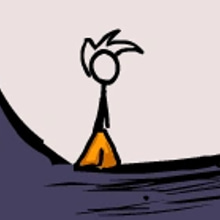
Some stories begin with a prophecy. This one begins with a pair of ridiculous yellow pants and a door that refuses to mind its own business. Yellow Pants is a graphic adventure where curiosity is the real key, and every room looks like it escaped from an art book that fell asleep mid sentence. You aren’t sprinting or shooting. You’re looking, prodding, listening to tiny hints a clock gives off when it stutters or the way a painting seems to face slightly left as if it’s embarrassed to be caught telling the truth. You click, you think, you grin when a solution feels both absurd and inevitable, and then the next door opens to a world that doesn’t bother explaining itself until you’re already in love with it.
🗝️ The First Door And The Joke It Plays On You
You start in a hallway that is too quiet, the kind of quiet old museums pretend is respectful. The pants are there, bright as a warning sign, and the first puzzle is simply admitting you’re going to wear them. The door won’t open because the lamp is off, but the lamp won’t turn on because the fuse is missing, and the fuse is inside a music box that only sings when you line up three shapes that don’t match on purpose. It sounds unfair. It isn’t. Yellow Pants teaches by nudging. The scratch on the wallpaper lines up with the music box lid. The song stutters exactly when the lamp flickers. You get it, and the door agrees. Somewhere, a tiny choir of satisfied neurons claps.
🧩 Clicks With Meaning Not Noise
Point and click adventures live or die on the honesty of their clues. Here, every object earns its screen time. A teacup isn’t just a teacup; it’s a weight that balances a lopsided scale to reveal a hidden latch under the table edge. A cracked mirror is a map because the cracks mimic the streets on the painting you ignored a minute ago. Nothing is pixel-hunt cruel. You won’t drag a rubber chicken across twenty screens praying it becomes important. You will, however, learn to zoom with purpose, to trace the faint ring a key left on wood, to tilt your head just enough that a mural’s nonsense resolves into a door code you’ll pretend you knew all along.
🎒 The Inventory That Feels Like a Pocketful of Stories
You never carry clutter for long. Items arrive with personality and leave with closure. A tin whistle that only plays one note turns out to be the exact frequency a glass door hates. A length of yellow thread looks like branding until it becomes a lifeline for a floating kite that refuses to come down without polite negotiation. Each solve writes a tiny anecdote you can retell. Remember when the umbrella wasn’t for rain but for catching moths because their glow inks a map if you let them kiss the page The best adventures feel like clever theft—borrowing an object from its obvious job and convincing it to do something noble or ridiculous.
🚪 Worlds Behind Doors And Why They Don’t Match
Every door swings into a tone shift. A sunlit studio where paint drips in slow motion. A street where traffic moves only when you’re not looking. A library whose shelves rearrange themselves like shy dancers; you learn their rhythm and ride it to the book that keeps whispering your name. The mismatch is the point. You stop asking for realism and start asking for rules, then realize the rules are always about paying attention. If a world speaks in reflections, you watch puddles and glass. If a world speaks in sound, you count beats and notice that the clock skips a second every time you step on a blue tile. The game never shouts, but it never mumbles either. It hums, and you learn the melody.
🧠 Puzzles That Respect You Even When They Giggle
Difficulty climbs with your confidence, not against it. Early riddles train you to observe; mid game puzzles braid observation with inference; late game chains ask you to trust two or three steps ahead without losing the thread. When you fail, the feedback is readable. The cabinet clicks almost but not quite. The dial stops at the right number but the needle sulks because something upstream is wrong. Hints exist, but they feel like winks rather than lectures. A cat poster changes expression if you’re close. A wind chime answers in a different key when only one part of a solution is correct. That kind of conversational design keeps pride intact.
🎭 A Protagonist With Pants And A Personality
You won’t deliver monologues about destiny, but your inner voice leaks into the margins. Small observations appear at the bottom of the screen, half commentary, half diary. This doorknob feels smug. The sky here is the color of lemons nobody ordered. A statue looks like it’s waiting to apologize. The tone is playful without turning the world into parody. When the adventure wants to be sincere, it is. When it wants to be odd, it delivers a violin that meows because the bow is a cat tail and somehow that helps a lock that responds to vibration. You’ll tell that story later and people will nod like that’s normal.
🎨 Art You Can Read Like A Puzzle
Visuals lean graphic and clean, with strong outlines that beg to be traced and colors that do quiet work. Yellow isn’t just an accent; it’s a breadcrumb, a path your eyes learn to follow through cluttered rooms and busy streets. Shadow placement hints at depth you can step into. Textures suggest material—metal that would ring, fabric that would rustle—so you can guess how an object should behave before you click. Even the UI belongs. Inventory sits like a row of stickers on a suitcase. Tooltips appear as handwritten notes, quick and friendly, then disappear before they overstay.
🎵 Sound That Solves Things
You can close your eyes and still play well. A hollow knock tells you a panel hides space. A wooden box hums at a lower pitch when the marbles inside rest on the correct side of a hidden divider. A distant train horn becomes a metronome for a riddle that needs a five beat loop. Music stays light, a little whimsical, then goes tender during the memories that slip through as you progress. There’s a story about why these doors exist, and audio carries it when text stays quiet. Footsteps change on different floor types and you will notice because an echo gives away a secret passage you didn’t earn with sight.
📖 A Destiny That Isn’t Loud But Feels True
Yellow Pants pretends it’s about pants. It’s about choosing where to look when a room overwhelms you. It’s about patience that feels like play. The thread running under the worlds speaks to leaving—leaving a house, a habit, a version of yourself that thought certainty was comfort. When the final lock clicks and the last door opens on the destination the intro teased, you don’t cheer. You exhale. The game doesn’t bow. It nods. You understand why the worlds grew stranger as you learned to trust your own eye. You step through, not because the story told you to, but because curiosity finally turned into courage.
🪄 Little Habits That Make You Brilliant
Take one slow pan before you touch anything. Notice what glows naturally versus what glows because it wants attention. Try combining items you’ve already used once; this world loves second careers. If a clue seems obvious, write it down anyway—obvious turns slippery after two new rooms. When stuck, switch senses; listen rather than look, or count instead of read. Most of all, allow yourself to laugh when a solution is delightfully silly. Humor is the handshake the designers offer when you meet them halfway.
📱 Clicks That Feel Like Fingers Not Menus
Controls are simple because they want to disappear. Click to interact, click and hold to inspect, drag to combine. On touch screens, a long press invites a closer look without bouncing to a full screen panel. The cursor changes shape just enough to keep you informed but never so much that it becomes a neon sign. Accessibility flips help—high contrast outlines for key objects, optional text cues on sounds for players who need them, gentle zoom without motion sickness tricks. It feels like the game is cheering for you without ever spoiling the punchline.
🌙 Why You’ll Open One More Door Before Bed
Because the worlds are small poems you get to finish. Because every solve is a polite magic trick that leaves you feeling clever rather than fooled. Because the art and audio cooperate instead of competing. Because the writing respects your time and your curiosity. Because the yellow thread becomes a companion and you’ll miss it when the credits arrive. Mostly, though, because the next door is right there, and it’s winking at you like it knows a joke you’ll enjoy telling tomorrow.



 4.5 (128 votes)
 Share
Share
 Embed
Embed


