🏴☠️💥 The ocean is calm, the cannons are not
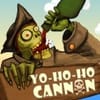
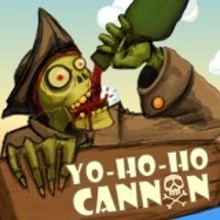
Yo-ho-ho Cannon is the kind of game that smiles at you with pirate charm, then immediately asks you to calculate angles like your treasure depends on it. You’re on a ship, you’ve got a cannon, and there’s a target across the water that absolutely needs to be reduced to splinters. It sounds simple until you realize this isn’t “shoot the thing once and move on.” This is physics. This is timing. This is watching a cannonball bounce in a way that feels unfair until you admit, quietly, that you aimed like a chaos goblin. And that’s the fun. On Kiz10, it lands as a classic aim-and-shoot puzzle where every shot is a decision, every miss is a lesson, and every perfect hit feels like a tiny pirate miracle. 😈🧠
🎯⚓ Aiming feels easy… right up until it matters
At the start, you’ll probably play it like most people do: drag, aim, fire, laugh, repeat. Then the levels start being clever. Targets hide behind structures. Enemies sit in awkward spots that beg you to curve a shot. Platforms stack in ways that suggest a weak point, but only if you can actually hit it. Suddenly you’re not just aiming, you’re planning. You’re thinking about ricochets and fall angles and whether hitting the bottom support will make the top collapse, or just wobble like it’s mocking you. The game teaches you quickly that “close enough” is not a strategy. A cannonball has a personality, and that personality is consequences.
💣🌊 The best hits are the ones you don’t overthink
There’s a funny balance in Yo-ho-ho Cannon: think too little and you waste shots; think too much and you hesitate yourself into a mess. The sweet spot is that confident half-second pause where you read the structure, pick the weak point, and commit. Because once you fire, you don’t get to negotiate with the cannonball mid-flight. It’s already doing its dramatic arc over the sea like it’s in a pirate movie trailer. And when it connects? Oh, that crunch. The satisfying pop of wood breaking, the little cascade of pieces, the target going down in a way that looks planned even if you were honestly just hoping. 😅💥
🪵🧨 Structures are puzzles wearing pirate costumes
A lot of cannon games are secretly demolition puzzles. This one lives in that space. Targets aren’t just sitting in the open waiting for you. They’re supported by beams, balanced on blocks, tucked behind obstacles, or stacked in ways that scream, “Hit me here if you’re smart.” You start to learn the language of fragile architecture. A thin support means “collapse potential.” A heavy block means “don’t waste a shot on me unless you want heartbreak.” A narrow gap means “try a precise shot or stop pretending you’re brave.” And the game rewards that learning curve. Your first clears might be messy. Later clears start looking clean, almost elegant, like you’re conducting a destruction orchestra with one cannon and a questionable moral compass. 🎻💣
🧠🦜 The pirate brain: greedy, stubborn, and weirdly strategic
What makes the experience addictive is how it turns you into a problem-solver without asking permission. You’ll miss a shot and instantly replay the whole scene in your head: if I aim slightly higher, the ball lands on that ledge; if it lands there, it rolls into the support; if the support breaks, the target drops. It becomes a chain of “if-then” thoughts, but delivered in a playful pirate wrapper so it never feels like homework. You’re not studying physics, you’re doing pirate engineering. And pirate engineering is mostly confidence plus explosions. 🏴☠️😎
🔥🎬 Chain reactions are the real treasure
The greatest feeling in this game is when one shot triggers a sequence that looks like you planned it all along. The cannonball hits a block, the block slides, something tips, the tower collapses, and the enemy goes down because gravity finally decided to be on your team. Those moments hit harder than any trophy screen. You’ll sit there for a second with that quiet satisfaction like, yep, I’m basically a genius. Then the next level humbles you instantly by putting the target behind something annoying. Classic.
😬⏱️ When timing becomes the sneaky boss fight
Not every shot is just angle and power. Sometimes timing matters because objects move, structures settle, or your best window is a brief moment where everything lines up. You’ll learn to wait. Not for long, just enough to let a swinging piece drift into the right spot, or to let a wobble stop so your shot doesn’t bounce weirdly. That waiting is tense, because your brain wants to fire now, now, NOW. But the game rewards patience. It’s like the cannon is teaching you discipline while wearing a pirate hat. Very rude. Very effective.
😈💥 The comedy of failure is part of the charm
You will do dumb things. You will take a “cool” shot that misses by one pixel and ruins everything. You will aim at the obvious weak point and discover it’s not weak at all, it’s just decorative. You will fire too hard and send the cannonball flying into nothingness like it’s trying to escape responsibility. And somehow, those failures don’t feel punishing. They feel like slapstick. You try again, you adjust, you get better. The game is fast like that. It doesn’t trap you in long downtime. It keeps you in the loop: see the puzzle, take the shot, watch the result, learn, repeat. 🔁💣
🗺️⚓ Levels that feel like tiny pirate scenes
Each stage has that “little diorama” vibe, like you’re firing across a miniature battlefield. Sea between you and the target, structures on the far side, sometimes multiple threats, sometimes one stubborn setup that refuses to break the way you want. It stays interesting because the game isn’t just raising difficulty by making enemies tougher, it’s raising difficulty by making the geometry nastier. That’s the right kind of challenge for a cannon puzzle: smarter layouts, trickier angles, more opportunities to be clever… or to embarrass yourself in spectacular fashion.
🧩💎 Getting good feels visible, not theoretical
One of the best things about Yo-ho-ho Cannon is how obvious your improvement becomes. Early on, you spend shots like you’re paying for therapy. Later, you start clearing stages efficiently. You stop aiming at targets directly and start aiming at what holds them up. You choose shots that control where pieces fall. You start thinking about “second impacts” and “follow-through” like you’re playing billiards with explosives. And it feels great because it’s earned. You didn’t unlock skill with a menu, you built it by missing and adapting.
🏴☠️✨ Why it fits Kiz10 so well
This is exactly the kind of Kiz10 game that shines in short sessions but accidentally steals your time. Quick levels, quick restarts, satisfying destruction, and that constant temptation to replay a stage just to do it cleaner. If you like pirate themes, cannon aiming, physics puzzles, and the sweet feeling of turning one well-placed shot into a whole collapsing mess, Yo-ho-ho Cannon delivers that fantasy. Aim with confidence, fire with commitment, and enjoy the moments the enemy fort realizes it should have invested in better support beams. 💥🏴☠️







 4 (7 votes)
 Share
Share
 Embed
Embed