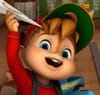
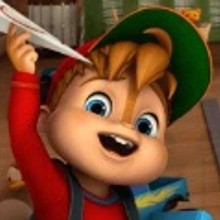
✈️ Launch, lift, and a grin You pinch the paper at the spine, breathe, then let it go. Not a throw, exactly, more like an invitation to the air. The plane tilts its nose, finds something invisible in the hallway, and glides as if the school itself just exhaled. Alvin’s voice is faint and excited somewhere behind you, but your eyes are busy tracing the curve you didn’t plan and now absolutely must protect. Cannon fire and boss roars belong to other games; here the drama is measured in centimeters and timing. One smooth arc past a poster, a brush with a ceiling fan that wakes the wings, then a neat dip through a glowing ring that rewards confidence with a happy chime. You don’t muscle a paper airplane. You suggest. The sky—this borrowed stripe of indoor air—does the rest.
🌬️ Air currents, friendly conspirators At first you’re sure the building is still, and then the game starts teaching you how wrong that is. The cracked window at the end of the corridor does subtle work, pulling everything forward like a polite usher. The ventilation grille hums and becomes a tide you can surf if you catch its edge. Even the long row of lockers turns the hallway into a narrow river that speeds your glide if you stay centered. Suddenly every room has weather. Music classroom drafts rise when the air resonates. The science lab burps odd little gusts from a duct over the sinks. Somewhere a fan decides it loves you, and when you meet it right, it lifts the plane as if a giant hand said up we go.
🎯 Rings, stars, and secret lines Score objects are not just decorations. They are invitations to draw better curves. Rings hang just far enough apart to make you doubt and then reward your refusal to panic. Stars hang in rude places that bully your aim into timing rather than power. The floor is a jealous magnet, the ceiling a scold, and yet the perfect line exists, like a chalk sketch only you can see. Sometimes you aim above the first ring, let gravity write the second half of the sentence, and watch the third ring catch you right on the period. Sometimes you skim a bulletin board so closely a pushpin seems to nod permission, then drift into a window glow that turns one clean glide into a small, triumphant story.
📚 School turned airfield Classrooms feel like levels, but they play like habitats. The library is quiet and exacting, full of narrow aisles where a glider’s patience outperforms a dart’s bravado. The gym is rude and generous, offering long, honest air and then demanding a last second pitch change to avoid the backboard. Hallways are practice tracks, lovely in their predictability until a rogue draft near a stairwell reminds you that predictability is an illusion. Even the art room has personality; paper scraps on a table flutter just enough to warn you when a cross breeze is about to shove your nose off course. You don’t memorize rooms so much as learn their moods.
🧠 Folds that change the handwriting The plane you launch is not a fixed identity. A sharp dart cuts crosswinds like a pencil line, decisive and unforgiving. A broad wing glider floats long enough to apologize for your late corrections. A tiny weight at the nose turns mushy aim into tight authority, while a mild tail crease quiets twitchiness without stealing your agility. It feels less like upgrading and more like handwriting practice, each fold a new way to write your name in the air. You’ll keep a favorite for the library and another for the gym, not because stats told you to, but because your hands did. When a fin tweak suddenly carries you through a three ring chain you kept missing, it’s hard not to whisper there you are.
🎮 Controls you forget on purpose Touch, tilt, keys; the game doesn’t care what you choose as long as you treat inputs like feathers, not hammers. The best corrections are tiny, the kind you feel in your wrists more than see on the plane. A quick nudge to arrest a wobble. A delayed tap to let a gust finish pushing before you reclaim the line. You learn to wait a heartbeat longer than seems wise, then act once. Spamming inputs makes the plane angry. Patience makes it elegant. When you catch yourself barely breathing on a perfect glide, you’ll realize your body understood the rules before your brain wrote them down.
🌈 Playful chaos, earned grace Disaster is funny in this world, and recovery is even funnier. You will ping off a protractor, pick up a neon sticky note on the wing like a stubborn badge, and still manage to tumble through a ring you were sure you’d lost. The game is generous with second chances that feel like first rate improvisation. Yet the clean runs are the ones you remember. The flawless library thread where you never touched the keys. The gym sweep that started too high and somehow turned into a buttery S-curve. When chaos happens, you laugh. When grace happens, you glow. Both are worth playing for.
🪄 Tiny habits with oversized payoff Aim a hair above ring one so gravity settles you into ring two. Approach fans from slightly below; let the updraft press the belly, not slap the nose. If a star sits behind a bookshelf lip, bank off the endcap at a shallow angle instead of wrestling a climb. Launch on the inhale of a gust, not the exhale. If landings skid, add the smallest tail crease and pretend you meant to engineer brakes from the beginning. None of these are rules. They’re gossip you learn by eavesdropping on the air. Soon they become instinct, which is both suspicious and delightful.
🔊 The sound of paper and pride This isn’t a wall of noise. It’s a collage of rustle, flutter, hush. Rings sing in a scale that stacks into a chorus when you nail a chain, and that chorus somehow makes the hallway feel like an audience that actually cares. The soft whoomp of a window draft has weight; the fan’s pitch tells you whether it’s helpful or hungry. Even the near silent glide before a perfect landing becomes a kind of music you chase, the quiet that makes the final chime land like a little medal pinned to your sleeve.
🗺️ Routes that become rituals You will find favorites. A late afternoon loop that starts in the art room, cuts through the hallway fan when it’s laziest, and finishes with a cocky drop through the library’s low ring. A gym routine that demands one aggressive nose dip followed by a long, smug coast. These routes become small rituals you revisit whenever a new fold or tiny tweak begs to be tested. Your scrapbook isn’t just badges. It’s the lines you kept repeating until repetition turned into style.
🤹 Kid friendly, pilot serious Everything looks approachable, and it is. Bright shapes, readable targets, gentle feedback. But beneath the cheerful surface the game treats you like a pilot. It assumes you can learn to read air, that you’ll notice the way a poster lifts when the draft strengthens, that you’ll remember the difference between a helpful breeze and a pushy one. It’s friendly without being simple, which is why both younger and older hands end up grinning at the same impossible ring that suddenly wasn’t.
🏁 Why you keep folding Because improvement is visible. Yesterday you hurled the plane and hoped. Today you launch softly and steer a single clean idea from door to window like a sentence with perfect punctuation. Because rooms that felt fussy now feel like friends with familiar quirks. Because the best moments are quiet and skillful and a little absurd. And because somewhere between the second classroom and the noisy stairwell you realize this is a small game that teaches a large calm: look, wait, nudge, trust. When the last ring sings and the plane kisses the landing spot without drama, Alvin whoops and you smile at nothing in particular. You fold another sheet without thinking. One more run. One more line only you can see, and the air, very politely, ready to hold it.







 Share
Share
 Embed
Embed