🏛️ Dust, ruins, and the uncomfortable feeling that one stone is lying to you
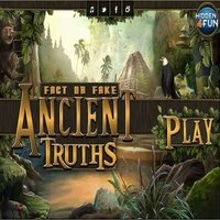
Ancient Truths has the kind of title that already sounds older than your patience. You click expecting a calm little puzzle, maybe some faded temples, a few cracked statues, some archaeologist energy, and then the game quietly traps you in that ancient ritual known as staring at two almost identical images until your brain starts negotiating with pebbles. That is exactly why it works.
This is the sort of puzzle game that does not need explosions or frantic movement to get under your skin. It only needs two scenes that look almost the same and one tiny difference hiding with the confidence of a seasoned criminal. Suddenly a peaceful ruin becomes a battlefield for your eyesight. A carved column looks normal until it doesn’t. A torch feels innocent until you notice one flame is missing. A statue hand changes shape and now your whole afternoon belongs to archaeology whether you like it or not.
Ancient Truths feels built around that delicious tension. It takes old civilizations, forgotten structures, dusty secrets, and the idea of ancient myths, then turns them into a visual puzzle where observation becomes everything. Not speed, not brute force, not luck. Just pure attention. The kind that starts calmly and ends with you squinting at the screen like a historian who has seen too much.
🗿 Two images, one truth, and several personal betrayals
The beauty of a good difference game is how quickly it becomes personal. At first, it seems simple. Two ancient scenes. Compare them. Find what changed. Easy. Then five seconds pass and one broken tile absolutely refuses to reveal itself. Now it is not a casual game anymore. Now it is a matter of pride.
Ancient Truths likely thrives on exactly that emotional shift. One minute you are relaxed, admiring old buildings, carved stone, mysterious ruins, maybe the sort of place where a secret door should definitely exist. The next minute you are arguing internally with a decorative vase because one version has a line on it and the other does not. Puzzle games do this so well. They turn tiny visual details into full dramatic events.
And because the setting leans ancient and archaeological, the whole challenge feels richer than a random picture comparison. Ruins are perfect for this genre. They are full of patterns, cracks, symbols, shadows, statues, ornaments, pillars, and suspiciously important little objects. Every corner can hide a mismatch. Every little engraving can become a clue. The environment itself almost wants to fool you.
That is the charm. The game does not scream for attention. It just waits for your eyes to make one mistake, then another, then another, until the final difference finally appears and you feel like a genius who has conquered history itself 😄
🔍 Why old ruins make visual puzzles so much more fun
Some settings are just better for puzzle games, and ancient ruins are one of the best. They carry mystery naturally. Even before the game begins, the atmosphere already feels loaded with secrets. You expect hidden meanings, strange symbols, forgotten architecture, and little details that matter more than they first appear. That mood makes every puzzle feel heavier in a good way.
Ancient Truths benefits from that instantly. The title alone suggests buried knowledge, myths, relics, maybe old cities untouched by time. When a game like that asks you to find differences, it does not feel random. It feels thematic. It feels like observation is part of the adventure. Like you are not simply spotting mistakes in two images, but uncovering clues inside something older and more important than it first looked.
That does a lot for immersion. Suddenly you are not just playing a browser puzzle. You are scanning a forgotten place, trying to understand what changed, what belongs, and what looks wrong. The archaeologist fantasy sneaks in so quietly you barely notice it. Then you are fully invested in whether that column had four marks or five.
And yes, that sounds ridiculous. That is why it is good.
🧠 Calm on the surface, chaos in the brain
Games like Ancient Truths have a very funny way of looking peaceful while causing small internal meltdowns. The visuals are usually still. Beautiful, even. No enemies attacking, no timer exploding in your face, no giant monster chasing you through a hallway. Just ancient scenery and silence. And somehow that silence becomes intense because your brain is doing all the work.
That is where the game becomes strangely addictive. Observation puzzles create their own pressure. The more you look, the more every object starts feeling suspicious. A staircase becomes untrustworthy. A carved face becomes offensive. A torch, a stone, a window edge, a crack in the wall, all of them become possible traitors. You start scanning left to right, top to bottom, then back again, trying to outsmart a game whose entire job is making you doubt your own eyes.
And when you finally find the difference? Oh, that feeling lands perfectly. It is small, quick, but deeply satisfying. A little click in the brain. There. I knew something was wrong. I am magnificent. Then the next hidden detail humiliates you instantly, because puzzle games do not believe in letting pride breathe too long.
That rhythm is exactly what makes Ancient Truths so appealing. Quiet challenge. Visible progress. Tiny victories. Repeated embarrassment. Ideal.
🏺 Ancient myths, hidden details, and the pleasure of paying attention
The archaeological angle also helps the game feel more imaginative than a plain comparison puzzle. Ancient places always suggest stories. Who built this city? What happened here? Why does everything look both beautiful and slightly cursed? Even if the gameplay is simple, that backdrop adds depth. You are not staring at random furniture in a bland room. You are looking at symbols, ruins, forgotten architecture, and echoes of a world that feels older than you.
That sort of setting invites curiosity. You do not only want to solve the image. You want to keep looking at it. And that matters. A difference game is better when the artwork itself is interesting enough to deserve your attention. Ancient Truths sounds like exactly that kind of visual puzzle, one where the scenery does part of the heavy lifting by making you want to scan every carved edge and shadowed corner.
There is also something oddly satisfying about how this genre rewards slowness. In most games, going slow feels like weakness. Here, it feels smart. Careful eyes win. Impulsive clicking loses. Patience matters. That makes the game a nice change of pace. It respects focus. It turns concentration into the whole experience.
🌄 Why it fits so well on Kiz10
Kiz10 is a great home for games that can pull you in fast without needing ten minutes of setup, and Ancient Truths fits that perfectly. The idea is immediate. Compare the images. Find the changes. Keep going. But the ancient theme gives it enough personality to stand out from a generic puzzle title. It feels more atmospheric, more curious, a little more mysterious.
If you enjoy spot-the-difference games, hidden detail challenges, ancient ruins, archaeology themes, and casual brain games that test your concentration without overwhelming you, this one makes a lot of sense. It has that perfect browser-game quality where you think you will play one scene and then somehow stay longer because the next image looks even more suspicious than the last.
In the end, Ancient Truths succeeds because it understands the power of small details. Not giant mechanics. Not endless noise. Just two old scenes, a handful of hidden mismatches, and the slow, addictive joy of proving your eyes still work under pressure. It turns forgotten cities into puzzle boards, ancient myths into observation tests, and tiny visual lies into something weirdly thrilling. On Kiz10, that makes it the kind of game that feels calm from a distance and wonderfully evil once you begin.



 4 (5 votes)
 Share
Share
 Embed
Embed