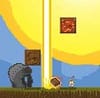
☀️ The whole mission begins with a single beam of light
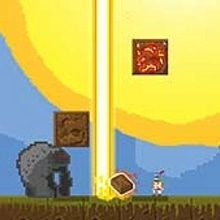
Bring the Sun has one of those titles that already feels bigger than it looks. It sounds hopeful, almost heroic, but also a little desperate, like light itself has become something fragile that must be carried, protected, and used carefully before the world slips into something colder. Kiz10’s own page frames the game very clearly: you control a powerful ray of sunlight, destroy dangerous enemies with the power of the sun, and keep a brave knight safe at the same time. That is such a strong premise because it immediately turns light into action. Not decoration. Not background. The sun becomes the actual mechanic, the force you think with, move with, and fight with.
That idea alone gives the game a really distinctive pulse. Most puzzle adventures ask you to move a character through danger. Bring the Sun seems to split that responsibility in a clever way. The knight matters, but the sunlight matters just as much, maybe more. Suddenly you are not only guiding someone through a level. You are shaping the space around them. That changes everything. A corridor is no longer just a path. It becomes a place where light can save, expose, or clear danger. An enemy is not just an obstacle. It is something the sun itself can deal with if you use it well.
And that is exactly why the concept works so nicely. Light already carries meaning in games. Safety, hope, visibility, energy, all of it. This game takes that natural symbolism and turns it into direct gameplay. The result feels immediately more magical than a standard puzzle platformer. You are not just advancing. You are bringing light with you, and that makes every level feel a little more alive.
🌞 The sun is not scenery here, it is the entire answer
The strongest part of Bring the Sun is probably how boldly it commits to its core idea. Kiz10 does not describe it as a generic action game with sunshine in the background. It specifically says you control a powerful ray of sunlight and use it to destroy dangerous enemies while protecting the knight. That means the puzzle and action layers are tied to the same source. Everything comes back to light.
That is great design for a browser game because it gives the whole experience a clean identity. You know what matters right away. The challenge is not going to be about a hundred unrelated systems. It is going to be about understanding how this light behaves, how the enemies react to it, and how to keep the knight safe while using the sun as both tool and weapon. That kind of focus usually leads to much stronger levels because every problem can be built around one idea used in new ways.
And because light is such a flexible thing in puzzle games, the possibilities naturally feel interesting. A beam can clear danger. It can illuminate a route. It can become protection. It can also create timing pressure, because if you control the sunlight, then every moment of positioning probably matters. Bring the Sun sounds like the sort of game where a small movement changes the entire scene. One slight adjustment, and the knight is safe. One good angle, and the enemy is gone. One delayed reaction, and suddenly the whole room looks much less friendly.
That relationship between precision and protection gives the game a surprisingly heroic feel. You are not simply solving abstract problems. You are guiding survival with light, which is much more dramatic than moving blocks around a room.
🛡️ Protecting the knight makes every puzzle feel personal
A lot of puzzle games are smart but emotionally cold. Bring the Sun avoids that because it gives the player someone to care about. Kiz10’s page specifically mentions keeping a brave knight safe, and that detail matters. It turns the whole experience from “use the mechanic correctly” into “use the mechanic to protect someone.” That gives every choice a little more weight.
The knight becomes the center of the mission, but not in the usual way. He is not necessarily the sole actor. In a strange and very appealing twist, the sunlight feels almost like the real hero while the knight becomes the reason the mission matters. That creates a very different emotional structure. You are not only attacking. You are shielding. Escorting. Making the world survivable. That makes success feel warmer, more purposeful.
It also means that enemies can never just be treated as decorations. If they are dangerous to the knight, they become urgent. Suddenly the battlefield has responsibility in it. The puzzle cannot be solved lazily because the goal is not only reaching an exit. It is preserving someone all the way through. That gives the game a nice tension. You are balancing offense and care, destruction and guidance, sunlight and survival.
And honestly, that is a really lovely fantasy. It feels almost mythic without needing a giant story speech. A knight in danger. Light as a weapon. Darkness pressing in through enemies and obstacles. The game practically writes its own atmosphere just from that relationship.
✨ Light-based games always feel a little magical
There is something naturally satisfying about controlling light in a game. It feels clean and powerful at the same time. Unlike brute-force mechanics, light suggests elegance. It lets a game be dangerous without becoming heavy. Bring the Sun seems to benefit hugely from that. Its action likely feels less like smashing through a wall and more like directing a force that already belongs to the world.
That matters because it gives the challenge a special texture. Light-based puzzles often feel more graceful than ordinary platform hazards. Even when the difficulty rises, the mechanic itself stays beautiful. You are not just avoiding trouble. You are transforming the scene with brightness. That is why games built around light often stay memorable. The solution usually looks good when it works. It feels right.
Bring the Sun also sounds like it could create those lovely little moments where a level suddenly makes sense because you understand how the sunlight should flow through it. One second everything feels threatening. The next, you move the beam correctly and the whole room shifts from danger to possibility. Those are some of the most satisfying puzzle moments there are. Clarity arriving literally as light. That is a pretty powerful image for a browser game.
And because the theme is so strong, the game does not need overcomplicated writing to feel meaningful. Light already carries emotional weight. Players instinctively understand why bringing it matters.
⚔️ The enemies make the sunlight feel stronger
Kiz10 explicitly says the sunlight is used to destroy dangerous enemies, which is a crucial detail because it prevents the game from becoming only passive puzzle-solving. The beam of sunlight is not just a safety lamp. It is a force that can fight back. That gives the whole adventure more momentum.
Action matters in games like this because it keeps the puzzle mechanic from becoming too quiet. If enemies are part of the level, then every successful use of light feels active and rewarding. You are not just maintaining conditions. You are reclaiming space. Clearing threats. Making a route possible. That makes the sunlight feel more substantial, more heroic.
And since the enemies are described as dangerous, they help shape the tension of the levels. A dangerous enemy near the knight changes how urgently you think. The beam is no longer just a cool mechanic. It is the immediate answer to a problem. That urgency is important. It keeps the game lively and gives every scene more narrative energy.
A level with enemies, a knight, and a controllable beam of sunlight is not just a puzzle board. It is a tiny myth in motion. One wrong move and darkness wins a little. One right move and the whole scene brightens, literally and figuratively. That kind of design is very easy to get invested in.
🌄 Why Bring the Sun feels bigger than a simple browser game
Bring the Sun stands out because it builds everything around a striking central image: a powerful ray of sunlight protecting a brave knight and destroying enemies. That comes directly from Kiz10’s own description, and it is more than enough to give the game a memorable identity.
It also fits perfectly with the kind of browser game that players remember. The mechanic is easy to describe, the stakes are clear, and the atmosphere writes itself. You are guiding light through danger. You are keeping hope alive in practical form. That is much more elegant than a generic puzzle challenge. It gives the game flavor, purpose, and a visual idea strong enough to stick in the mind.
So expect moments of brightness and pressure, a few rooms where the answer feels beautifully simple once you see it, and a few others where the knight’s survival suddenly feels like a much bigger responsibility than you expected. That is part of the appeal. The game should make you feel clever, but also just a little noble.
On Kiz10, Bring the Sun feels like a light-based puzzle adventure with real personality because it turns sunshine into strategy, protection into gameplay, and one beam of light into the whole reason the journey matters. Sometimes that is all a game needs. A brave knight, a dark world, and one brilliant answers cutting through it.



 3.8 (7 votes)
 Share
Share
 Embed
Embed