Dust on the horizon and a promise of trouble 🌵⚔️
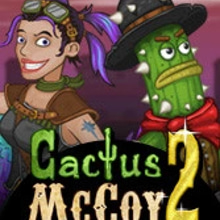
The desert doesn’t whisper. It rasps. Wind drags grit across old tracks, a bell clanks somewhere far off, and a silhouette steps onto a ridge with the sun at his back. Cactus McCoy hasn’t shed the thorny curse, and honestly, he wears it like a badge now. In Cactus McCoy 2 you feel that first crunch of sand, the creak of a wooden bridge, and the rhythm of a game that wants your hands busy and your eyes nosy. A treasure’s been stolen, a friend’s been wronged, and the only way this goes is forward through canyons, rooftops, mines, jungles, and the kinds of rickety platforms that make you grin when you stick the landing.
Hands on the moves that matter 🎮💥
Movement is snappy with a forgiving arc that invites risky jumps and stylish recoveries. You’ve got a roll that slips under rude projectiles, a jump with useful hang time, and a three hit string that feels like a handshake before the real brawl starts. Weapons define your mood per room. Punching bare knuckles? Crisp and fast. Rusty dagger? Nimble with a cheeky backstab window. Heavy mallet? Slower, but it erases problems and sends bandits into comedic flips. Firearms click with a frontier swagger—limited ammo, loud payoff—so you learn to treat them as punctuation marks rather than paragraphs. The trick is flowing: swap on the fly, cancel a recovery into a roll, and chain a ledge grab into an aerial smack that drops you exactly where the gold coins scatter.
Enemies you read like wanted posters 🤠📜
The baddies aren’t just HP bars shuffling toward your patience. Miners telegraph big swings with a shoulder hitch you’ll learn to punish. Knife bandits lunge after a feint that looks like a sneeze. Shield bruisers force angle play—pop them from behind after a hop or bait a charge into a wall. Ranged pests love perches, but their aim gets cocky; a tiny sidestep and a thrown bottle and they’re part of the scenery. Mid bosses are short exams rather than brick walls. Watch one pattern, steal a turn, and keep your feet honest. When a room fills with mixed types, the fun becomes triage: who ruins your route if you let them live, and which weapon turns the whole math in your favor.
Levels that breathe like old pulp comics 🗺️🧭
Every stage spins a new flavor without abandoning the heartbeat. A canyon town stacks balconies like ladders and hides coins in signposts you didn’t trust at first. A vine choked ruin asks for patience—swing, release, kick off, repeat—while traps blink like mischievous eyes. Rail segments snap you into chase mode, asking for clean jumps and a cool head when crates dare you to get greedy. Secret alcoves loop behind waterfalls and in the bellies of broken idols; you’ll hear the soft chime of treasure and feel your path curve, because detours are the real main roads in games like this. The camera respects you, framing action wide enough to plan but tight enough that hits still feel personal.
Upgrades that make bad ideas good ideas 🔧💰
The coin trail isn’t just a score; it’s a conversation with your future self. Spend early on survivability so mistakes cost a giggle instead of a restart. Invest next in damage where you actually play—if you favor blunt instruments, don’t pretend you’re a knife dancer; if you toss every spare weapon, buy the perk that boosts throws and lean into chaos. Mobility perks quietly transform the map: a faster roll, a longer grab radius, a kinder landing window. Suddenly a route that felt fussy becomes a playground, and your brain starts inventing speed lines where none were obvious. That’s the best kind of progression—the kind you measure in routes and confidence.
Secrets, challenges, and the joy of detouring 🗝️🧩
Posters in town hubs hint at challenge badges—beat a stage using only thrown weapons, find all hidden caches, juggle a bandit for an embarrassing number of hits without touching ground. Optional routes hide behind breakable walls that look suspicious only after you learn the language: a hairline crack, a different tile color, a miffed crow that refuses to perch. You’ll start replaying levels not because you must but because you want to see if that impossible coin ring is actually polite once you bring the right perk. And when you finally thread a trap hallway with zero bumps, you’ll swear you hear the map nod.
Combat that rewards rhythm more than memorization 🥊🎶
It’s easy to mash early. It’s smarter to listen later. Light light heavy to confirm spacing, roll through a counter, pop a launcher, switch to a spear mid combo to keep a goon airborne, then chuck the spear into the next guy because waste is a choice. Weapon durability means nothing if you finish a fight two seconds faster and take zero damage. Distance is a story you tell the room—keep ranged fools at the end of nouns, whisper sweet nothings to shielders from behind verbs. When you start playing like that the streets feel cooperative, and even mean rooms turn into choreography.
Set pieces you’ll brag about later 📣🔥
A mine cart breakneck sprint where you duck lanterns, hop gaps, and tackle a foreman on the run like the panel of a comic that forgot physics. A rooftop chase in a dusk orange town while signs crack and birds scatter, ending in a leap that lands on a hanging banner and swings you into a balcony punchline. A jungle idol that wakes, throws the map into slow motion with falling debris, and gives you exactly one dignified lane to sprint through while bandits panic. There’s spectacle here, but it trusts your inputs, which is why it plays as well as it looks.
Tiny habits that turn scrapes into style points 🧠✨
Roll through the last frame of an enemy swing to land behind them without burning stamina on a jump. Approach shielders on diagonals, not straight lanes. Throw depleted weapons—zero durability isn’t useless if it bonks someone into a pit. Grab coins as pathing decisions, not chores; they often point at safe arcs. If a room feels nasty, leave one weak enemy alive to farm a tiny rhythm while you reposition, then finish tidy. And when in doubt, punch once and watch. The first second tells you everything.
Writing, art, and the grin of pulp adventure 🎨📚
Cactus McCoy 2 looks like a Saturday matinee poster that can move. Thick lines, bold contrasts, and a palette that swings from sun baked gold to jungle jade to candlelit blues. Animations sell weight without clutter, and the UI gets out of the way except to celebrate with a wink when you do something silly but glorious. The music is a jaunty partner—acoustic twang, snare tick, small brass flourishes—that never drowns the satisfying thwack of a club or the comic boing of a spring platform.
Why it sings on Kiz10 🌐💙
Platformers thrive on immediacy. Kiz10 drops you at the edge of the first roof in a click. Input feels crisp in the browser, and performance stays smooth even when the screen fills with coins, crates, and cartoon chaos. It’s perfect for a two level coffee break or an evening where you chase secrets you told yourself you’d ignore. Favorites keep your progress close. The site’s frictionless loop—play, upgrade, replay—turns “one more run” into a habit you’ll defend with a smile.
A last fist bump before the road goes on 🌅🛤️
McCoy isn’t cured, not yet. But he’s found purpose in the thorny in-between. Help a friend. Steal a treasure back from a villain who monologues too much. Learn the map until the map loves you. When the credits roll you’re not done, because you saw three cracks you didn’t explore and a challenge poster you’re definitely ready to tear down. Cactus McCoy 2 is that rare blend of clean mechanics and playful swagger that makes you feel clever, brave, and a little dusty—in the best way. Saddle up. There’s a bell to ring and a bandit to trip.



 2.5 (377 votes)
 Share
Share
 Embed
Embed


