🎭🌌 Welcome to the calmest place that absolutely isn’t calm
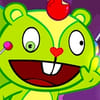
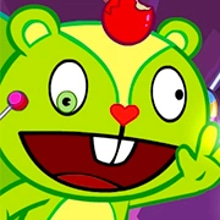
Calm HTF drops you into a theater that feels too big, too quiet, and way too full of characters who refuse to behave like normal background extras. The stage lights are soft, the seats stretch out like an endless grid of “somebody sat here and never left,” and you—an oddly brave little visitor—realize the exit isn’t the real goal. The real goal is getting through this place without losing your patience, your sense of direction, or your faith in humanity’s ability to sit still for five seconds. It’s a point-and-click adventure puzzle game, which sounds gentle, but the moment you start clicking around you understand: the calm is a mask. Under it, the theater is a puzzle box with opinions. On Kiz10, it plays like a slow-burn mystery where every tiny interaction can be the difference between progress and wandering in circles, muttering “I swear I already checked this” like it’s a prayer.
🖱️🔍 Click… listen… click again… and suddenly you’re a detective
The controls are simple, almost suspiciously simple. You explore, you interact, you pick up objects, you combine ideas in your head, and you solve little problems that open bigger paths. It’s not about reflexes. It’s about attention. Calm HTF rewards the player who actually looks at the environment instead of speed-running through it like a caffeinated tourist. You’ll be scanning corners, clicking on odd details, and testing interactions just to see what the game considers “important.” And when something works, it’s not a loud explosion of success. It’s a quiet “oh… that changed something,” the kind of subtle shift that makes your brain lean forward.
You’ll also catch yourself doing the classic point-and-click ritual: clicking everything that looks even slightly clickable, then pretending it was strategic the whole time 😅. But the game is clever about it. It doesn’t just hide items randomly; it encourages you to understand what the characters want, what the space is trying to block, and what the next key to progress might be.
😶🌫️🪑 The seats are full of problems wearing cute faces
The theater is packed with personalities, and they aren’t there to be decorative. Many characters need help, and the twist is that help doesn’t always mean “give them the obvious thing.” Sometimes it means noticing what they’re stuck on. Sometimes it means finding a missing object that turns their mood from stubborn to satisfied. Sometimes it’s a tiny chain reaction: you help one character, which changes access somewhere else, which unlocks a clue you didn’t even know you needed. The game feels like you’re untangling a knot made of small favors and weird requests.
And here’s where Calm HTF gets that special vibe: it feels oddly gentle in tone, but the puzzles don’t treat you like you’re half-asleep. You’re meant to think. You’re meant to try something, fail softly, then try again with a new angle. The characters are the fuel. They turn a simple escape structure into something more social, like the theater itself is a community of stuck moments that you’re slowly fixing one by one.
🔑🌟 Seven keys, seven moods, one door that keeps haunting your imagination
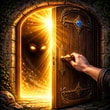
The objective that ties everything together is deliciously clear: collect seven keys. Not one. Not two. Seven. Each key feels like a little promise that the Starry World door isn’t just decoration. It’s real. It’s waiting. And the game uses that goal like a lighthouse. Whenever you feel lost, you remember: keys. Color, value, progress. Find them. Earn them. Unlock that final path.
What makes it satisfying is that the keys don’t feel like random collectibles. They feel like proof. Proof that you solved something, helped someone, noticed something you could’ve missed. Each time you snag one, the theater becomes a little less intimidating and a little more readable. You start building a mental map. You start remembering who needed what. You start feeling like you belong there, which is funny, because the whole place still feels like it could swallow your afternoon if you get careless.
🧠🧩 Puzzle pacing that doesn’t rush you, but also doesn’t babysit you
Calm HTF is the kind of puzzle game that respects slow thinking. It doesn’t slam a timer in your face to manufacture urgency. Instead, it creates a different pressure: curiosity. You want to see what’s behind the next door. You want to know why that object is highlighted. You want to understand what that character is hinting at with their weird little request. The theater becomes a chain of “almosts,” where you’re constantly one step away from a solution, and that one step is usually hiding behind a detail you overlooked because you were too confident.
There’s a nice balance between searching and solving. You’ll do some classic hidden-object style scanning, but it doesn’t feel like a pure scavenger hunt. The environment has logic. The interactions have purpose. When you get stuck, it usually means you haven’t connected two pieces of information yet, not that the game decided to be unfair. And when you finally connect them, you get that clean, satisfying click in your head where the room suddenly makes sense 💡.
🎬✨ The atmosphere: cozy, eerie, and a little bit dreamy
Even though it’s a puzzle escape game, Calm HTF carries this dreamlike mood. A “calm theater” sounds safe, but in games, calm often means “something is waiting.” Here, what’s waiting isn’t a jump scare. It’s the next puzzle. The next locked path. The next character who needs you to fix a small problem so they can finally be happy. That creates a gentle tension, like walking through a quiet building at night where nothing is chasing you… but you still whisper to yourself anyway.
And the Starry World idea gives everything a soft cosmic pull. You’re not just escaping a building; you’re earning a trip somewhere brighter. That contrast—dim theater to star-filled door—makes the goal feel magical, like the end isn’t just “freedom,” it’s a reward with a different color palette in your imagination 🌌.
😅🗝️ The real challenge: staying organized inside your own head
If you’ve ever played point-and-click games, you know the true villain isn’t the puzzle. It’s your memory. Calm HTF gently tests how well you can keep track of tiny details. Who needed what? Where did you see that locked spot? Did you pick up the item already or are you imagining it? You’ll have moments where you feel brilliant, then moments where you realize you walked past the solution three times because you were focused on the wrong corner of the room. That’s not failure. That’s the genre. That’s the delicious pain of adventure puzzles 😭.
What helps is the game’s steady structure. It’s not random chaos. It’s a sequence of problems that become manageable once you slow down and treat every area like it contains at least one important clue. The theater becomes less like a maze and more like a checklist in your brain—except you’re not writing the checklist down, you’re just carrying it around like a fragile little egg and hoping you don’t drop it.
🏁🌠 Why Calm HTF feels so replayable on Kiz10
Calm HTF is perfect for players who love escape games, point-and-click adventures, and puzzle exploration that feels like you’re helping a strange little world heal itself. It’s not about being fast. It’s about being curious and methodical, with occasional bursts of “wait… that worked?!” energy. On Kiz10, it’s the kind of game you can start casually and then realize you’re deeply invested in collecting every key because the Starry World door has become personal. You don’t just want to finish. You want to finish clean. You want to make everyone happy. You want to prove you can solve a calm puzzle game without turning into a frantic clicking machine. You probably will turn into a frantic clicking machine anyway. But hey… that’s part of the charm 😈🎭🔑



 4.5 (39 votes)
 Share
Share
 Embed
Embed