🏴☠️⚓ Welcome aboard… try not to look innocent
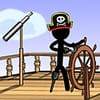
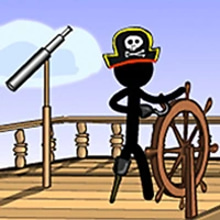
Causality Pirate Ship drops you onto a wooden deck that looks almost peaceful at first. Sea breeze, ropes, barrels, a few stickmen pirates strolling around like they’re late for a very tiny treasure meeting. And then you remember what kind of game this is. You’re not here to help them. You’re here to orchestrate a sequence of “accidents” so perfectly timed that nobody sees anybody else die. It’s a cause-and-effect puzzle game with a pirate costume, and it’s deliciously mean in the best way.
On Kiz10, it plays with that instant browser rhythm: you load in, you stare at the scene, and your brain immediately starts whispering ideas like a gremlin strategist. What happens if I click that rope? What if the barrel rolls? What if the trap triggers when that pirate turns away? The ship is basically a small stage set, and every object is either a tool or a trap pretending to be scenery. The fun is figuring out which is which, then threading the needle between “deadly” and “discreet.” Because deadly is easy. Discreet is the entire game.
👀🫣 The rule that makes everything stressful and hilarious
The no-witness rule is what turns Causality Pirate Ship into a real puzzle instead of a random click-fest. You can create the perfect chain reaction and still fail because one stickman pirate glanced over at the wrong second like a nosy neighbor. That’s the pain. That’s the magic. You don’t just solve physics, you solve attention. You’re managing sightlines, timing, and patrol paths like you’re directing a silent, unhinged little stage play.
And it creates this funny psychological shift. At first you’re thinking, okay, I need to eliminate them all. Five seconds later you’re thinking, wait, who is watching whom? Which pirate is the biggest snitch? Which one turns around randomly like the game coded them to ruin my day? You start treating every character like a security camera with feelings. You’ll catch yourself muttering stuff like, buddy, please just keep walking, don’t stop there, don’t you dare turn around… and when they do, of course they do, you sigh like someone betrayed you personally 😭
🪢🧨 Clicks, traps, and pirate ship dominoes
This is a point-and-click chain reaction game, so your hands aren’t doing complicated moves. Your mind is. You click an object and set something in motion. A rope releases. A crate shifts. A cannon does something extremely cannon-like. Then you watch the effect unfold, and the ship becomes a machine you’re trying to operate without being seen operating it.
The best levels feel like building a domino line in your head. Not literally dominoes, but that same satisfaction when you imagine the sequence before it happens. Step one isolates a pirate behind a wall. Step two triggers a hazard when another pirate is safely facing away. Step three creates a distraction so the next “accident” looks like bad luck instead of a plan. When it works, it’s clean, almost elegant. When it fails, it’s usually because of one tiny detail you didn’t respect, like a pirate pausing half a second longer than you expected. That’s the game’s whole personality: tiny details with big consequences.
And the pirate theme really helps the vibe. A ship is full of moving parts. Tight spaces. Ladders. Platforms. Things that swing. Things that roll. Things that look stable until they absolutely are not. It’s the perfect environment for cause-and-effect puzzles because you can believe anything could go wrong on a ship. A loose rope is believable. A rolling barrel is believable. A sudden chain reaction of chaos? Honestly… also believable on a pirate ship 🏴☠️😂
⏳🧠 The real weapon is patience (annoying, but true)
If you rush, you lose. Not because the game is slow, but because observation is your currency. The smartest move in Causality Pirate Ship is often doing nothing for a moment. Watching the patrol patterns. Noticing who pauses, who turns, who walks into a blind spot, who climbs a ladder at the same time every loop. The scene is like a little clockwork toy. Once you see the rhythm, you can place your actions inside it.
That’s also why retries feel fair. When you fail, you usually understand why. A witness. Bad timing. Wrong order. You don’t feel robbed, you feel caught being impatient. And then you go again, but this time you wait a beat longer, or you trigger the first trap earlier, or you eliminate the “watcher” pirate before the complicated part. It becomes this loop of tiny improvements, which is the best kind of puzzle loop because it doesn’t rely on brute force. It relies on learning.
There’s a sneaky joy in that learning. The level stops feeling like chaos and starts feeling like a plan you own. You start predicting reactions. You stop clicking randomly. You’re basically writing the level’s script, and the pirates are just acting it out… poorly… because they’re doomed… sorry little guys 😬
🧭⚔️ A pirate puzzle that feels like stealth without sneaking
What’s weirdly cool about Causality Pirate Ship is that it feels like a stealth puzzle game even though you never “control” a character walking around. Your stealth is your timing. Your hiding is line-of-sight management. Your “silent takedown” is a chain reaction that happens when nobody’s looking. That’s why it hooks people who like logic puzzles and people who like stealth games. It’s stealth as a brain exercise.
And it’s also a dark comedy. The stickman style keeps it light, even when the outcomes are dramatic. You’re not playing a serious horror story. You’re playing a mischievous puzzle where every failure looks like slapstick fate. The ship becomes a cartoon tragedy machine. You’ll fail in ways that make you laugh against your will, like wow, that was not my plan, but it was… spectacular. Then you reset and try to make it spectacular in the correct order.
🎮🌊 Why it belongs in your Kiz10 puzzle rotation
Causality Pirate Ship is perfect for quick sessions because each stage is self-contained. You can hop in, solve a couple of levels, feel clever, and leave. Or you can get trapped in that stubborn mindset where you refuse to quit because you were so close. The game loves “almost.” Almost timed it. Almost hid it. Almost cleared the deck. Almost. And almost is a dangerous word because it makes you hit restart immediately.
If you’re into pirate games, stickman games, point-and-click puzzles, and anything that rewards clever cause-and-effect thinking, this one scratches that itch hard. The ship is a puzzle box. The pirates are movings pieces. Your job is to turn the whole scene into a perfectly timed sequence of disasters that nobody witnesses. Easy to describe. Brutal to execute. Extremely satisfying when you finally nail it 😈⚓
So take a second before you click. Watch the deck. Identify the watcher. Imagine the chain reaction like you’re drawing it in the air. Then commit. And if it fails, don’t panic. Just accept the truth: the pirate ship didn’t beat you… your impatience did 😅🏴☠️



















 Share
Share
 Embed
Embed