🌪️🏝️ The island doesn’t care who you are
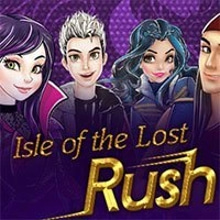
In Descendants – Isle of the Lost Rush, the first thing you notice isn’t the scenery. It’s the speed. The moment your run begins, the island feels like it’s actively trying to shake you off the path. One wrong step, one late jump, one tiny hesitation, and the game turns into that classic runner feeling: you’re not “playing slowly,” you’re surviving quickly. On Kiz10.com, it lands perfectly as a pick-up-and-go arcade runner where the real opponent is the obstacle rhythm and your own tendency to get greedy for coins.
This isn’t a calm stroll through a storybook. The Isle of the Lost vibe is more like a constant dare. The track keeps pushing hazards into your lane, and you’re forced to make decisions in half-seconds. Do you stay safe and keep the run alive, or do you swerve for that tempting coin line and risk eating a trap? The game thrives on those micro-moments where your brain screams “GO!” while your instincts whisper “WAIT.”
🏃💥 Runner controls that feel simple until the pace climbs
The controls are clean and intuitive, which is exactly what a runner game should be. You’re moving forward automatically, and your job is to time jumps, dodges, and quick lane decisions to stay alive. Early sections feel manageable, almost friendly, like the game is letting you warm up. Then the tempo starts rising. Obstacles arrive faster. Gaps appear closer together. Your margin for error shrinks, and suddenly you’re playing with full focus.
What makes it satisfying is how skill-based it becomes. When you fail, it usually feels like a real mistake, not random bad luck. You jumped too early. You committed to a bad lane. You chased coins without checking what was coming next. That’s why replaying feels good: every new attempt has a clear reason to be better than the last one.
🪙✨ Coins, score, and the “one more” curse
Coins are more than a collectible here. They’re a psychological trap. The game places them in clean lines to guide your movement, and your brain naturally starts following the shiny trail. That’s where most runs die. Because the coin line often leads you into risk, and risk is how the island wins.
But the coins also make the run feel rewarding even when you don’t last long. You’re constantly getting small wins, small progress, small bursts of satisfaction. Score attack games live on that loop. You don’t need to “finish a campaign” to feel like you accomplished something. You just need a better run than your last one. A longer distance. A cleaner sequence. A stretch where you dodged everything without panicking.
And once you start chasing improvement, the game becomes personal. You’ll remember the exact obstacle that ended you. You’ll restart just to prove you can clear it. Then you clear it and immediately crash two seconds later because you celebrated too early in your head. Classic runner behavior.
⚡🧠 The real skill is reading the next two seconds
Good runner players don’t stare at their character. They stare at what’s coming. In Isle of the Lost Rush, that mindset matters a lot. The track gives you information, but it gives it fast. You need to scan ahead, spot the safe lane, and commit early instead of reacting late. Late reactions turn into clipped hits, awkward landings, and messy recoveries that slow you down and set up the next failure.
You’ll also learn to recognize “bait patterns.” A long coin chain that seems safe, but ends at a hazard. A jump that looks easy, but lands you in a tight follow-up obstacle. The game is full of these little setups that punish autopilot. If you treat every segment like it’s trying to trick you, you’ll survive longer.
🎭🏆 The vibe: chaotic, colorful, and surprisingly tense
The fun of this game is how it mixes playful energy with real pressure. The visuals and theme keep it light, but the gameplay rhythm is sharp. You’re constantly balancing speed with safety, and the best runs feel like a flow state: jump, land, dodge, collect, repeat. When you hit that flow, you stop thinking in words and start thinking in timing.
Then a new obstacle combo appears and breaks your rhythm instantly, forcing you back into full attention. That push-pull is what keeps the game exciting. It’s not just “run forever.” It’s “run until the island finally finds the one pattern you didn’t respect.”
🧩🔥 How to survive longer without losing the fun
If you want better runs, aim for consistency over hero moments. Big risky moves look cool, but consistent safe movement wins high scores in the long run. Let coin lines go if they pull you into danger. You’ll earn more coins by staying alive longer than by risking everything for one shiny chain.
Try to keep your movement calm. When you start panicking, your inputs get bigger and messier, and that’s how you drift into hazards you could have avoided. Calm decisions are faster than frantic ones. If you’re approaching a tricky section, commit to a lane early, jump with confidence, and focus on landing cleanly, because messy landings are where the next obstacle catches you.
Most importantly, don’t tilt. Runner games punish tilt hard. One mistake makes you chase harder, chasing makes you make worse choices, and suddenly you’re stuck in a loop of short runs. Take one breath, reset, and treat each attempt like a fresh clean shot.
🌟🏁 Why it’s a great Kiz10 runner
Descendants – Isle of the Lost Rush fits Kiz10.com perfectly because it’s instant action with real replay value. It’s easy to start, but it rewards practice. Every run teaches you something, every run can be cleaner, and the score-chasing loop keeps pulling you back. If you like endless runner games, obstacle dodging, quick reflex challenges, and that addictive “I can beat this score” feeling, this is exactly the kind of rush that keeps your hands moving and your brain locked in.





 Share
Share
 Embed
Embed


