🤖🪐 A small robot, a big switch, and gravity that can’t mind its own business
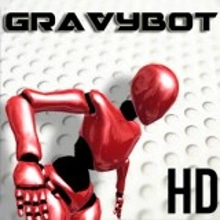
GravityBot HD drops you into a clean sci-fi space where everything looks calm, metallic, and slightly too quiet. And then you make your first move and the whole place reveals what it really is: a gravity playground built to test your nerves. You’re controlling a little robot that can mess with gravity, which sounds like a superhero power until you realize you still have to land correctly, time your flips, and not get turned into scrap by a laser that has absolutely no sense of humor. On Kiz10, it plays like a physics puzzle platformer where your brain is constantly doing tiny calculations without asking permission, the kind that go, “If I flip now I’ll stick to that surface, but if I wait half a beat I’ll avoid the beam… right?” and sometimes you’re right, and sometimes you discover what regret looks like in zero gravity. 😅
🧲⬆️ The core mechanic: falling upward like it’s normal
Gravity flipping is the heart of the game. You move through rooms that would be straightforward in a normal platformer, except the floor is optional and the ceiling is suddenly a valid life choice. One tap, one flip, and your robot clings to a different surface like gravity is a remote control you’re holding with sweaty hands. That changes everything. Jumps aren’t just jumps. They’re commitments. Every gap becomes a timing puzzle, because you’re not only deciding where to go, you’re deciding which direction “down” should be when you arrive.
And the best part is how clean it feels when it clicks. The moment you stop fighting the mechanic and start using it like a tool, the game becomes smooth in a satisfying way. You aren’t reacting late anymore. You’re setting up routes. You’re flipping early so you land already aligned. You’re moving like you planned it, even if five seconds ago you were bouncing around like a confused toaster.
🚧🔦 Rooms that feel like experiments with sharp teeth
GravityBot HD is built around compact stages, the kind that feel like puzzle boxes. You enter a room, you see platforms, hazards, maybe a moving obstacle, and you immediately know there’s a “correct” flow hidden inside the layout. The fun is digging it out. Some rooms want you to flip mid-air to avoid a hazard lane. Some want you to cling to a ceiling and crawl past danger that’s sweeping the floor. Some want you to bounce between surfaces in quick succession, like you’re doing a controlled panic dance.
What keeps it interesting is that the game doesn’t rely on one trick. It varies how it pressures you. Sometimes it’s precision. Sometimes it’s timing. Sometimes it’s that cruel moment where you can see the safe spot but you have to reach it through a moving hazard window that only opens for a blink, and your robot is drifting just a little too far because you flipped a fraction early. That’s when you start talking to yourself like a mechanic: “Okay. Again. But cleaner.”
⚡🧠 Gravity puzzles are really rhythm puzzles in disguise
You’ll notice something after a few levels. The best runs have rhythm. Flip, drift, land, move, pause, flip again. It’s not frantic button-mashing. It’s controlled timing. The game rewards calm hands and early decisions. If you wait until the last second to flip, you’re usually too late. If you flip too early, you land in the wrong lane and spend the next two seconds fixing a mistake you didn’t need to make. So you start aiming for that sweet middle: flipping at the moment that gives you the cleanest arc and the safest landing.
And yes, there’s a very specific type of satisfaction when you do a perfect chain. You flip to the ceiling, slide past a hazard, flip back to a side platform, then drop into the next section like you’re being pulled by invisible rails. The game suddenly feels effortless for a moment, like gravity is finally cooperating instead of arguing. Then the next room humbles you, because that’s the contract. 😄
🛰️🧩 The sci-fi vibe makes every move feel a little more dramatic
The setting matters. Gravity mechanics are already cool, but putting them inside a sterile space facility makes every flip feel like a controlled experiment. You’re not just platforming, you’re navigating a high-tech test chamber where the environment looks designed to measure your mistakes. The quiet atmosphere amplifies the tension. When you survive a tough section, it feels like you outsmarted the room, not just jumped over it.
There’s also that cinematic feeling you get when you drift through a tight gap and barely avoid something lethal. The camera isn’t screaming at you, the game isn’t throwing fireworks, but your brain is doing the soundtrack anyway. You’ll feel it in your shoulders when you exhale after a clean pass. You’ll feel it when you mess up and instantly know you flipped at the wrong beat.
😬🧷 The funniest failures are the slow ones
Some games kill you instantly and you’re like, okay, fair. GravityBot HD has the special talent of letting you watch your mistake unfold. You flip, you drift, you realize you’re not going to make the landing, and you have that awful half-second where you can see the outcome and can’t stop it. That’s painful, sure, but it’s also useful, because it teaches you exactly what went wrong. You don’t leave a failure confused. You leave it educated and slightly annoyed at yourself, which is honestly the perfect fuel for “one more try.”
🧊🕹️ The real skill: staying gentle with your inputs
Gravity games punish dramatic corrections. If you try to “save” a bad approach with a big last-second movement, you usually make it worse. The game wants you to be subtle. Small movement tweaks, early flips, cleaner arcs. It’s the difference between flailing and steering. Once you accept that, you start playing smarter without even meaning to. You begin scanning ahead instead of staring at your robot. You begin reading hazard patterns like they’re telling you a schedule. You begin waiting one tiny beat longer before flipping, because you learned that the room is timed, not random.
And then you get into the good zone. The zone where you’re not fighting gravity, you’re conducting it. The zone where every flip feels intentional and your robot moves like it belongs in this weird upside-down world.
🏁🌌 Why GravityBot HD is so easy to replay on Kiz10
It’s quick to start, quick to retry, and the improvement is real. You don’t win because you got lucky, you win because you learned the room. That makes it addictive in a clean way. Each level is short enough that you never feel stuck for long, but clever enough that you still feel proud when you solve it. If you like physics puzzles, platform challenges, gravity-flip mechanics, and sci-fi escape vibes, GravityBot HD hits that exact sweet spot where thinking and movement become the same things. You’ll fail, you’ll laugh, you’ll get better, and at some point you’ll pull off a perfect flip chain and feel like gravity finally stopped being a bully. For about five seconds. 😅🤖





 4.6 (19 votes)
 Share
Share
 Embed
Embed


