🟪🕵️♂️ Pixelated Panels and Loud Brain Noises
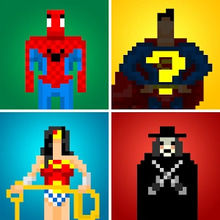
Guess The Pixel: Comics is basically what happens when someone takes your favorite comic-style characters, smashes them into chunky pixels, and then dares you to identify them before your confidence evaporates. It’s a guessing game, sure, but it’s also a weird little mind sport: part memory, part pattern recognition, part “why do I suddenly not know what a face looks like.” On Kiz10, it plays like a quick-hit puzzle quiz where every correct answer feels like a tiny victory lap and every wrong one feels like your brain slipping on a banana peel in public. 🍌😅
The first seconds are always the funniest. You load a new image and your mind instantly screams a name… then you realize the image is basically a colorful square soup. A red blob, a blue corner, a hint of yellow, maybe an eye, maybe a logo, maybe it’s just your imagination making promises it cannot keep. You stare. You tilt your head. You lean closer like the pixels will suddenly feel guilty and confess. And then, when the image sharpens or you unlock more clarity, you go “OH. Obviously.” Which is the most dangerous word in a game like this: obviously. 😭✨
🧠🔍 The Game Loop: Tiny Clues, Big Ego
At its core, Guess The Pixel: Comics is about taking a heavily pixelated picture and figuring out what it is. Sometimes the game lets you reveal more detail, sometimes it rewards correct guesses quickly, sometimes it pushes you to answer with limited information. Either way, the rhythm stays addictive: new image, quick scan, wild hypothesis, second scan, calmer thinking, then either a satisfying correct answer or a dramatic crash-and-burn where you realize you mistook a cape for hair and now you look ridiculous. 😂🦸
It’s perfect “short session” energy, but it has that trap door effect where one round becomes ten. Because the images are fast, the feedback is instant, and your brain loves the feeling of recognition like it’s candy. Every time you guess right, your mind gets that little spark: pattern solved, memory unlocked, dopamine delivered. 🍬⚡
And what makes the “Comics” flavor special is the kind of visual language it plays with. Comic characters usually have bold silhouettes, iconic color palettes, strong outlines, signature symbols, and exaggerated features. The game uses that against you. You’ll see a couple of colors and think you know the answer… but you don’t know if you’re seeing the character or just seeing the stereotype of the character. That difference is where the chaos lives. 😵💫
🎨🟦 Pixels as a Puzzle, Not a Filter
A lot of games use pixelation as a visual gimmick. Here it becomes the main obstacle. Pixelation hides detail, but it also forces you to look differently. You stop hunting for tiny facial features and start hunting for bigger tells: shape, contrast, color blocks, recognizable patterns. A certain shade of red doesn’t just mean “red,” it might mean “that specific hero’s suit.” A black-and-white contrast might hint at a mask. A weird diagonal line might be a weapon, a logo, a hairstyle, or… a completely irrelevant piece of background that tricks you into spiraling. 😭🌀
The funniest part is that the game teaches you patience without ever saying the word. When you rush, you guess based on vibes and you get punished. When you slow down, you start noticing small things: a belt shape, a glove outline, a symbol that becomes visible only when you stop panicking. That’s the quiet appeal of good guessing puzzles: they turn your frantic brain into a careful observer, but only after they embarrass you enough times. 😅
🧩🗯️ The “Comic Brain” Effect
There’s a special mental glitch that happens with comic characters. You think you know them because you recognize the idea of them. But when the image is pixelated, your memory has to do real work. You can’t rely on “I’ve seen this a million times.” You have to rely on “what are the core visual anchors that survive pixelation.” That’s a different skill, and it feels surprisingly rewarding when you start getting better. 🤓✨
You’ll also notice how your guesses change depending on mood. If you’re confident, you’ll guess early and fast. If you’re cautious, you’ll wait for more clarity. If you’re tired, you’ll suddenly confuse characters that you swear you’d never mix up. That’s not the game being unfair. That’s your brain running on low battery while trying to do identity recognition with a blurry mosaic. 🔋😵
⏳🎯 Timing, Pressure, and That “Just Guess Something” Moment
Some rounds create this gentle pressure: you don’t want to waste too much time, you want to keep your streak alive, you want to keep the flow going. And that’s when the game gets spicy. Because pressure makes you sloppy. You’ll see one clue, your mind grabs the first name that fits, and you commit. Then the reveal comes and you realize you basically guessed based on one pixel and a dream. 🫠
But that pressure is also what makes the game feel lively instead of sleepy. Without it, you’d just stare forever and eventually get it. With it, you’re forced to choose: risk the quick answer for speed, or play it safe for accuracy. Either way, you’re making a decision, and decisions make puzzle games feel real. 🧠⚔️
😆🧨 Why It’s So Replayable on Kiz10
Guess The Pixel: Comics is one of those Kiz10 games that fits any mood. If you want something light, it’s light. If you want something competitive, you can treat every round like a personal scoreboard. If you want something funny, the wrong answers will supply comedy on demand. And because comic imagery is so iconic, you’ll always have that moment of recognition that feels like cracking a secret code. 🔐😄
It also works because the failure doesn’t sting for long. You’re not losing a 40-minute run. You’re not grinding a level for half an hour. You’re just missing a guess and immediately getting another chance to prove your brain still functions. That fast reset is addictive. It’s the same reason quick quiz games can pull you in: short loops, strong feedback, endless “I can do better.” 🎮✨
🧠🪄 Tiny Tips That Actually Help (Without Killing the Fun)
If you want to win more, stop hunting for faces first. Hunt for silhouettes and signature colors. Look for shapes that comics repeat: masks, capes, big gloves, distinctive head shapes, logos that survive even in blurry form. And when you’re stuck, don’t tunnel-vision on one corner. Let your eyes sweep the whole image again. Sometimes the clue is embarrassingly obvious… you just weren’t looking at it because your brain decided the answer five seconds ago and refused to negotiate. 😭🤝
Most importantly, keep it playful. This is a guessing puzzle game, not an exam. The fun is in those moments where you guess wrong and laugh, then immediately lock in and guess right the next round like you’re avenging your honor. 🗡️😂





 Share
Share
 Embed
Embed