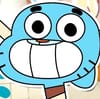
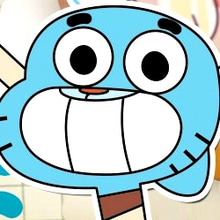
The halls of Elmore do not end. They zig and loop and pretend to be normal until a gap appears where a corridor should be, a bottomless drop cutting the school into floating islands. Somewhere a bell rings like a dare. Gumball looks at the space, at the distance, at the absurdity of it all, and grins. Elmore Breakout is not about speed so much as nerve and judgment. You build a bridge with a single press, release at the exact length, and hope your tiny plank kisses the next platform like it was meant to. When it works, it feels like cheating gravity with confidence alone.
🎒 First day of forever
You begin in a familiar hallway that immediately stops being familiar. A gap, then another, each one a different length that refuses to be guessed. The trick is rhythm. Hold to extend, release to drop, land, breathe, repeat. It is simple on paper and deliciously tense in practice, because the difference between perfect and plummet is a heartbeat. The game trains your eye with kindness: the camera holds steady; the tiles give scale; your character’s stride becomes a ruler you can feel. After a few runs you are measuring without measuring, tapping from instinct you didn’t know you had.
🧠 Glasses that tell the truth
Focus goggles are your best friend and your worst temptation. Pop them on and the world sharpens: you see exactly how far the bridge will swing, where the plank will land, how the arc will bite the edge. Used sparingly, they are genius. Used constantly, they lull you into lazy play and punish you when the battery blinks dry. Learn to read distances with naked eyes and save the goggles for the rude jumps—the double gaps after a speed pad, the micro platform tucked behind a poster, the one cruel stretch that always eats your run. Restraint is a superpower here.
🧱 Bridges with personality
Every bridge has a mood. Short ones snap down with a confident clack. Long ones sway and test your balance for a breath before settling. Overshoot, and the far end tips into nothing. Undershoot, and you get that tiny gasp before the fall. Both mistakes teach quickly and fairly. You begin to hear the difference in your thumb. A quick press is a hop. A one-Mississippi is a hallway. A two-and-a-half is a cafeteria. Now and then the game throws a platform on a conveyor or a moving elevator, and the plank becomes a conversation between your timing and the world’s mischief.
🧍 Cast with chaos
Elmore Breakout lets you earn and choose different characters, and they change more than the color of your run. Darwin has a lighter step that forgives a wobble. Nicole plants feet with reassuring weight that steadies long planks. Larry feels oddly aerodynamic on moving belts—no one knows why; no one complains. A run you failed with Gumball might land with a different hero simply because their stride changes how your eyes count. That subtlety keeps the loop fresh. You are not just chasing score; you are discovering which character tunes your inner metronome.
📏 Micro techniques that feel like magic
Count your taps out loud for the first ten minutes, then switch to a silent cadence. The rhythm that fits your hands is better than any guide. If a platform looks one tile longer than your instinct, tap and flick—tiny extensions add millimeters without wrecking balance. When you drop a slightly long plank, step onto the near edge first to dampen the swing before crossing. On moving platforms, aim to land short and let the belt carry the final centimeter. If two gaps come back to back, plant the first bridge a hair early so you have room to correct the second. These are small habits that turn near misses into clean swagger.
🏫 Elmore as obstacle course
The school becomes a map of jokes and memories. Lockers rattle when you pass. The science lab hums like a beehive full of experiments that probably violated three rules. The gym echoes, making distances sound longer than they are, a mean little acoustic prank. Posters hint at secrets: a corner peeling up marks a hidden skin; a handwritten note near a door indicates an alternate route with tighter but shorter jumps. It’s not just a backdrop; it is a teacher. By the time you reach the rooftop, you feel like the building was training you for that one ridiculous final stretch the whole time.
🎯 Scoring with style not just survival
Landing centered on a platform adds a tiny bonus. Chaining three perfect centers unlocks a sparkle that boosts the next drop’s points. Crossing a plank without stopping scores more than inching forward. If you end a stage with unused goggles, the game claps quietly and converts the discipline into coin. That economy nudges better habits. You start playing for lines and posture as much as progress. The scoreboard becomes a diary of neat choices instead of a blunt measure of distance alone.
🔄 One more run syndrome
Because rounds are short, because every mistake is explainable, because improvement is visible, you will say one more and mean twenty. Runs develop personalities. The Slow Warm-Up where you play cautious and land everything. The Wild Sprint where you stop thinking and somehow score higher because your hands are honest. The Redemption Loop where you return to the one gap that bullied you and make it look easy. The game watches without judgment and gives you another corridor whenever you want it.
📱 Controls that don’t fight you
On phone, the hold-and-release window is generous but precise; pads register light touches; haptic taps feel polite rather than loud. On keyboard, space or mouse press is all you need, and the timing reads crisp at any frame rate. The camera stays helpful: it neither smothers you nor hides the next problem. Animation sells weight without sticky lag, so if you fall it is because your count was off by a hair, not because the avatar decided to be dramatic.
🔊 Sound as a ruler
Listen to the clack. It becomes your metronome. Short bridges drop with a light tick; long planks thud and then hum for a moment as they settle. The game’s music breathes between jumps, not over them, so you can hear your own timing. Even the little coin jingle calibrates your pace—collect on the move and it avoids tripping your rhythm; pause for it and you notice the count in your head stutter. Treat the soundscape as part of the UI and your accuracy climbs without you looking harder.
🧩 Challenge without cruelty
Elmore Breakout is honest. Early gaps are modest, built to teach courage. Middle stretches add moving pieces and cheeky misalignments that reward practiced eyes. Late runs expect confidence but never demand perfection. When you fail, the restart is instant and the lesson is clear. You will catch yourself smiling at mistakes because they make sense and because fixing them is satisfying in a way only physical-feeling games can manage.
🎨 Bright, readable, and proud of it
Colors are bold but not noisy. Depth is clear; edge lines are clean; parallax whispers rather than shouts. You can read a platform’s width at a glance without pausing the flow. Character animations carry personality in tiny gestures: Darwin’s bounce, Nicole’s focus, Gumball’s show-off arms when a long plank lands sweet. The art’s real job is clarity, and it nails it, which is why your brain relaxes enough to play well.
🏆 Why this sticks in your Kiz10 rotation
Because it turns a single mechanic into a full conversation. Because improvement looks like shorter hesitations and cleaner posture, not just bigger numbers. Because characters change the feel without complicating the rules. Because the goggles teach good habits instead of replacing them. And because building a perfect little bridge at the last possible moment across a stupidly long gap will always feel heroic, even if you are just a cartoon kid skipping class in search of the exit.
🌟 The moment you’ll chase
A late run, a moving belt, a gap twice as long as you like. You press longer than comfort, release into a plank that seems doomed, step onto the near edge to still the swing, walk the last steps with breath you forgot to take, and land dead center. The platform flashes a tiny sparkle, the score ticks higher than last time, and your thumb is already counting to the next doorway. That is Elmore Breakout at its sweetest: small courage, neat timing, big grin.












 Share
Share
 Embed
Embed