🎩 Manners, panic, and a hero trying very hard to look composed
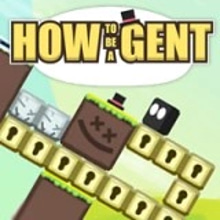
How to Be a Gent is the kind of adventure game that understands one beautiful truth: trying to act elegant while everything around you is falling apart is automatically funny. On Kiz10, the game is presented as an adventure puzzle where Henry must solve every puzzle and save his beloved, which is already a perfect setup. There is romance, there is pressure, and there is that wonderful little promise that being a “gent” is going to require far more problem-solving than style alone can provide.
That is exactly why the game works.
This is not an action game that solves everything with speed and noise. It is the more dangerous kind of challenge: the one that asks you to think while trying to preserve dignity. Henry is not just moving forward because the level says so. He is moving through situations that need observation, timing, and a willingness to use the right clue at the right moment instead of poking at the whole room like a confused raccoon in formalwear. That shift matters. It gives the game personality immediately.
And really, the title does a lot of heavy lifting in the best way. “How to Be a Gent” suggests rules, posture, manners, maybe even a little old-fashioned elegance. But puzzle adventures love taking those neat expectations and throwing them into messy situations. Suddenly the polished idea of being a gentleman collides with locks, traps, awkward objects, strange logic, and the constant possibility that Henry is one wrong move away from looking absolutely hopeless. Very good energy. Very human energy.
🗝️ Saving the day is mostly a matter of noticing things
The strongest part of a game like this is that progress never feels random when it is working well. You are not charging through enemies. You are reading the world. Small details matter. Objects matter. Sequences matter. The path forward often hides inside things that looked decorative a second earlier. That is where puzzle-adventure games get their teeth. They train the player to stop looking at rooms as backgrounds and start treating them like arguments waiting to be solved.
How to Be a Gent fits that style beautifully because the central goal is so clear. Henry must rescue the person he loves. That gives every puzzle more weight. You are not solving abstract nonsense for a number on a screen. You are moving toward something. That sense of purpose is incredibly useful in browser adventures. It keeps the game feeling warm and alive, even when the puzzles themselves start getting more demanding.
And the best part is how personal that kind of challenge feels. In a point-and-click or puzzle adventure, failure is usually not loud. It is more intimate than that. You miss a clue. Misread an object. Try the wrong sequence. Overlook something that later seems embarrassingly obvious. Then the game sits there, very calm, while you realize the answer was probably in front of you the entire time. Wonderful genre behavior. Slightly cruel, but wonderful.
💡 The puzzle is never just the puzzle
What makes adventure puzzle games memorable is that the problem usually lives inside the atmosphere, not outside it. A locked path is not just a locked path. It is part of the story’s rhythm. An object is not just a tool. It is often a punchline waiting for the correct moment. How to Be a Gent should feel strongest there, in that space where logic, comedy, and story all overlap.
Because the title itself carries a playful tone. It does not sound grim. It sounds mischievous. That means the puzzles can afford to feel a little theatrical. A little clever. A little bit like the world is testing Henry’s grace under pressure and enjoying the results whenever that grace disappears. That kind of tone helps a lot. It stops the game from becoming dry. You are solving things, yes, but the solving has character.
And that is where these games get addictive. A good puzzle-adventure never only says “find the answer.” It says “find the answer inside this strange little situation.” The world matters. The setup matters. The order matters. You are not just unlocking progress. You are participating in a scene, and each solved moment nudges the story forward with a little more confidence than before.
❤️ Romance makes every puzzle feel slightly more dramatic
A lot of puzzle games have structure. Fewer have a reason to care. How to Be a Gent gets that reason for free because the rescue goal is built directly into the premise. Henry is trying to save his beloved. That changes the mood immediately. Even the lightest puzzle gains a bit of emotional pressure when it sits inside a rescue story.
Now, of course, this is still a browser adventure game, so the drama is the fun kind. Not huge tragic opera. More like romantic problem-solving with occasional moments of “please, Henry, think before touching that.” But that tone is exactly why it works. The game can be warm, a little silly, a little clever, and still keep the player invested because the objective is human and easy to understand.
And honestly, romance plus puzzles is a strong combination. It turns progress into something softer than mere completion. Each solved problem feels like forward momentum toward a reunion, and that makes the whole experience more memorable than a generic escape-room structure with no heart behind it.
🎭 Why “gentleman” energy makes the whole thing better
There is something especially charming about games that ask the player to behave with precision while the world itself keeps setting up awkward situations. That is exactly the kind of flavor this title promises. Being a gent is not just about looking tidy. In a game like this, it is about solving trouble without losing your composure. Or at least trying not to.
That creates a nice contrast. The player wants clean progress. The game wants little missteps, funny realizations, and those moments where an elegant plan turns into a mildly embarrassing correction. That balance gives the game identity. It is not just “another puzzle adventure.” It has a role to play. A tone to maintain. A hero whose whole concept becomes funnier the moment the puzzle refuses to cooperate.
And because Kiz10 classifies it as both a puzzle game and an adventure game, that blend is exactly what you would hope for. Adventure gives it movement and charm. Puzzle gives it structure and bite. Put those together, and the result is the kind of browser game that feels light at first but keeps pulling the player along because each solved moment makes the next one more tempting.
🌟 Why this one sticks
How to Be a Gent works because it keeps its premise clean and its tone distinctive. Kiz10’s own description is short and direct: help Henry solve all the puzzles and save his beloved. That is already enough to build a very satisfying browser adventure around. The game does not need to overwhelm the player with systems. It just needs clever little obstacles, readable logic, and enough charm to make Henry’s journey feel worth following all the way through.
For players who enjoy adventure games, point-and-click logic, rescue stories, and browser puzzles with personality, this hits a very nice sweet spot. It is playful without becoming empty, thoughtful without becoming stiff, and romantic enough to give the whole puzzle structure a bit more heart than usual.
And that is really the charm of How to Be a Gent. It turns problem-solving into a performance. Not of brute force, but of timing, wit, and the constant effort to stay graceful while the world keeps doing everything it can to make that impossibles.





 Share
Share
 Embed
Embed


