🍊⚡ A juicer, a mission, and absolutely no room for mistakes
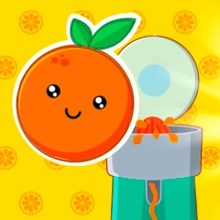
I Like OJ Orange Juice is the kind of game that sounds like a joke until it hijacks your attention for twenty straight minutes. The premise is wonderfully dumb in the best possible way: catch oranges with your juicer, close the lid on the wrong fruit, and keep your tiny juice operation from becoming a complete embarrassment. Kiz10 describes it very simply, and that simplicity is exactly the trap. You are there to catch oranges and reject everything else. Easy, right? Right up until your hands start reacting faster than your brain and the fruit begins to fall like the sky has a grudge.
That is the first thing this game gets right. It does not waste time pretending to be more complicated than it is. Released on April 19, 2017 as an HTML5 browser game for desktop, mobile, and tablet, it goes straight for that clean arcade loop: focus, react, survive, repeat. And once that loop starts, something funny happens. A game about orange juice becomes a tiny personal crisis generator. Suddenly you are not just catching fruit. You are protecting a system. You are maintaining standards. You are defending the sacred integrity of your juice from random apples, lemons, or whatever else dares to fall into your workspace uninvited.
🥤🧠 The whole game is basically “stay calm” with fruit
The genius of I Like OJ Orange Juice is how quickly it turns sorting into stress. At the beginning, everything feels manageable. You see an orange, you catch it. You see the wrong fruit, you close the lid. Nice. Clean. Civilized. Then the pace picks up a little, and now the game changes shape. The decision itself is still simple, but the time you have to make it gets thinner and thinner until your fingers are working on instinct and your brain is just somewhere in the background yelling vague warnings.
That is where the fun lives. Not in complexity, but in pressure. Arcade skill games survive on that pressure. They need a rule simple enough to understand instantly and sharp enough to punish hesitation. This game has exactly that. There is no giant tutorial. No layered system. No unnecessary clutter. Just a clear visual task and a rising chance of failure. It feels almost mean sometimes, but in a playful way. Like the game is smiling while it tests whether you can tell one piece of fruit from another under mild emotional collapse.
And because the goal is so readable, every mistake feels personal. You do not lose because of some obscure mechanic. You lose because you flinched, guessed wrong, reacted too soon, or got greedy and tried to catch a borderline orange that was obviously not orange enough. That honesty is part of what makes the game addictive. It is not vague. It is brutally specific. The fruit fell. You made a decision. It was the wrong one. Again.
🎯🍹 Reflexes are only half the story
At first glance, I Like OJ Orange Juice looks like pure reaction speed, but there is a little more going on than that. Rhythm matters. Attention matters. Visual discipline matters. Good players usually stop panicking and start reading patterns. They do not just react to every object individually. They settle into the flow of the falling fruit and keep their input controlled instead of frantic. That sounds obvious, sure, but it is amazing how quickly a simple arcade game can turn people into chaotic button goblins. This one absolutely can.
There is also a strange kind of tunnel vision the game creates after a few rounds. You start seeing the shape of oranges everywhere. Your eye learns what to trust. Your hand starts moving before the conscious thought finishes forming. That is when the game feels best. Not when you are barely surviving, but when you are in that focused little zone where everything is happening fast and somehow still making sense. The juicer opens. The juicer closes. Correct fruit in, wrong fruit out. Beautiful. Efficient. Slightly ridiculous.
And then, naturally, the pace wobbles your confidence again. Because that is how these games stay alive. The second you feel fully in control, they add enough pressure to remind you that no, actually, your system is made of nerves and hope.
🌀😵 Why it becomes impossible to quit after “one more try”
This is where browser games like this become dangerous. The rounds are short. The objective is immediate. Failure is fast. That combination is basically a machine built to produce “one more try.” You miss one orange, or you let the wrong fruit through, and the restart feels harmless. You can fix that. Obviously. Then you play again, do a little better, and now the game has your pride involved. Extremely suspicious behavior from a pile of fruit, honestly.
That restart loop is powerful because every loss feels recoverable. You are never overwhelmed by giant systems or long penalties. You just know you can do better next round. Cleaner reactions. Better timing. Less panic. More dignity. Maybe. That makes I Like OJ Orange Juice a perfect quick-play Kiz10 game. It loads fast, the premise is instantly clear, and it is mobile-friendly, which suits a tap-and-react arcade concept really well.
The silly presentation also helps. A game about making orange juice has no business creating this much tension, and that contrast makes the whole experience funnier. You are not defusing a bomb. You are not saving a kingdom. You are sorting fruit with the seriousness of a tournament player. There is something charming about that mismatch. The stakes are tiny, but your emotional investment becomes embarrassingly real anyway.
🍍🚫 The joy of rejecting the wrong fruit
A lot of skill games focus on hitting the target. This one is also about refusing the target that should not be there. That tiny design twist matters more than it seems. It creates a push-pull rhythm instead of a single repetitive action. You are not just catching. You are filtering. Accept, reject. Open, close. That alternating logic gives the gameplay a sharper edge than simple tapping.
It also makes the game feel just chaotic enough. If all you did was catch oranges, the challenge would flatten out quickly. By forcing you to actively block the wrong fruit, the game keeps you involved every second. You are never merely waiting. You are constantly judging. Constantly deciding. Constantly one bad twitch away from ruining your own juice purity like a disgraced fruit sommelier.
And because the wrong fruit is such an important part of the tension, the theme becomes more memorable. You remember the game not just as “the orange one,” but as that game where every non-orange felt deeply offensive. That kind of silly clarity is valuable. It gives the title personality without needing lore, cutscenes, or decorative nonsense. Just fruit and pressure.
📱🏆 Why it fits Kiz10 so well
Kiz10 already positions I Like OJ Orange Juice inside puzzle, mobile, HTML5, kids, and general free game categories, which makes sense because it sits right at the intersection of casual accessibility and twitchy skill challenge. It is easy for anyone to understand, but it still has enough bite to keep score-chasers interested. That balance is exactly what works on Kiz10. A player can arrive with zero context and be playing correctly in seconds.
The site also places it near plenty of other quick-session arcade and reflex games, which reinforces the lane it belongs to. Verified Kiz10 pages exist for titles like Paper Flick, Knife Hit, Tap The Frog, Super Pineapple Pen, and Cheating In School, all of which share that same immediate, replayable, “I can learn this instantly but I may not master it today” energy.
So what is I Like OJ Orange Juice in the end? It is a casual skill game disguised as a fruit joke, and that disguise works beautifully. It is fast, clean, funny, and a little cruel once the tempo rises. It asks for sharp eyes, steady hands, and the ability to keep your cool while oranges and impostors rain down from above. A tiny game, really. But also a sneaky one. The kind that starts with juice and ends with a score chases.





 Share
Share
 Embed
Embed