𝐁𝐞𝐚𝐮𝐭𝐢𝐟𝐮𝐥 𝐕𝐢𝐨𝐥𝐞𝐧𝐜𝐞, 𝐒𝐭𝐮𝐩𝐢𝐝 𝐌𝐨𝐯𝐞𝐦𝐞𝐧𝐭𝐬 🥋😵💫✨
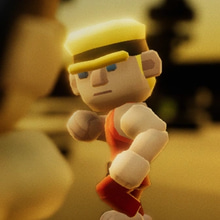
Irrational Karate is the kind of fighting game that makes you laugh first, then suddenly sit up straight because you’re losing. The characters move like they learned martial arts from a dream you had after eating something spicy. Limbs swing a little too wide, bodies wobble a little too much, and everything feels slightly off in the best possible way. On Kiz10, it lands as a 3D street fighting game where the real challenge isn’t memorizing fifty special moves, it’s controlling the chaos long enough to smash your opponent into a clean knockout. The vibe is silly, but the punches still count, and the moment you get clipped by a ridiculous flying hit you didn’t respect, you realize the game is joking… but it’s not playing.
There’s a very specific pleasure in a game that looks harmless and then punishes you for being careless. Irrational Karate thrives on that. You can’t just button-mash and hope the universe forgives you. You need timing. You need spacing. You need the ability to look at a fight that’s turning into a physics comedy and still make good decisions like a responsible adult. Which is hard, because your fighter is flailing around like a noodle with anger issues. 😅
𝐓𝐡𝐞 𝐅𝐢𝐠𝐡𝐭 𝐅𝐞𝐞𝐥𝐬 𝐋𝐢𝐤𝐞 𝐚 𝐂𝐚𝐫𝐭𝐨𝐨𝐧 𝐁𝐚𝐫 𝐁𝐫𝐚𝐰𝐥 🎬👊🍕
Most street fighting games try to look tough. Irrational Karate is confident enough to look goofy. The animations have that “everything is slightly exaggerated” charm, so every kick looks like it’s traveling a bit farther than your brain expects, and every stumble looks like it could turn into a fall if you panic-correct. That makes every exchange feel alive. You’re not watching a rigid set of canned moves, you’re watching a messy duel where momentum matters.
And that messiness is strategic. When the movement is unpredictable, you stop relying on autopilot. You start reading intent. You start asking, where is my opponent leaning, what direction are they committing to, what happens if I step in right now, what happens if I wait half a second and let them swing into nothing. The funny part is that the game teaches patience through embarrassment. The moment you rush, you whiff. The moment you whiff, you get punished. The moment you get punished, you start playing smarter. Classic learning method: pain, but cute. 😭✨
𝐓𝐢𝐦𝐢𝐧𝐠 𝐎𝐯𝐞𝐫 𝐅𝐚𝐧𝐜𝐲 𝐌𝐨𝐯𝐞𝐬 ⏱️🧠⚡
If you’re expecting a complex combo manual, Irrational Karate doesn’t demand that. It demands something more human: good timing under pressure. Your best hits usually come from simple decisions done cleanly. Step into range, strike when your opponent is vulnerable, back out before you get clipped by a counter-swing. The fights become a rhythm of approach and retreat, like you’re dancing with someone who keeps trying to trip you.
You’ll notice that panic makes everything worse. If you start swinging nonstop, your character’s body language becomes sloppy, your spacing collapses, and you create openings for the opponent to tag you with one ugly, unexpected hit. The game’s name is honest: things are irrational, so your job is to be the rational one. Calm inputs, small adjustments, and a willingness to reset the fight instead of forcing a “hero moment” every two seconds. 😌🥋
𝐊𝐧𝐨𝐜𝐤𝐨𝐮𝐭 𝐌𝐨𝐦𝐞𝐧𝐭𝐬 𝐓𝐡𝐚𝐭 𝐅𝐞𝐞𝐥 𝐋𝐨𝐮𝐝 💥😈🏆
There’s a special satisfaction to landing a clean KO in this game because it often feels like you earned order in the middle of nonsense. You see your opponent overcommit, you punish, and suddenly the chaos snaps into clarity for one perfect second. That’s the highlight-reel feeling, except the highlight reel is mostly you thinking, I cannot believe that worked… but yes, I planned it. Totally. 😅
The game also makes you respect positioning. It’s easy to forget in a funny brawler, but distance is everything. If you’re too close, you can get caught by weird hit angles. If you’re too far, you waste energy swinging at air. The sweet spot is controlling the mid-range where you can react and punish without being tangled up in your opponent’s flailing. Once you start holding that distance, the match stops feeling random and starts feeling like controlled bullying. In a street fighting game, that’s basically the dream.
𝐓𝐡𝐞 𝐒𝐞𝐜𝐫𝐞𝐭 𝐒𝐤𝐢𝐥𝐥: 𝐌𝐚𝐧𝐚𝐠𝐢𝐧𝐠 𝐘𝐨𝐮𝐫 𝐎𝐰𝐧 𝐖𝐞𝐢𝐫𝐝𝐧𝐞𝐬𝐬 🧍♂️🌀🎯
A lot of players lose to Irrational Karate not because the opponent is “better,” but because they can’t manage their own character’s momentum. You’ll take one step, your fighter drifts a little, you try to fix it fast, and suddenly you’re in a spiral of overcorrection. The game becomes ten times easier when you accept that your character is not a perfectly precise machine. You’re guiding a chaotic body, so guide it gently.
Think of it like steering a shopping cart with one wobbly wheel. If you yank it, it swings harder. If you nudge it, it tracks straight enough. Same idea here. Small inputs create stability. Big inputs create comedy. Sometimes you want comedy, sure, but not when you’re one hit from losing. 😭🛒
You’ll also start recognizing “danger moments” where you should stop attacking. After a swing, there’s often a brief window where you’re vulnerable, and spamming another swing can lock you into bad posture. The smarter play is often to reset your stance, reposition, then strike again when your opponent commits. This is the kind of game that rewards restraint, which feels ironic because everything on screen looks like it’s having a meltdown.
𝐖𝐡𝐲 𝐈𝐭’𝐬 𝐀𝐝𝐝𝐢𝐜𝐭𝐢𝐯𝐞 𝐨𝐧 𝐊𝐢𝐳𝟏𝟎 🎮🔥😄
Irrational Karate works so well on Kiz10 because it’s instantly readable and instantly replayable. You can jump in, start fighting, and understand the goal in seconds: knock the other fighter out. But the more you play, the more you notice there’s a real skill curve hiding under the silly animations. You get better at spacing. You get better at timing. You get better at letting the opponent waste energy while you stay composed. That improvement feels fast and tangible, which is dangerous because it makes you want “one more match” to prove you’ve learned it.
It also scratches a very specific itch: the joy of a fighting game without the intimidation. You don’t need to study a move list for an hour to have fun. You just need to keep your head cool and make fewer bad decisions than the other person. And when you finally win a messy fight cleanly, it feels like you tamed something wild. For about thirty seconds. Then the next round starts and the nonsense returns. 🥋😵💫
𝐐𝐮𝐢𝐜𝐤 𝐒𝐭𝐫𝐚𝐭𝐞𝐠𝐲 𝐓𝐡𝐚𝐭 𝐀𝐜𝐭𝐮𝐚𝐥𝐥𝐲 𝐖𝐨𝐫𝐤𝐬 🧠🧨🛡️
If you want better results quickly, focus on three things. First, don’t swing first every time. Let the opponent show you their timing, then punish. Second, keep a “safe gap” where you can step in and out without getting tangled in random hitboxes. Third, when you land a good hit, don’t instantly chase with reckless swings. Take the advantage, reposition, and force them to walk into your next clean strike. It’s not about being flashy, it’s about being consistent.
Irrational Karate is funny, chaotic, and surprisingly satisfying when you treat it like a real street fighting game instead of a joke. The irony is that the more seriously you play, the funnier it becomes, because you start winning with calm precision while your character still moves like a confused cartoon superhero. That contrast is the charm. That’s the hook. 🥋✨



 4 (41 votes)
 Share
Share
 Embed
Embed


