🌅 Wind before sunrise, ninja in the air
The night in Ninjago is almost over when trouble finds you. The sky is turning that pale blue that means sunrise is close, the lanterns are fading and the wind over the monastery roofs is starting to wake up. Somewhere below, the others are still fighting. Somewhere above, a fortress of stone and steel is trying very hard to keep you inside. In the middle of all that, you stand at the base of a vertical maze full of fans, lanterns, spinning blades and angry guards, with one weapon that nobody else has. Airjitzu.
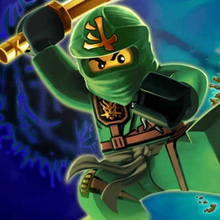
The first time you jump, it feels wrong. Ninjas are supposed to land, not float. But then you twist, channel the wind, and the ground does something surprising. It lets go. Your feet lift, your robe snaps around your legs and suddenly the whole fortress is a stack of platforms instead of a prison. LEGO Ninjago Airjitzu Escape is that moment stretched into a full game. It is a vertical action challenge where every spin is a choice, every gust of air is a path, and sunrise is your ticking clock.
🌀 Airjitzu as your main move, not a special trick
Most games treat “fly” like a rare reward. Here, spinning into the sky is your everyday tool. Hold the power, feel the wind thicken around you, and your ninja becomes a living top, rising through the air like a leaf that decided to ignore gravity. It is not free flight. It is controlled chaos. You can climb, glide sideways, squeeze between hazards and then land on a tile that barely has enough space for your feet and your courage.
You start timid. Small hops, low lifts, careful descents. Then the level design dares you. A row of coins hangs way above a moving fan. A lantern line arcs across a gap that looks too wide for any normal jump. A spinning turbine sends up bursts of air like invisible elevators. You realise that every piece of the environment wants to help you if you are brave enough to use it. So you begin to chain Airjitzu bursts, bouncing from draft to draft, turning what looked like a wall into a staircase only you can see.
The best moments are the messy ones. You mistime a spin, drift too close to a blade, panic, correct midair and land by sheer luck on a tiny platform that clearly was not the intended route. The game does not scold you. It just shrugs, adjusts the camera and quietly accepts that this is your path now.
🏯 A tower built like a test from Master Wu
The fortress in LEGO Ninjago Airjitzu Escape feels like it was designed by Master Wu on a day when he drank too much tea and got a little dramatic. Every floor has its own idea of what “training” means. One layer is all about moving fans and chimneys that spit warm air, forcing you to time your spins with the rhythm of the building. Another layer is packed with swinging traps, blades, chains and spikes that seem way too sharp for a place supposedly built by wise elders.
Look closer and you see the logic. The lowest sections remind you not to be reckless. Platforms are close together, hazards are slow. Higher up, the tower gets cocky. Platforms tilt, moving walls try to squeeze you, and gaps appear exactly where your comfort zone ends. Somewhere near the top, open sky tears through the architecture. Whole sections hang in the air with nothing but clouds under them, turning every mistake into a very long drop and a lesson in humility.
Because the game is a vertical climb, you feel progress in a very physical way. The courtyard shrinks into a patchwork carpet. The lantern light turns into tiny dots below. The higher you go, the more you sense how far you have come and how expensive it would be to fail now. That tension makes each new jump feel louder than the last.
⚔️ Serpents, guards and midair decisions
Of course, the tower is not empty. Serpentine warriors, mechanical sentries and other enemies are scattered across platforms like they never learned about safety regulations. Some patrol on narrow ledges, forcing you to decide whether to fight them head on or slip past in the air above their heads. Others control key switches and doors, turning combat into part of the puzzle.
Battles are quick and sharp. You land, throw a few hits, maybe fire a ranged attack and then decide whether it is smarter to finish the fight or launch back into Airjitzu before backup arrives. The game never lets you forget that you are a ninja, not a tank. Hit, move, vanish into the wind.
The most fun moments happen when the environment and the enemies collide. A guard stands under a hanging crate. A well placed attack cuts the rope and the crate finishes the job for you. A serpent blocks the only safe platform near a rising fan. You spin up, drift wide, circle behind them and land with a perfect knock that clears the path. The game rewards creativity. If it looks like it might work, it usually does, even if the result is a little more chaotic than you expected.
🔥 Sunrise timer and that little voice in your head
You are not climbing for fun. The story hangs a time limit in the sky. Escape before sunrise or accept that the fortress wins. You do not see a giant countdown in the middle of the screen, but you feel the pressure in the color of the sky, in the music that thickens as you rise, in the way the game nudges you forward with tighter gaps and faster hazards.
Inside your head, a small debate starts. One side wants to rush, to spin through each floor like a tornado and worry about precision later. The other side knows that one bad jump near the top can erase five minutes of careful climbing. You find a rhythm between those two voices. Fast where you are confident, slow where traps and enemies stack up in dangerous ways.
Every time you fall, you remember exactly why. That early spin that drifted too close to a blade. That greedy detour for a collectible just off the safe path. That moment you tried to fight two enemies on a platform clearly sized for one. Next run, you correct one mistake at a time. Sunrise will not wait, but it will not catch a ninja who learns quickly.
🧠 Light puzzle brain, fast reflex hands
Mechanical switches, locks and moving platforms add a layer of thinking to all the jumping. You might need to activate a fan, ride its wind, hit a trigger midair and then land on a platform that only appears for a few seconds. You might have to choose between two routes one full of enemies but solid ground, the other with fewer foes but more Airjitzu precision.
The puzzles are rarely about stopping and staring. They are about making decisions while hanging in the air. You adjust your angle mid spin to bounce off a wall and redirect upward. You use a short burst of Airjitzu to clear a swinging trap instead of a full length flight. You learn that sometimes the safest route is actually the one that looks harder, because it keeps you away from crowded enemy platforms that could knock you into the void with one lucky hit.
Little by little, your brain starts planning two moves ahead. You do not just think “reach that platform.” You think “reach that platform, then immediately spin right to catch that updraft, then land on the balcony beyond the guard.” When a plan like that actually works, it feels like you just choreographed your own Ninjago episode.
🎮 Perfect sky ninja snack on Kiz10
On Kiz10, LEGO Ninjago Airjitzu Escape is the kind of game that fits any kind of session. If you only have a few minutes, you can hop in, attempt a climb, feel the wind grab your ninja a couple of times and log out with your brain still replaying one near perfect jump. If you have longer, you can chase cleaner runs, explore alternate routes, or challenge yourself to clear sections without touching certain platforms just because it feels cooler.
You do not need a huge list of controls. A handful of keys manage movement, jump, Airjitzu and attacks, and the rest is rhythm and instinct. The LEGO look keeps everything bright and readable, even when the tower gets busy with blades, fans and enemies. Each fall is quick, each restart is painless, and every attempt brings you a little closer to that smooth run where you glide from bottom to top like the tower was built just for you.
For fans of LEGO Ninjago, vertical action and games where movement feels as important as combat, LEGO Ninjago Airjitzu Escape on Kiz10 delivers a focused dose of ninja energy. It is all wind, bricks, sunrise pressure and the quiet satisfaction of mastering a skill that lets you treat the sky itself like solid ground.


















 Share
Share
 Embed
Embed