🌌 A tiny particle with a surprisingly rude attitude
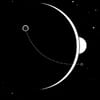
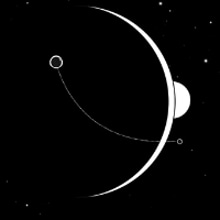
Minimal Gravity has one of those names that sounds peaceful right up until the game starts proving otherwise. Kiz10 describes it as a skill game where you guide a particle from one side of gravity to the other, which sounds elegant, almost relaxing, like some clean little physics experiment floating quietly in a browser. Then the challenge actually begins, and suddenly that tiny particle feels like the center of your entire nervous system. One movement too early, one shift too late, and the whole thing stops looking minimal and starts feeling very personal.
That contrast is exactly why the game works. Minimal Gravity strips the idea down to almost nothing, a particle, gravity, motion, and then lets those few ingredients do all the damage. On Kiz10, that kind of skill-based puzzle setup always has a special kind of bite because it wastes no time hiding behind complexity. The rule is clear. The danger is clear. What is not clear, at least not at first, is how quickly your own confidence becomes the problem. That is where the fun begins.
And honestly, games like this are some of the sneakiest on the whole site. They look so simple that your brain immediately tries to downgrade them into “easy.” Big mistake. Minimal Gravity feels like the kind of game that waits for that assumption, smiles politely, and then makes you earn every clean movement the hard way. Tiny games are often the meanest. They do not have room for distractions, so every little error gets a spotlight.
⚡ Gravity only sounds calm when you are not fighting it
The most interesting thing about Minimal Gravity is that the whole challenge is built from movement and opposition. Kiz10’s page frames it around taking a particle from one side of gravity to the other, and that immediately tells you the game lives on change, direction, and the little moments where the player has to decide whether to commit now or wait one beat longer.
That is a very strong puzzle-skill formula because gravity-based games always create tension from something invisible. You do not fight an enemy with a face. You fight a force. The world itself keeps making demands. That changes the feeling of every action. A small move is no longer just input. It becomes a negotiation with the rules of motion. You are not simply tapping or steering. You are asking the game whether your timing is good enough to survive the next shift.
And that is where the addictive part starts. A run almost works. You can see why it failed. The correction feels close. Suddenly you are not only playing anymore, you are chasing a cleaner rhythm. One better crossing. One smoother transition. One less embarrassing moment where the particle drifts off in a direction that made perfect sense for about half a second. Great. Excellent. Exactly what a browser skill game should do.
🧠 Minimal puzzle games always become bigger inside your head
There is something very funny about how serious your brain can become over a game built around one particle. But that is the power of good abstract design. Minimal Gravity does not need heavy visuals or a giant story because the challenge itself creates enough tension. Every time the particle moves, the whole state of the game changes emotionally. Safe becomes risky. Stable becomes shaky. One side of the field becomes the wrong side in an instant. That constant redefinition is what gives the game energy.
The Kiz10 page tags it as both a Physics Game and a Puzzle Game, and that combination feels exactly right. The physics side gives the movement its weight. The puzzle side gives the player a reason to think before reacting. Neither part works alone as well as they do together. If it were only movement, the game would risk feeling empty. If it were only logic, it might feel dry. Together, it becomes one of those sharp little browser challenges where the correct solution often looks obvious only after you finally manage to pull it off.
That is why games like this age so well. They do not rely on spectacle. They rely on process. A player gets better not because something shiny unlocked, but because they genuinely understand the timing a little more than before. You feel that improvement. That matters a lot.
🔷 The cleanest games usually hide the sharpest edges
Minimal Gravity also benefits from being visually and conceptually clean. A game with very little clutter makes every movement feel more exposed. There is nowhere to hide a sloppy decision. No extra noise to blame. If the particle misses the line, the truth is simple. You misread it. You moved too fast. You trusted the wrong moment. That kind of honesty is huge for replay value because it makes failure feel educational instead of random.
And browser players love that. They love a game where the next attempt might actually be better because the lesson is visible. Minimal Gravity has all the signs of that kind of design. Released on January 21, 2016, as an HTML5 browser game for desktop, mobile, and tablet, it sits in that sweet spot where the concept is immediate and the execution gets sharper the longer you stay with it.
There is also a subtle elegance in using a particle instead of a character with a lot of baggage. A particle has no personality, which weirdly lets the player project all the drama into the movement itself. It becomes your problem instantly. Your timing. Your mistake. Your clean run. That purity is very useful in a skill puzzle. It keeps the focus exactly where it belongs.
🌠 Why one more try always sounds reasonable
The real trap in Minimal Gravity is that improvement always feels just close enough. One cleaner transition and you would have had it. One calmer reaction and the route would have stayed under control. That “almost” feeling is the fuel. It is what turns a small browser game into something sticky. You fail, but the failure is informative. You succeed, but the success makes you curious whether you can do it more cleanly next time. Either way, the replay button starts sounding extremely logical.
That is why Minimal Gravity fits Kiz10 so well. It belongs to the side of the platform where puzzle and skill games overlap, where players do not need giant systems to stay engaged. They need one strong mechanic, one honest challenge, and a loop that keeps their brain active. This game has that. It is tiny, sharp, and much more intense than its title first suggests.
So yes, Minimal Gravity sounds small. It is small. But in the best ways. It turns a particle and a gravity shift into a whole little war between patience and instinct, and that is usually the sign of a very good arcade puzzle.





 4.5 (5 votes)
 Share
Share
 Embed
Embed