🔥 Gong, lightning, and the first revelation
Mortal Kombat: Revelations does not welcome you gently. The screen fades from darkness into a stone arena lit by sickly torches, a bell slams once, and two fighters step forward like they have been waiting years for this single round. There is no warm up, no friendly spar. The announcer’s voice carves the air, drops the word “Fight!” and suddenly your thumbs are writing your story faster than your brain can process. This is not a button masher pretending to be a classic. It is a full on love letter to arcade era Mortal Kombat, the kind of 2D fighting game where every mistake feels loud and every clean hit feels like you just rewrote fate in front of a roaring crowd.
The moment you land your first punch, you can feel the weight. Limbs snap into place with that harsh, satisfying impact that defined the series. Health bars shrink in ugly chunks, characters flinch with personality instead of generic animations, and the camera shakes just enough to make your victories feel like they rattled the stage itself. You are not just pressing buttons. You are signing your name across the screen in uppercuts, sweeps and brutal specials.
🥋 A roster built on grudges, not smiles
Scroll through the character select and it hits you: this world does not produce cheerful fighters. Warriors, assassins, monks, monsters, cyborgs, ninjas from rival clans every icon on that grid feels like the start of a grudge match. Some fighters are fast and slippery, sliding under projectiles and dancing at the edge of your range. Others are pure muscle, moving slower but turning any opening into a small disaster for your opponent’s health bar.
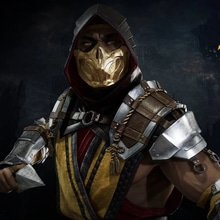
You pick someone that fits how you secretly see yourself. Maybe a masked ninja with teleport tricks and razor sharp normals. Maybe a towering brute whose every hit looks like it could level a building. Maybe a sorcerer who never fights fair, controlling space with cursed projectiles and punishes that seem to come out of nowhere. As you play, the roster stops being a list of skins and turns into a set of personalities you know intimately. You remember who bullied you in your first ten matches. You remember who you ran to when you needed a character that could swing momentum back in your favour.
The best part is that there is no perfect choice. Every fighter has strengths you can lean on and weaknesses that betray you if you get lazy. Knowing those matchups becomes half the game.
🎮 Inputs, timing and the quiet brutality of execution
Mortal Kombat: Revelations stays loyal to its roots, which means your success lives in your ability to control inputs under pressure. Special moves come from precise button combinations, not random swiping. A fireball is not just “press anything and hope.” It is a motion you carve into the controller at the right moment, with the right spacing, after confirming that your opponent actually left themselves open.
At first, your matches are messy. You mash your way into accidental combos, throw out unsafe specials from full screen and hope armor saves you when you guess wrong. Then your brain shifts gears. You start to see tiny windows of opportunity. A blocked jump in here, a whiffed sweep there. You stop throwing out moves “just because” and start asking “If this hits, what do I follow with” That single question changes everything.
You spend a couple of rounds just practicing one route. Jump-in, heavy, special. Sweep, projectile, advance. Uppercut into corner pressure. The more you repeat these little sequences, the more natural they feel. Suddenly you are not thinking about motions anymore. Your hands do them while your eyes watch the opponent’s feet, their posture, the way they retreat when they are scared or step in when they smell blood. That is when Revelations stops feeling like a retro game and starts feeling like a live duel.
⚡ Round momentum, meter and comeback ghosts
One of the quiet thrills in Mortal Kombat: Revelations is how quickly momentum can turn. You can dominate the first fifteen seconds, deleting half of your opponent’s life with clean spacing and calculated strings, and then eat one bad punish that flips the entire round upside down. Meter management becomes your secret language with the game.
Do you burn your bar on a flashy enhanced special early, hoping to steal control, or save it for a defensive break when things get ugly Do you cash out damage with a big super, or hold back and trust that your corner pressure will finish the job anyway You feel those decisions in your chest. Spend meter and miss, and the screen suddenly feels colder, harsher, like you just stepped into the next exchange naked. Hold meter too long and lose without ever using it, and you will stare at the screen after the fatal blow wondering why you were so stingy.
Comebacks in this game feel personal. That round where you were down to a sliver, eating chip damage in the corner, blocking for your life until you finally squeezed out one desperate uppercut that started a sequence of specials and juggles you did not even know you had in you. The crowd in your head goes insane. It is just you, your character and that small, stunned pause when the announcer says “Finish him” and you realise somehow, against the odds, you are the one standing.
🩸 Finishers that test your nerve as much as your memory
You cannot say “Mortal Kombat” without thinking about finishers. Mortal Kombat: Revelations knows this and leans in. That final second of the round, when your opponent sways on their feet and the game gives you the infamous prompt, is its own tiny trial. You either know the input, or you do not. You either trust your muscle memory, or you fumble and throw a sad punch that ends the match with a whimper.
Landing a finisher is not just about flexing. It is rhythm. Step forward the right distance. Wait half a heartbeat. Input cleanly, not too fast, not too slow. When it works, the screen erupts into a brutal little mini scene that fits the fighter’s personality and the tone of the match. When it does not, you learn two quick lessons. One, lab time matters. Two, the humiliation of whiffing a finisher right after a hard fought victory is almost as bad as losing.
The game never forces you to perform them, but knowing they are there adds a constant extra layer of tension. Even as you fight for your life, some part of your brain is quietly whispering the commands to itself, just in case.
🏟️ Arenas that feel like witnesses, not backgrounds
From burning temples and acid pits to ruined courtyards and hellish dimensions, the stages in Mortal Kombat: Revelations do more than hold the fight. They frame it. Each arena drops small story hints without needing a paragraph of text. Scorch marks on stone. Bones half buried in ash. Chains hanging from places that clearly never saw an architect.
As you play more, you start to associate certain matchups with certain stages in your mind. Maybe you always seem to run into a particular rival on that one bridge where the wind never stops. Maybe your favourite character just feels “right” in a specific arena, where the colours match their outfit and the soundtrack’s drums hit exactly in time with your combos. You find yourself picking stages not just for visuals, but for how they make you feel. Focused. Aggressive. Calm before the storm.
Some stages carry legends. You know the ones where losing is not just about health but about where your body might end up if your opponent knows a certain finisher input. Even if you are playing casually on Kiz10, those old myths sneak into your head and add a delicious little chill to every round.
🧠 Learning the tournament, not just the controls
Mortal Kombat: Revelations wants you to think like a tournament player, even if you are just spending a few rounds in your browser. It is not enough to know your own character. You learn to watch habits. That player who always opens with a jump in. The one who loves low sweeps and forgets overheads exist. The zoner who panics the instant you close the distance.
You start experimenting with mind games. Back off at the start of the round for once and see if your opponent whiffs that usual jump in. Block low for a full second and wait for the overhead you know is coming. Fake a retreat, then run back in with a counter string the moment they throw a fireball. It is a quiet, satisfying feeling when you realise you beat someone not because your character is stronger, but because you read them like a book.
And when someone reads you instead When they block your favourite string, punish your special on reaction and shut down your biggest setup You walk away a little salty, sure, but also strangely motivated. That is how this kind of fighting game rewires your brain. Every loss is a set of notes for the next run.
🔥 Why it feels right at home on Kiz10
On Kiz10, Mortal Kombat: Revelations is the kind of fighting game you open “just for a couple of matches” and then realise you have been chasing one more rematch for twenty minutes. It loads straight in your browser, no setup, no install, just that familiar pre fight silence and a character select screen daring you to pick someone risky.
If you grew up with classic arcade fighters, it taps directly into that muscle memory. If you are new to the series style, it becomes your crash course in why people still argue about frames, spacing and matchups decades later. Short sessions let you practice one combo route, test one character, or warm up before diving into other games on Kiz10. Longer sessions turn into mini tournaments with yourself, hopping between fighters until you find the one that feels like your true main.
Brutal, fast, unapologetically old school and still somehow fresh, Mortal Kombat: Revelations gives you exactly what the name promises. A sharper look at why this style of combat never really went away and why, when the announcer says “Fight,” your heart rate always jumps just a little.





 Share
Share
 Embed
Embed