🛩️ Paper, air, and a tiny bit of delusion
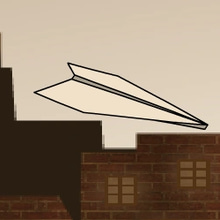
Paper plane is one of those games that starts with an innocent idea and then quietly turns into obsession. You are not commanding a giant jet, saving the world, or managing a dramatic cockpit full of blinking buttons. No, this is a paper plane. A folded little dream made of nothing and confidence. You throw it, watch it catch the air, and suddenly your brain becomes fully invested in the fate of this glorified sheet of paper. That is the trap. A good one.
At first glance, the concept feels simple in the best possible way. Launch the plane, send it flying, and try to beat records for height and distance. That is the core of it. No fake complexity, no endless explanation. Just physics, timing, momentum, and the weird emotional rollercoaster of seeing your throw go from graceful masterpiece to tragic nosedive in about three seconds. On Kiz10, Paper plane works because it grabs a basic fantasy almost everyone knows. Who has not folded paper, thrown it across a room, and imagined it was a heroic mission instead of classroom nonsense? This game takes that exact feeling and turns it into a proper arcade challenge.
What makes it memorable is how quickly the mood shifts. One second you are calm, thinking this will be a chill little flight game. The next second you are leaning toward the screen like that will somehow improve aerodynamics. It will not, obviously, but the game has already pulled you in by then. That fragile paper airplane stops feeling like an object and starts feeling like a personal statement. If it crashes early, somehow that feels disrespectful. If it glides beautifully, you feel smarter than you really are. Dangerous stuff.
🌬️ The throw is easy, the perfection is not
Paper plane lives on a very satisfying contradiction. It is easy to understand and oddly hard to master. Anyone can throw the plane. That part is immediate. The real challenge comes from learning how to make each attempt count. Distance games always have this little psychological trick in them. They look forgiving. They look casual. But under the surface, they are measuring your judgment every second. Was the launch angle right? Did you commit too early? Did you lose momentum because of impatience? Did you ruin a good flight by getting greedy? Oof. There it is.
That tension gives the game its pulse. Every attempt feels short enough to retry instantly, but meaningful enough to make each failure sting a little. Not too much, just enough to keep you pressing play again. It becomes a loop of tiny ambition. You are not trying to conquer the universe. You are trying to go a little farther. A little higher. A little cleaner. And somehow that becomes very, very important.
The beauty of a paper plane game is that it turns fragile movement into drama. A tiny rise feels hopeful. A long glide feels elegant. A sudden drop feels like betrayal from the sky itself. The game does not need massive explosions to create tension. The air does the work. You are constantly negotiating with invisible forces, hoping your throw has enough life in it to keep going. Sometimes it does. Sometimes the plane behaves like it has all the determination of wet toast. That is part of the fun.
📏 Distance turns into pride surprisingly fast
There is a specific kind of player satisfaction in record-chasing games, and Paper plane understands it well. You are always looking at the possibility of a better run. Not a completely different run. Just better. Cleaner. Longer. That small gap between your current best and your next attempt is where all the replay value lives. It is honestly kind of sneaky.
Because the goal is so clear, every little improvement feels real. You notice progress immediately. Maybe your launch feels smoother. Maybe your timing clicks. Maybe you finally get the kind of flight that keeps floating just a little longer than expected, and for a brief second you believe in miracles, physics, and your own elite paper-folding spirit all at once. It is silly, sure, but it works.
This is where the game becomes more than a novelty. It starts feeling like a skill game with attitude. The plane might be made of paper, but the challenge is not flimsy. Good runs need control. Better runs need patience. Great runs usually happen when you stop forcing things and let the game’s rhythm guide you a little. That sounds poetic, which is funny, because we are still talking about a paper airplane trying not to embarrass itself mid-flight. Yet somehow the drama feels real while you are playing.
And because the structure is compact, the pacing stays sharp. No waiting around. No endless downtime. Throw, glide, react, recover, retry. It is a clean arcade loop, and those loops tend to age very well when they are built around something this universally readable. Everybody understands a flying object and the desire to keep it flying longer. The game does not need to explain why that is compelling. Your own instincts do the explaining.
🎯 Why this tiny flying game sticks in your head
Some browser games entertain you for a minute and vanish. Paper plane lingers. Part of that comes from how relatable its fantasy is. It is grounded in something physical and familiar, which makes every attempt feel intuitive. But another part comes from tone. This is not a stiff simulation. It is playful. It knows the absurdity of asking you to care deeply about a paper plane, and then it makes you care anyway.
On Kiz10, that kind of game fits perfectly because it is immediate and replayable. You can jump in for a quick session, chase one better score, and leave satisfied. Or at least that is the lie you tell yourself before launching the plane again because this time, clearly, the air will respect your effort. That accessibility matters. The game does not hide its fun behind complications. It gives you a challenge instantly and trusts the core mechanic to carry the experience. That is usually a good sign.
There is also something charmingly cinematic about the best flights. A paper airplane drifting through open space should not feel dramatic, but it kind of does. The longer it stays up, the more the run starts to feel like a small miracle held together by luck and timing. You start narrating it in your head without meaning to. Look at it go. Keep going. Don’t mess this up. No, no, no, not like that. And then either triumph or disaster arrives, usually with no regard for your feelings.
That emotional swing is exactly why these simple flying games work. They turn tiny moments into memorable ones. A strong launch feels satisfying. A ruined attempt feels personal. A new record feels earned. There is no excess. Just motion, distance, and the fragile hope that this throw might be the one that finally behaves.
☁️ A simple idea that still feels great
Paper plane does not need to be huge to be effective. It takes a basic concept, sharpens it into a skill challenge, and lets the player do the rest. The result is a flying game that feels light, fast, and strangely addictive. You are always only one attempt away from a better run, and that promise is enough to keep the whole thing alive.
If you enjoy online distance games, casual flying challenges, or browser games built around clean arcade ideas, this one has real appeal. It is easy to start, hard to abandon, and full of that classic “one more try” energy that browser gaming has always done so well. On Kiz10, Paper plane feels exactly like it should: simple on the surface, sneaky underneath, and much more competitive than a paper airplane has any right to be. Which, honestly, makes it even better.



 2.5 (14 votes)
 Share
Share
 Embed
Embed