🏙️🔫 Rooftops, recoil, and the weird confidence of a pogo gun
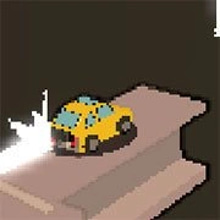
Pogo Gun Pogo is the kind of game that sounds like a nonsense phrase until you play it and your brain goes, oh… this is actually dangerous. You’re on rooftops, there’s a void waiting below like an unpaid bill, and your “movement” is basically a pogo stick that’s been replaced with a gun that kicks you around. Not gently. Not politely. It kicks you with that cheerful physics chaos that makes you laugh right before you miss a landing by half a toe and disappear into the abyss. On Kiz10, it feels like a rooftop parkour runner mixed with a recoil-jumping toy, and it’s surprisingly addictive because every jump is both a plan and a gamble 😅
The goal is straightforward: jump from roof to roof, keep going as far as you can, and grab coins along the way. But the way you get there is the entire personality of the game. You’re not simply pressing jump and hoping for the best. You’re using that bounce-and-blast motion, timing the recoil, steering mid-air, and trying to land with enough stability that your character doesn’t wobble off the edge like a shopping cart with trust issues. The physics are soft in a fun way, meaning your movement feels bouncy and slightly unpredictable, like the world has a sense of humor and it’s testing whether you can stay calm while it giggles.
🦘💥 Movement that feels like controlled panic
The first few jumps in Pogo Gun Pogo feel like learning to walk again, except walking is replaced by “launch yourself forward and hope your feet remember what ground is.” The recoil is your engine. It pushes you up, pushes you forward, and sometimes pushes you into the exact angle you didn’t want. And here’s the funny part: the game makes that chaos feel learnable. Not perfectly controllable, but learnable. That’s the difference between frustrating physics and fun physics. You start noticing how much force you need for short hops versus long leaps. You start sensing when to commit early versus when to wait an extra beat. You start making decisions with your hands instead of your thoughts, which is always the moment a game becomes dangerous for your free time 😭
When you land well, it feels clean and heroic. When you land badly but still recover, it feels even better, like you barely saved a stunt in a movie scene. And when you land badly and tumble off the roof? That’s when you learn the real rhythm: the game resets fast, so you’re not punished with boredom, you’re punished with the simple knowledge that you could’ve done better. That’s a powerful motivator. It makes you try again because the loss feels like an unfinished sentence.
🪙✨ Coins as temptation, not decoration
Coins in Pogo Gun Pogo aren’t just there to sparkle. They’re little magnets for your worst impulses. The safe route is usually the straightforward jump that gets you to the next roof with minimal drama. The coin route is slightly off-line, slightly riskier, and always whispering, come on, you can grab me and still land. Sometimes you can. Sometimes you absolutely can’t. And the game is at its funniest when it lets your greed do the sabotage. You’ll go for a coin, shift your angle by a tiny amount, and suddenly your landing is too far left, your character bounces, and the void collects you like it was waiting with a clipboard.
But that’s also what makes the runs feel alive. You’re not just surviving distance, you’re making choices. Do you play safe and go farther, or do you play spicy and collect more? Do you slow your pace to line up a clean jump, or do you keep the momentum and trust your instincts? The game doesn’t lecture you. It just reacts. It’s like the rooftops are keeping score of your confidence.
🌬️🏗️ Soft physics, hard consequences
A lot of rooftop runner games are strict and rigid: you either land or you don’t. Pogo Gun Pogo feels more elastic. You can land awkwardly and still recover if you’re quick and careful. You can bounce, correct, and regain balance. That soft physics gives you these little “second chances” that feel exciting, because you’re not instantly dead the moment something goes slightly wrong. But don’t get too comfortable. The void is still there, and it’s patient. One sloppy bounce near an edge and you’re gone. The game is basically a friendly prank that becomes a serious problem if you stop respecting it.
That’s the tension that keeps the gameplay engaging. You’re always juggling two things: distance and stability. A long jump is great, but if you land sideways, you might lose the run anyway. A short jump is safe, but it might slow you down or limit coin paths. You start learning to think like a stunt driver, but with a pogo gun instead of a steering wheel. Align your approach. Commit to the takeoff. Prepare for the landing. Then immediately ignore your own advice because you saw a coin and your brain said “worth it” 😅
🎮🧠 The real skill is rhythm
Once you’ve played a few runs, you’ll notice Pogo Gun Pogo is less about raw reaction and more about rhythm. It’s like the rooftops have a beat. Jump, float, land, stabilize, jump again. When you rush the rhythm, you get messy landings. When you respect it, you flow. And that flow is where the game feels best: a smooth sequence of hops where you’re barely touching down before launching again, chaining rooftops like the city is your personal trampoline park.
The game also teaches you something slightly annoying but true: you don’t need max distance every jump. Sometimes the smartest play is a controlled medium hop that lands you centered, giving you better setup for the next leap. Big leaps are flashy, but centered landings win runs. That’s not as exciting to admit, but it’s how you go far. And then, once you’re stable, you can take the big leap again and feel like a legend for three seconds.
🏙️😈 Rooftops that mess with your confidence
Rooftops are a perfect setting for this kind of physics platform game because they’re visually simple but emotionally intense. No guard rails. No forgiveness. Just edges. The game uses that to create pressure without needing horror tricks. A gap looks small until you’re mid-air and realize your angle is slightly off. A landing looks wide until you hit it at an awkward tilt and bounce twice. The city becomes a series of tiny arenas where each one asks, can you keep it together for one more jump?
And when you fail, it’s usually in a way that feels fair but funny. Not “the game cheated.” More like “I got cocky.” That’s the best kind of failure because it makes you laugh and restart instead of quitting. Pogo Gun Pogo is very good at making you believe the next run will be cleaner, smarter, smoother. And half the time it is. The other half… well, that’s why the reset button exists.
🚀🧩 Tiny advice that actually helps
If you want better runs, focus on landings first, not jumps. Aim to land centered on each rooftop. Give yourself a fraction of a second to stabilize before the next launch, especially after a long hop. When chasing coins, treat the coin line as a route plan, not a last-second reach. Decide early whether you’re going for it, then commit. Last-moment adjustments are where the physics gets you.
And when you feel the run getting shaky, slow down for one beat. That single beat can save you, because it lets you reset your angle and stop the wobble. The game rewards players who can switch between speed and control on demand. Sometimes you sprint through rooftops. Sometimes you breathe. Both are skills.
🏁🔥 Why it’s perfect on Kiz10
Pogo Gun Pogo is fast, funny, and oddly competitive against yourself. It’s a physics-based rooftop jumper where the main mechanic is silly, but the skill ceiling is real. You’ll chase longer distances, cleaner landings, riskier coin routes, and that satisfying feeling of mastering a movement systems that looked ridiculous at first. It’s an arcade platform game that turns the city into a playground and your patience into the real resource. And once you get a clean streak of jumps? You’ll feel unstoppable… right up until you bounce one centimeter too far and the void reminds you who runs this place 😅🏙️





 Share
Share
 Embed
Embed