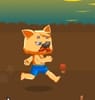
🍃🏃 The forest is not a vibe, it’s a test
Run Forest Run drops you into that classic runner situation where your feet are doing the thinking and your brain is just yelling commentary in the background. You’re racing through a forest track that looks friendly until you realize it’s basically a corridor of small betrayals. One second you’re gliding, the next you’re hopping over something that definitely wants you to faceplant, and suddenly you’re doing the runner math: if I jump now, will I land safely, or will I land directly into chaos? On Kiz10.com, it hits that sweet spot between “easy to start” and “why am I sweating over a browser game” 😅
It’s the kind of game that doesn’t ask for a long commitment. It asks for a sharp moment. A clean jump. A tiny correction. Then another. Then another. And before you know it, you’re in that loop where you promise yourself you’ll stop after one more run, except your definition of one more is dangerously flexible.
🌿🪙 Coins, distance, and the little lie you tell yourself
The first thing you learn is that coins are not just shiny decorations. Coins are temptation. Coins make you take risks you shouldn’t take. You’ll see a line of coins hovering in an awkward position and your brain will go, I can totally grab those, and your hands will agree before your common sense has a chance to object. That’s the fun of it, though. This isn’t a runner where you calmly stroll forward. It’s a runner where greed and speed shake hands and drag you into trouble.
Distance becomes its own obsession. You start measuring your run not just by how far you went, but by how clean you felt doing it. Some runs are messy but long, full of panic jumps and near-misses. Other runs are short but weirdly elegant, like you were in sync with the forest for a moment and then the forest remembered it hates you. The best part is that every failure feels like it has a reason. Not a random reason. A human reason. You jumped late. You rushed. You got cocky. You tried to grab the last coin in a risky line like a movie hero and paid the price. Classic. 😭
🐌🦟 The enemies are small, the disrespect is huge
The forest doesn’t throw giant bosses at you right away. It throws tiny annoyances that are somehow worse because they feel personal. Little critters that sit exactly where your landing wants to be. Fast hazards that appear when you’re already committed to a jump. Things that don’t look dangerous until you realize you’re about to collide with them at full speed.
And that’s what makes the game feel alive instead of mechanical. It’s not just “avoid obstacle.” It’s “avoid obstacle while moving at a pace where your eyes can barely keep up.” You start learning patterns, not because the game tells you to, but because you need to. You learn how the hazards tend to cluster. You learn when the track is likely to get rude. You learn to spot the trap where the safe path looks too clean, which usually means the next step is going to be chaos.
👟✨ Shoes and upgrades that feel like survival tools
A great runner game needs a reason to keep going besides pride, and Run Forest Run leans into progression in a way that feels satisfying. You collect coins and you start thinking about what those coins can buy you. Better shoes, better chances, better forgiveness when your timing isn’t perfect. It’s not about becoming invincible. It’s about stacking tiny advantages so you can push your run farther and make the forest feel slightly less disrespectful.
Upgrades also change how you play. When you know you’ve got a little extra help, you take different lines. You experiment. You try to keep your momentum instead of playing overly safe. And then you mess up anyway because you got confident, which is extremely on brand for runner games. 😂
🌲🧠 The real skill is rhythm, not speed
People think endless runners are about fast reactions, and yes, reactions matter. But the deeper truth is rhythm. If you find the rhythm, the game feels smooth. Your jumps become consistent. Your movement becomes calm. You stop flailing. You start anticipating instead of reacting late. That’s when you begin getting those runs that feel cinematic, like you’re surfing the forest instead of fighting it.
If you don’t find rhythm, you’ll still have fun, but it will be the chaotic kind of fun. The kind where you survive by luck and emotional damage. The kind where you shout “HOW” at the screen and then immediately press restart. The game supports both styles, honestly. You can play like a careful runner, or like a raccoon on an energy drink. Either way, the forest is ready. 😅🌿
🧩🚧 Tiny choices that decide the whole run
What makes Run Forest Run addictive is how often it forces micro-decisions. Do you jump early to be safe, or jump late to land closer to the coins? Do you take the riskier path that looks profitable, or stay on the boring lane that keeps you alive? Do you correct your position now, or wait one more beat and pray?
Those decisions stack. One safe choice keeps the run stable. One risky choice might multiply your rewards, or it might end your run instantly. And because restarts are fast, you don’t get discouraged. You get curious. You start trying new timing. New routes. New risk levels. The forest becomes a playground for experimentation, except the playground occasionally throws you into a wall. 😭
🎮📱 Quick to learn, hard to stop
This is a runner game built for quick sessions on Kiz10.com. It’s the perfect “I have a few minutes” game, which is hilarious because it’s also the perfect “why did I just play for half an hour” game. The controls are simple, the goal is clear, and the feedback is instant. You feel your improvement. You feel the difference between panic and control. You learn to stay calm when the track gets ugly.
And when you finally hit a run that feels clean, you’ll do that thing every runner player does. You’ll sit back and think, okay, that was good. That was my best. And then you’ll immediately think, I can beat that. That’s the ritual. That’s the loop. That’s the forest laughing softly while you press play again. 🍃🏃♂️





 Share
Share
 Embed
Embed