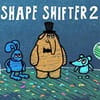
🧙♂️🌀 Three Souls, One Body, Zero Patience
Shape Shifter 2 starts with a tiny bit of fairy-tale mischief and then immediately turns it into a practical problem: a wizard’s curse has mashed three animals into one shared existence, and the only way forward is to switch forms on command. That premise sounds cute until you realize the levels are built like little arguments with gravity. One moment you need a nimble body to slip into a narrow gap, the next you need power and weight, and then—surprise—you need a totally different approach because the exit is sitting somewhere smug and unreachable. On Kiz10, it’s the kind of puzzle platformer that looks friendly, but quietly trains your brain to think in “what am I right now?” instead of “where am I going?” 😅
You’re not just jumping. You’re choosing a form with intent, like you’re picking the right tool from a toolbox that keeps changing shape in your hands. Mouse for tight spaces and delicate moves. Rabbit for agility and those glorious moments where a jump becomes a full “wait, I can actually float a bit?” feeling. Elephant for weight, stability, and the blunt solution to problems that don’t deserve elegance. The levels don’t ask you to be fast in the racing-game sense. They ask you to be smart fast: see the obstacle, pick the form, commit, and don’t second-guess yourself mid-jump because mid-jump is where regret lives 🫠.
🐭🔍 Small Form, Big Sneaky Opportunities
The mouse form is the game’s quiet genius. It’s the “I fit where I shouldn’t fit” option, the one you use when the level designer is trying to be clever with narrow tunnels, low ceilings, and suspicious little passages that scream “something valuable is hidden here.” You’ll start noticing how the environment is built with mouse logic in mind: tiny gaps that look decorative until you remember you can become small. And once you realize that, you stop running through levels like a single character and start scanning like a shape-shifting burglar. Is that gap real? Is that ledge reachable if I’m lighter? Is that star placed there to bait me into a trap? Yes. Probably yes 😈.
There’s also a weird emotional thing that happens: when you’re the mouse, you feel vulnerable. Everything looks bigger. Falls feel deeper. Enemies (or hazards) feel meaner. So you play carefully. You slow down. And the game rewards that caution because a lot of the trickiest star placements demand calm, precise movement rather than hero jumps.
🐰💨 The Rabbit Is the “I Can Fix This” Button
Then you hit the rabbit and suddenly the game feels like it gives you permission to breathe. The rabbit’s movement tends to be the most forgiving, the form that can recover when you slightly misjudge a jump, the one that makes you feel like you’re flowing instead of crawling. And Shape Shifter 2 knows exactly what it’s doing with that. It gives you sections where rabbit movement feels amazing… right before it forces you to switch away from it. Because if you stay rabbit-brained for too long, you start trying to solve every problem with jump confidence. That’s when you clip a ceiling, land awkwardly, and realize: okay, fine, the puzzle wants the other form now. 😅
Rabbit sections often become your “tempo” moments. You run, you hop, you chain moves smoothly, you feel like you’re clearing ground. The danger is getting addicted to that comfort. The best players don’t treat rabbit as the default, they treat it as a strategic mood: use it when the level is about movement, then switch immediately when the level becomes about geometry, weight, or access.
🐘🧱 The Elephant: Heavy Decisions, Heavy Landings
Elephant form is where the game stops being cute and starts being direct. Sometimes the solution is not finesse. Sometimes the solution is “be heavy.” The elephant is the form you choose when the puzzle needs stability, when you need to hold a position, resist a push, or interact with the environment in a way that screams mass over speed. It changes how you look at platforms too. Suddenly you’re thinking about what can support you, what will crumble (or what feels like it might), and how your own weight is part of the puzzle.
And there’s a satisfaction to it. Mouse is clever. Rabbit is smooth. Elephant is decisive. When a level has been making you dance around for two minutes and you finally realize, oh… I just need to be the elephant here, it feels like you solved a riddle with one blunt word. BONK. Problem solved. 🐘✨
⭐🗺️ Stars: The Real Reason You Keep Replaying
Let’s talk about the stars, because that’s where the game becomes personal. Completing a level is nice. Collecting all the stars is where your pride gets involved. Stars are placed in a way that forces you to engage with the full design: side paths, risky jumps, form-specific routes, and those annoying “it’s right there, why can’t I reach it?” moments that make you stare at the screen like it’s hiding the answer behind its back.
Star hunting also changes how you move. If you only want the exit, you might rush. If you want every star, you start planning. You start backtracking. You start switching forms not because the game blocks you, but because you’re optimizing your path like a tiny speedrunner with a completionist soul. And the funniest part is how it turns you into your own enemy. You’ll clear the level safely, then take one extra risk for the last star, and immediately lose. Not unfairly. Just… predictably. 🤡✨
🧩⚙️ Puzzle Platforming That Feels Like a Conversation
Shape Shifter 2 has that classic platform puzzle feel where every level is basically asking you a question. The question isn’t always “can you jump?” It’s “do you understand what I’m asking?” Because the right form at the wrong time is still wrong. The wrong form at the right time is… also wrong, just funnier.
You’ll develop a little internal dialogue as you play. “Okay, mouse for the tunnel.” “Rabbit for the long gap.” “Elephant to hold position.” Then the level throws a curveball and you go, wait, why is the star there? Why is that ledge angled like that? And suddenly you’re experimenting, switching rapidly, trying combinations, and realizing the game is less about reflex and more about reading the room. It’s like a miniature escape room, except your key is your own body and your lock is gravity. 🗝️🌀
🎭😵 When You Stop Thinking in One Body, Everything Clicks
The big “aha” moment comes when you stop treating form-switching as a special move and start treating it as language. Not “I switch because I must,” but “I switch because that’s how I express the solution.” Once you reach that mindset, the game flows. You enter a room and instantly see the intended route: mouse path here, rabbit jump there, elephant stability there. You stop brute-forcing jumps and start composing a sequence.
And the tone of your play changes too. You get less frantic. You hesitate less. You make cleaner decisions. That’s when Shape Shifter 2 becomes oddly satisfying, because it’s not just you surviving traps—it’s you understanding the level’s logic and responding with the right shape, at the right time, like you’re speaking fluent puzzle. 😌🧠
🕹️✨ A Quick Tip That Saves So Many Restarts
If you keep failing on star routes, try this: before you jump, decide what form you need to be immediately after landing. Don’t think only about the current gap. Think about the next two seconds. Many mistakes happen because you land as rabbit when you should land as mouse, or you land as elephant when you need a quick follow-up move. Planning one step ahead turns “impossible” sections into clean sequences.
Shape Shifter 2 on Kiz10 is the kind of puzzle platform game that stays fun because it constantly makes you reconsider who you are, not just where you are. Three forms, one cursed journey, a pile of stars, and that addictings feeling that the next level will be the one you perfect… until it isn’t. 😄⭐



 4.3 (22 votes)
 Share
Share
 Embed
Embed