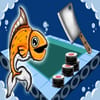
🐟🌊 Small fish, huge problem, zero patience from the ocean
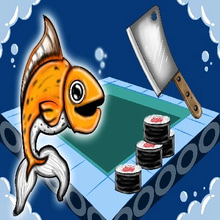
Slippy Fish starts with a simple idea that instantly feels unfair in a funny way: you’re a small fish, the sea is full of danger, and you have exactly one job… keep moving without getting turned into dinner. It’s an arcade survival game built on quick reactions and clean timing, the kind that looks friendly for two seconds and then quietly teaches you respect. The fish is fast, the hazards are everywhere, and the ocean has that classic “I don’t care about your plans” attitude. On Kiz10, it lands as a pure skill challenge: no long setup, no complicated menus, just you, a slippery little swimmer, and a path packed with things that want you gone.
The best part is how immediate it feels. You don’t need a tutorial to understand what’s happening. You see obstacles, you dodge, you keep going. But then the game starts speeding up, or the spacing gets tighter, or the pattern flips in a way that makes your fingers hesitate, and suddenly you’re not casually playing anymore. You’re locked in. You’re making tiny decisions every second. You’re doing that weird gamer breathing where you forget to inhale because you’re waiting for the perfect moment to move. 😅
🌀🫧 The movement feels light, until you mess it up
Slippy Fish is all about control that feels “simple” but isn’t. The fish glides with a smooth, floaty energy, which sounds relaxing until you realize floaty means you can overcommit. One bad tap and you drift into a hazard like you signed a contract with gravity. The game rewards small corrections, not panic swerves. If you get scared and spam inputs, you usually make it worse. The fish zigzags, your timing collapses, and the ocean collects its payment immediately.
So the real skill is learning restraint. Calm hands. Short adjustments. A steady rhythm. You start guiding the fish like it’s delicate glass, even though the goal is to move fast. It’s a funny contradiction: the game is frantic, but the best way to play is controlled. When you finally find that rhythm, it feels incredible, like the fish is skating between danger by instinct instead of luck.
🦈⚠️ Threats aren’t just obstacles, they’re pressure
The hazards in Slippy Fish don’t feel like background decoration. They feel like the whole mood. Tight gaps, sudden danger zones, and the constant sense that one mistake ends everything. That’s what makes it a proper survival arcade game instead of a casual swim. You’re not exploring an underwater world for sightseeing. You’re navigating a gauntlet.
And the theme helps a lot. The game leans into that “escape before you become food” tension. Your fish isn’t a hero with a sword. It’s a snack with a dream. That makes every close call feel personal. When you barely slip through a gap, you don’t think “nice.” You think “OH THANK GOD.” Then you immediately get punished for celebrating too early, because the next hazard arrives like it heard you smiling. 🙃
🎯🧠 Reading the water like a map, not a blur
At first, you’ll react late because you’re watching the fish. That’s the classic trap in reflex games. You stare at the character, you respond when danger is already in your face, and the run ends. The moment you improve is the moment you start watching ahead. You scan the next opening. You read the spacing. You treat the path like a sentence you’re learning to speak fluently.
Slippy Fish rewards that “look forward” mindset hard. Once you’re scanning ahead, you stop making emergency moves and start making planned moves. You choose your line early. You stop drifting into the center “just because.” You position the fish for the next gap before you even reach it. That’s when your runs get longer, not because the game gets easier, but because your decisions get cleaner.
💥😬 The real enemy is the greedy move
There’s always a moment where you feel safe. You’ve dodged three hazards in a row, your rhythm is good, and your brain goes, okay, we’re fine now. That’s the exact moment Slippy Fish ends your run. You take a slightly riskier line. You cut a corner too close. You try to correct too late instead of committing early. You do one extra movement you didn’t need. Boom, done.
It’s almost comical how often the run ends not because the level was impossible, but because you got a little too confident. The ocean doesn’t punish skill. It punishes arrogance. The game basically asks, can you stay sharp even when you’re doing well? That’s the real test, and it’s why people replay these games like they’re trying to settle a personal argument.
🐠✨ The satisfying part: improvement is obvious
One reason Slippy Fish works so well on Kiz10 is that you can feel progress quickly. Early attempts are short and chaotic. Later attempts are smoother. You start dying in different places, which sounds bad, but it’s actually proof you’re advancing. You start surviving sections that used to delete you instantly. You start making fewer wild corrections. You start trusting your timing.
And then you chase “clean runs.” Not just long runs. Clean ones. The kind where you glide through gaps without scraping the edge, where your inputs are minimal, where the fish feels like it’s moving on rails you built with your own control. Those runs are addictive because they feel earned. You don’t stumble into them. You build them.
🕹️🐟 Quick tips that actually help (and don’t ruin the fun)
Try this: stop making big reactions. Big reactions create big mistakes. Make smaller adjustments earlier. If you see a gap coming, position before you reach it. Another one that matters more than it should: don’t “hover” in the middle unless the game forces you. The middle is usually where you get trapped, because hazards close in and you have no direction advantage. Pick a line with intent, then ride it.
Also, if you’re having a bad streak, slow your brain down, not the fish. Your hands should stay calm even if the game is fast. When players fail repeatedly, it’s usually because they’re inputting in panic rhythm instead of timing rhythm. Reset your rhythm. One clean move at a time.
🌊🏁 Why Slippy Fish is the perfect short-session obsession
Slippy Fish is a pure reflex survival experience with an instantly readable goal and a brutally replayable loop. It’s cute enough to be approachable, sharp enough to be challenging, and fast enough to feel exciting without requiring a huge time investment. You can play for a minute and get a quick rush, or you can play for twenty minutes chasing that one run where everything clicks and you feel like the ocean finally stopped trying to bully you.
If you like fish games, underwater survival challenges, arcade dodging, and high-score runs where every mistake is your fault in the most motivatings way, Slippy Fish belongs in your Kiz10 rotation. Just remember the rule the sea never forgets: the moment you relax, you become lunch. 🐟💨🦈












 4.1 (12 votes)
 Share
Share
 Embed
Embed