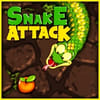
🐍⚡ A hungry snake with anger issues
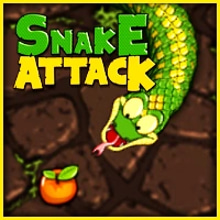
Snake Attack doesn’t introduce itself with a gentle tutorial and a handshake. It drops you into the kind of survival space where you’re already moving, already making decisions, already trying not to get cornered like a rookie. You’re a snake, sure, but not the cozy “eat an apple and politely grow” kind. This is the version of a snake that treats the arena like its personal territory and everything in it like a problem to solve with speed.
The first minute is a vibe check. You learn how the snake responds, how sharp your turns feel, how risky it is to commit to a chase, and how quickly a small mistake becomes a crash, a trap, or a humiliating reset. And that’s the hook: the game feels simple, then it gets spicy, because the arena starts filling with moments where you have to choose between greed and safety. Go for the snack? Go for the enemy? Pull back and reposition? You’ll tell yourself you’ll play safe, and then you’ll see a perfect opportunity and your finger will betray your promise 😅
🧠🎯 The secret skill is reading danger before it happens
In Snake Attack, the enemy isn’t only whatever you’re hunting. The enemy is the shape of the space around you. Tight corners. Blind angles. That one spot you drift into when you panic. The game rewards players who stay calm and treat movement like strategy, not like random wiggling.
When you’re doing well, it feels like you’re predicting the future by half a second. You turn early. You cut off angles. You keep your head pointed toward safety while still collecting what you need. When you’re doing badly, it feels like the arena shrinks. Suddenly every turn is late, every path is crowded, and you’re one unlucky bump away from becoming a sad memory.
There’s a satisfying tension in that. It’s not a long, slow build. It’s quick choices with immediate consequences. You start to develop habits without even noticing. Staying near open lanes. Keeping escape routes. Avoiding reckless dives unless you’re sure you can finish the job. The game teaches discipline the way arcade games do best: by punishing you instantly, but in a way that makes you laugh and try again.
🍽️💥 Growth that feels like power, not just size
Growing in a snake game can be a double-edged blade. Bigger means stronger, but bigger also means harder to control. Snake Attack plays with that exact feeling. Early on, you’re small and fast, slipping through tight gaps like a sneaky little menace. As you grow, you begin to feel heavy, important, dangerous. Your movement becomes a statement. You can take space. You can pressure opponents. You can force mistakes.
But with that power comes responsibility, and yes, I mean responsibility in the funniest way possible. Because the moment you get large and confident, you start taking risks you shouldn’t. You’ll cut too close to an obstacle. You’ll turn too late. You’ll overcommit to a target. And suddenly the big powerful snake becomes the big embarrassing snake. It’s a cycle. It keeps the game honest.
⚔️🐍 The “attack” part: speed kills, hesitation kills faster
Snake Attack lives on rhythm. Move, strike, collect, reposition. If you hesitate at the wrong time, you give the arena time to punish you. If you rush at the wrong time, you punish yourself. The best runs happen when you find that sweet middle ground where you’re aggressive but not reckless, confident but not careless.
You’ll notice that attacks feel cleaner when you approach like a hunter, not a sprinter. Don’t chase in straight lines forever. Curve. Set up angles. Force the other side to react. Make your movement uncomfortable for them. A good snake player doesn’t just go faster. A good snake player controls where the fight happens.
And because the game is arcadey and quick, you get to try those ideas without committing your whole day. Fail fast, learn fast, run it back. The best part is when you pull off a clean cut-off, the kind where you trap a threat with movement alone, and you feel like a genius for a moment. Then you crash into something silly two seconds later. Balance. Poetry. Snake life 🥲
🌪️🕹️ The arena mood: calm for five seconds, chaos forever
Snake Attack has that lovely arcade escalation where everything starts manageable and then slowly turns into a mess you have to tame. You’re collecting, growing, staying alive, and the game keeps layering pressure. Maybe more hazards. Maybe more opponents. Maybe tighter routes. Whatever the exact flavor, the result is the same: the arena becomes a living problem.
That’s when the game becomes less about raw reflex and more about composure. You can’t win by panic-turning. You win by keeping your head in open space and treating every move like it matters. Even when you’re huge, you still need to move like you’re fragile, because one mistake can delete everything you built.
It’s the kind of game where you’ll have a run that feels unstoppable, then one tiny decision ruins it, and you sit there thinking… “I knew better.” Then you hit play again immediately because now it’s personal 😤
✨🔁 Why it’s so replayable on Kiz10.com
Snake Attack is built for repeat sessions because improvement is visible. You feel yourself getting better. You stop making the same dumb turns. You start predicting threats. You learn when to push and when to reset position. The game doesn’t need a massive story to keep you invested. The story is your run. Your streak. Your growth. Your clean escapes and ugly mistakes.
It also scratches that perfect arcade itch: short rounds, high intensity, instant restarts. You can play it as a quick break or sink into it chasing “one more perfect run” until you realize you’ve been locked in for way longer than you planned. It’s the kind of chaos that feels light, but still skillful.
If you like snake games with aggressive pacing, survival pressure, and that constant dance between greed and control, Snake Attack on Kiz10.com is a perfect match. Just remember the oldest snake rule: you don’t die because you’re slow… you die because you thought you were safe 🐍🔥












 4.1 (93 votes)
 Share
Share
 Embed
Embed