🕶️ Quiet Shoes, Loud Panic
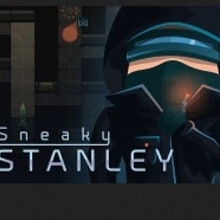
Sneaky Stanley is the kind of game that pretends to be calm for about three seconds and then reminds you that being sneaky is actually a full-time stress condition. You are not charging into battle, not smashing walls, not launching rockets into the moon like some caffeinated maniac. No, this is more delicate than that. This is a stealth puzzle game. A measured one. A tense one. A “please do not walk directly into the robot’s vision cone again” kind of experience. And somehow, that makes it even more dramatic.
At its core, Sneaky Stanley is about movement, timing, and reading the room before the room ruins your day. You guide Stanley through dangerous levels where the objective sounds simple enough: reach the valuable target, stay out of sight, and do not get caught by robotic security. Easy on paper. Slightly less easy when every square of space feels like a bad decision waiting to happen. That is the magic of the game on Kiz10. It turns a quiet mission into a tiny thriller where every move feels louder than it should.
💎 One Diamond, Twelve Bad Decisions
The setup is deliciously dangerous. Stanley is after treasure, usually something shiny enough to justify the risk, and the building around him is not exactly welcoming. Security bots patrol the area, sightlines become traps, and the level layout starts playing mind games with you almost immediately. You begin by thinking in straight lines. Then the game laughs softly and forces you to think in patterns, bait routes, turn timing, and safe tiles.
This is not a speedrun first, brain later type of game. Sneaky Stanley works because it slows your instincts down just enough to make every action feel intentional. You stop rushing. You start studying. You stare at a guard pattern for a second too long and suddenly feel like a suspiciously underqualified mastermind. There is something oddly satisfying about that. It is stealth stripped down to its bones: where can you move, when can you move, and what happens if you get greedy? The answer to that last one is usually “something embarrassing.”
And yes, greed absolutely becomes part of the experience. You spot the gem, the exit, the path that almost works, and your brain says, go now, probably fine. It is rarely fine. Sneaky Stanley is built around that sweet little gap between what looks safe and what actually is safe. Living inside that gap is half the fun and most of the panic 😏
🤖 Robots, Routes, and the Tiny Theater of Failure
The enemies in this game are not chaotic monsters crashing through the walls. They are worse. They are organized. Predictable, but only if you bother to pay attention. These security robots create the entire mood of the game because they transform each level into a miniature stage performance where timing matters more than confidence. You do not overpower them. You outwait them, outread them, and hopefully outsmart them before your courage turns into nonsense.
That structure gives the game a very clean kind of tension. Every failure teaches something. You learn the patrol route. You learn where the trap was hiding. You learn that the “safe” corner was actually a lie with geometry. Then you restart, now wiser and slightly offended. This is one of those puzzle games where losing does not feel like punishment. It feels like information. Annoying information, maybe, but useful.
Because of that, the game gets more addictive the longer you spend with it. It stops being about simply escaping detection and starts becoming about perfection. Can you do it with fewer moves? Can you reach the objective without hesitation? Can you glide through the level like a criminal ghost instead of a panicked office worker wearing borrowed stealth? That challenge creeps up on you. Quietly, fittingly.
🧠 Puzzle Design That Whispers Instead of Screams
Some puzzle games throw giant mechanics at you and hope volume counts as intelligence. Sneaky Stanley does the opposite. Its design is tighter, quieter, more controlled. The challenge comes from space, timing, and risk. That gives the game a very satisfying shape. You are not flooded with nonsense. You are given a problem, a few dangerous variables, and just enough freedom to make the wrong move in a very creative way.
That is why the game feels clever rather than complicated. Each level can be read at a glance, but solving it cleanly takes real attention. You begin spotting details that did not seem important at first. A patrol turn. A narrow route. A pause in movement. Suddenly the whole level opens up. Those moments are great. Tiny, nerdy, deeply satisfying. It is the stealth-game version of hearing a lock click open after fumbling with the key for far too long.
There is also something charming about the game’s restraint. It never needs to become huge to become interesting. It just keeps tightening the screws. More pressure. Smarter layouts. Less room for sloppy movement. The challenge grows naturally, which means the tension grows with it. By the time you are deep into a set of levels, you are no longer just solving puzzles. You are planning tiny heists with the seriousness of someone trying to steal the sun.
🎭 The Mood: Half Cool Criminal, Half Nervous Disaster
What makes Sneaky Stanley memorable is the contrast between how stylish stealth sounds and how clumsy it can feel when you are actually doing it. In your head, you are smooth. Efficient. Untouchable. In reality, you often sit frozen for two full seconds because a robot turned one tile earlier than expected and now your soul has left your body. That tension between fantasy and panic gives the game personality.
Stanley himself fits that atmosphere perfectly. The name alone already sounds like someone who got hired because he was “good enough under pressure,” which is hilarious when the pressure becomes absolutely ridiculous. You are not playing an invincible action hero here. You are playing a sneaky survivor with a mission, a target, and a very limited margin for nonsense. It makes the game feel more human, even in its most puzzle-driven moments.
And on Kiz10, that works beautifully. It is easy to jump into, easy to understand, and instantly engaging because the rules are so readable. Avoid sightlines. Reach the treasure. Do not get caught. But inside those simple rules is a lot of room for tension, mastery, and those lovely little moments where you finally beat a level that had been quietly insulting your intelligence for ten minutes.
🚪 A Heist Made of Patience, Timing, and Tiny Victories
Sneaky Stanley is not loud about what it does well. It does not need to be. Its strength is precision. It gives you a stealth puzzle challenge that feels focused, clever, and weirdly personal. Every move matters. Every mistake is yours. Every successful route feels earned. And because the danger is always readable, the game keeps pulling you back with that powerful little thought: I can definitely do this cleaner next time.
If you enjoy stealth games, logic games, thief adventures, or puzzle experiences where planning is more important than brute force, Sneaky Stanley is a fantastic fit on Kiz10. It captures that special feeling of slipping through dangers by a single move and turning patience into progress. No explosions needed. No chaos required. Just one sneaky path, one bright gem, and one more chance to prove you are smarter than the machine watching the hallway.



 2.5 (14 votes)
 Share
Share
 Embed
Embed


