🎾🌍 Stadium Noise and Sudden Nerves
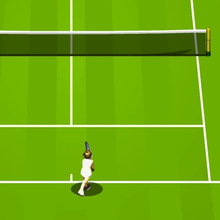
Tennis World Cup throws you into that very specific kind of sports chaos where everything looks clean for about two seconds, and then the rally starts and your brain becomes a small emergency room. The court is simple. The objective is simple. Hit the ball back, win the point, keep going. But of course it never feels that simple once the match begins. That’s when timing starts to matter, rhythm starts to matter, and every return feels like a tiny argument with gravity.
What makes this tennis game click so quickly is the tension between elegance and panic. Tennis always looks graceful from a distance. Smooth movement, perfect angles, clean white lines, all very civilized. Then you actually play, and suddenly it becomes a desperate sprint to keep control of a ball that seems personally offended by your existence. Tennis World Cup leans into that fun contradiction. It gives you the fantasy of world-level competition, but it keeps the gameplay sharp, immediate, and approachable enough that you can jump in without needing a coaching staff and a decade of training montages.
On Kiz10, that works beautifully. You open the game expecting a quick sports match and end up locked into a string of rallies where each point starts feeling weirdly important. It’s just one more serve, one more return, one more match. That’s how these games get you. Quietly. Efficiently. Almost politely.
And there is something old-school satisfying about a tennis game that understands its real strength: momentum. Not just speed, not just scoring, but momentum. The feeling that one smart shot can swing the tone of a whole match. One mistake can hand control away. One clean rally can make you feel like an absolute champion for fifteen glorious seconds.
🏆🔥 The Cup Is Not Going to Win Itself
The title says it all, really. Tennis World Cup is not built around a lazy exhibition vibe. It aims for that global tournament energy, the idea that every match pushes you a little closer to being the player everyone else has to fear. Even if the structure stays arcade-friendly, the mood still taps into that bigger sports fantasy. You are not casually knocking a ball around the park. You are chasing a trophy, a title, a moment.
That goal changes the feel of everything. A single point matters more when it feels connected to progress. A win feels cleaner. A loss stings a little more. Not in a dramatic, controller-throwing way, hopefully, but enough to make you want another match. Sports games live and die by that urge to improve. Tennis World Cup gets it. It gives you enough control to feel responsible for what happens, which means victory feels earned and defeat feels... educational. Very educational. Deeply, almost suspiciously educational.
The rhythm of tennis also helps. Unlike games that drown you in nonstop visual noise, this one gives you bursts of intensity. Serve. Return. Reset. Then suddenly a rally stretches longer than expected and everything tightens. You start leaning forward. Your timing sharpens. The match stops being casual and starts becoming personal. Not against a real human enemy, maybe, but against the pressure of your own reactions.
That is where the game becomes memorable. Not because it is trying to overwhelm you with complexity, but because it knows sports tension doesn’t need to be complicated to be effective. It just needs to feel alive.
⚡🎾 Fast Hands, Smart Angles, No Mercy
A good tennis game does not only ask whether you can hit the ball. It asks whether you can place it, react to it, recover after it, and keep your cool when a rally starts wobbling out of control. Tennis World Cup thrives in that zone. It is easy to understand on the surface, but once the pace picks up, the little details start deciding everything.
Positioning matters. Timing matters. Patience matters more than people think. Sometimes the most satisfying point is not the flashy one. It is the quiet one where you stay composed, keep the ball in play, and wait for the opening. Other times, though, you absolutely want the dramatic winner, the kind of shot that feels like punctuation. A full stop. Conversation over. Point yours.
That variety is part of the fun. Some matches feel smooth and controlled. Others become scrappy little wars of survival. The game can shift from calm to intense with almost no warning, and that keeps it from feeling flat. You’re not just repeating the same motion. You’re adapting to the flow of the point, reading space, and trying not to hit a panicked return that hands everything away.
There is also a nice purity to the whole setup. Tennis games are at their best when they trust the sport. They do not need fireworks every second. The ball itself creates the drama. The angle of a return can be enough. The pace of a rally can be enough. A missed shot can feel loud even without explosions or cinematic slow motion. Tennis World Cup seems to understand that and lets the court do the talking.
🌪️👟 When a Rally Turns Into a Tiny Disaster Movie
Then comes the real fun: those moments when a normal exchange suddenly turns wild. You think you have the point under control, and then the rally stretches. The ball comes back one more time. Then one more. Your nice neat plan falls apart. Now you’re improvising. Now you’re reacting. Now your brain is making terrible little internal speeches like “just get it over the net, please, I am begging you.”
That’s the secret engine of this game. It creates those tiny pressure spikes that make sports titles replayable. You are always close to either brilliance or nonsense. Sometimes both in the same point. One lucky angle makes you look like a genius. One mistimed return makes you look like someone who has never seen a racket before. Humbling stuff. Very healthy for character development.
And because the matches keep moving, the game avoids dragging. That matters. Sports browser games need pace. They need to respect the player’s attention while still delivering enough challenge to feel rewarding. Tennis World Cup does exactly that. It gives you quick access to the good part: the duel itself. No unnecessary fluff. No endless detours. Just serve, rally, score, repeat.
On Kiz10, that makes it a strong pick for anyone who wants a sports game with immediate feedback and a clean competitive loop. It is the kind of game you can play casually, but it also has enough tension to wake up your inner try-hard. You know the one. The version of you that suddenly cares a little too much about virtual tennis prestige.
🥇🌍 Why Tennis World Cup Feels So Good to Replay
At the heart of it, Tennis World Cup works because it captures one of the best things about tennis: every point feels like a miniature story. There is an opening move, a shift in control, a risky moment, and then a result. That structure naturally creates drama, even in short bursts. The game uses that beautifully.
It also benefits from clarity. You always understand what you are trying to do. The challenge is not confusion. The challenge is execution. That means every improvement feels real. You are not learning nonsense systems; you are getting better at the thing that matters. Better timing. Better reactions. Better choices.
And maybe that is why the game stays fun. It does not pretend to be more complicated than it needs to be. It just delivers a solid tennis experience with tournament flavor, fast rally tension, and that lovely sports-game cycle of win, improve, repeat. Sometimes you dominate. Sometimes you scrape through. Sometimes you lose and immediately queue up another match because your pride refuses to leave quietly.
So if you want a tennis game on Kiz10 that feels quick, competitive, and full of sharp rally energy, Tennis World Cup absolutely earns a spot on the courts. It has the pace, the pressure, and the clean arcade spirit that makes a sports game easy to start and annoyingly hard to stop playing. One more match? Yeah, probably.



 5 (88 votes)
 Share
Share
 Embed
Embed