✏️📄 A notebook doodle that turns into a full-on mind game
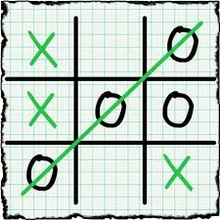
Tic Tac Toe: Paper Note takes the oldest “I’m bored in class” classic and makes it feel oddly fresh again. You know the rules in your bones: three by three grid, X versus O, first to connect three wins. But this version leans hard into that paper-note aesthetic, like someone scribbled a quick board on a sheet and said “prove you’re smarter than me.” And that simple setup is exactly why it works so well on Kiz10. No loading drama, no complicated systems, just pure strategy in tiny bites… with enough tension to make you stare at a blank square like it personally offended you.
It’s a strategy puzzle game dressed as a casual pastime, and that contrast is the fun. The visuals say “relax,” but the decisions say “don’t you dare misclick.” Because tic tac toe is a game of mistakes. The board is small, the choices are limited, and that means every move is loud. One sloppy corner, one ignored threat, and suddenly you’re watching the other side draw the winning line with the calm confidence of someone who knows you handed it to them.
⭕❌ The rules are simple, the consequences are not
The basic objective never changes: place your symbol, create a line of three, and stop your opponent from doing the same. That’s it. But inside that simplicity there’s a very real little battle happening. You’re not just trying to “get three.” You’re trying to control the board. You’re trying to force the opponent into boring defensive moves while you quietly build a trap that wins anyway.
The funniest part is how quickly the game teaches you humility. You’ll start with a move that feels “good” because it’s aggressive, then you’ll realize it opened an angle you didn’t see. Or you’ll block the obvious threat and still lose because there was a second threat hiding behind it. Tic Tac Toe: Paper Note is basically a tiny mirror that shows you how you think under pressure. Do you play safe? Do you play greedy? Do you tunnel-vision? Do you plan two moves ahead or only one? The grid doesn’t care. It just records your decisions like a judge with a pen. 🧑⚖️✍️
🧠🎯 The real secret is not winning fast, it’s making the board “yours”
If you want to feel like you’re actually in control, stop thinking of the board as nine squares and start thinking of it as power zones. The center is influence. The corners are threat engines. The edges are… well, they exist, but they’re usually where people go when they don’t have a better plan. 😅
A strong opening doesn’t guarantee a win, but it usually guarantees something better: options. Options mean you can adapt. Options mean you can pressure. Options mean you don’t spend the whole game reacting. And reacting is how you end up in those annoying matches where you block and block and block until the game becomes a draw, and you’re sitting there thinking, okay… I survived, but I didn’t dominate.
Paper Note’s charm is that it makes you want to dominate, even though it’s tic tac toe. You want clean wins. You want to set a trap and watch it snap shut. You want that moment where your opponent can’t block both threats at once, and you get the final move like a mic drop. 🎤❌
🤝😈 Play vs CPU or 2 Player and suddenly it’s personal
This game hits differently depending on who you’re up against. Versus the computer, it’s a tidy logic duel. You’re testing patterns, learning how the CPU responds, and trying to outmaneuver it with clean setups. It’s almost meditative… until you realize you’re one move away from losing and your “meditation” turns into frantic arithmetic in your head.
In 2 player mode, though? Different beast. Suddenly the board becomes a tiny stage for mind games. You start predicting habits. You remember what your friend did last round. You start baiting blocks. You start playing slightly weird moves on purpose to see if they panic. And when someone loses, it’s not just a loss, it’s a story. “You didn’t see the fork.” “You always forget the corner.” “You went edge first like a maniac.” The paper theme makes it feel like the old-school table version where people argue, laugh, and demand a rematch instantly. 😄
🌀🧩 The “fork” is the villain and the hero of every match
There’s one concept that turns tic tac toe from “kid game” into “oh, this actually has depth”: the fork. That moment where you create two winning threats at once, forcing the opponent to block one and lose to the other. Tic Tac Toe: Paper Note is basically a fork factory if you know how to build them, and a fork cemetery if you don’t.
You don’t need complicated theory to use forks, you just need awareness. Where could a second threat appear? If you place your symbol here, what lines does it open? If your opponent blocks that line, does your next move create another? It’s quick, sharp thinking. The board is small, so the puzzle is intense in short bursts, like a mini chess tactic compressed into nine squares.
And here’s the chaotic truth: once you start hunting forks, the game gets way more fun. Every match becomes a little trap-setting contest. You stop playing random. You stop “hoping” for a win. You start engineering it.
😬🛡️ Blocking isn’t boring when you treat it like a counterattack
A lot of players hate blocking because it feels defensive. In Paper Note, blocking can be a weapon if you do it with intention. The best blocks aren’t the ones that simply stop a win. The best blocks are the ones that stop a win while also improving your position. You block… and steal control. You block… and take the center. You block… and create a threat that forces the opponent to respond. That’s how you turn defense into momentum.
If you ever feel stuck in endless draws, it usually means your blocks are purely reactive. You’re putting out fires instead of building something. Next time, when you block, ask yourself a petty little question: “What do I get from this?” If the answer is “nothing,” you’re surviving, not playing. If the answer is “a corner, a line, a new threat,” now you’re cooking. 🔥⭕❌
📌🕹️ Why the paper style makes it oddly addictive
The notebook look isn’t just cosmetic. It changes the vibe. It makes the game feel like a quick, casual challenge you can start anytime, which is perfect for Kiz10. But because it feels light, you keep restarting. And because the game is short, you keep chasing “one perfect match.” You lose once, you want redemption. You draw once, you want a win. You win once, you want a faster win. Suddenly you’re deep in a loop that’s basically: tiny board, big emotions. 😵💫
And that’s the magic of a good browser tic tac toe game. It respects your time. It gives you instant tension and instant resolution. Win or lose, you learn something in seconds. Then you try again with a slightly sharper brain.
🧠✨ Little habits that make you instantly better
If you want immediate improvement, stop giving away the center when you shouldn’t, stop ignoring corners, and stop making “pretty” lines that don’t lead to a fork. Also, watch your opponent’s second move carefully. That’s where most games are decided. If you can predict what they’re trying to build early, you can cut it off and force them into awkward edge moves that don’t threaten much.
And when you’re about to click, pause for half a heartbeat and do one quick scan: do I win right now? do I need to block right now? if neither, can I create a threat that forces a block next? That tiny scan is basically your cheat code for cleaner matches.
Tic Tac Toe: Paper Note is a classic strategy puzzle game with a cozy notebook vibe and sharp decision-making packed into every move. Whether you’re playing versus the CPU for quick brain trainings or battling a friend in 2 player mode for bragging rights, it’s the kind of Kiz10 game that’s simple, fast, and secretly competitive in the best way. ✏️⭕❌





 Share
Share
 Embed
Embed


