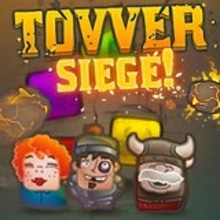
Tovver: Siege throws you into one of the oldest conflicts imaginable: a lonely tower versus an army that clearly has nothing better to do than tear it down. The setup is simple, almost classic in its brutality. Enemies arrive. Your defenses respond. The tower either survives… or becomes a pile of regret. That tension is exactly what makes siege-style strategy games so satisfying. They compress a full battlefield into a single focal point, one fortress, one defense line, one place where every decision matters.
On Kiz10, Tovver: Siege fits neatly into the tower defense genre, where the goal is survival through planning, upgrades, and clever positioning. You are not wandering through giant maps looking for objectives. Instead, everything revolves around protecting your stronghold while enemies swarm toward it from every direction. This style of gameplay is common in siege and tower defense titles where players defend a structure against waves while strengthening their abilities over time.
The beauty of a siege game is how quickly the pressure builds. At first, the enemies seem manageable. You shoot, block, upgrade, and watch the tower stand tall. But wave after wave begins to pile up, and suddenly every tiny mistake starts feeling dangerous. That is when the real game begins.
🧱🔥 Building a defense that actually survives
In Tovver: Siege, the central mechanic revolves around protecting the tower while expanding its strength. In games like this, the tower is more than just a structure. It is your lifeline, your weapon platform, and your last line of defense all at once. Every improvement you make, whether stronger attacks, faster defenses, or new abilities, directly affects how long the fortress can survive against the invading forces.
Tower defense gameplay often focuses on strengthening systems over time, letting players upgrade mechanics or abilities to become more effective against stronger waves. That gradual growth is where the strategy lives. Early levels may allow simple defenses, but as enemies evolve, the player must adapt quickly. What worked against the first wave might fail miserably against the tenth.
This evolving challenge creates a satisfying rhythm. You learn the flow of attacks. You understand when to spend resources. You choose between short-term survival or long-term power. And sometimes those decisions come back to haunt you a few rounds later when the battlefield suddenly looks far more crowded than expected.
⚡🧠 Strategy hides behind chaos
At first glance, a siege defense game can feel chaotic. Enemies rush forward, attacks fly across the screen, upgrades demand attention, and your tower takes damage faster than expected. But underneath that chaos sits a surprisingly thoughtful layer of strategy. The player must constantly evaluate priorities: strengthen the tower, increase attack power, or unlock abilities that change how battles unfold.
This balancing act is what keeps the gameplay engaging. If you spend everything too early, later waves become overwhelming. If you save resources too long, early enemies might break your defenses before your strategy even begins. That push and pull forces players to think ahead while still reacting to immediate threats.
Over time, players begin to recognize patterns. Certain enemies arrive in groups. Others hit harder but move slower. Some require quick bursts of power to stop them before they reach the tower. That knowledge turns random survival into controlled defense. What once looked like chaos slowly becomes a system you understand and manipulate.
💥👾 Waves that never stay easy
One of the defining features of a siege-style game is escalation. The first few waves exist to teach the basics, but the later ones exist to test whether you actually learned them. Enemies become tougher, faster, or more numerous, forcing the player to adapt constantly.
This design works because it builds tension naturally. Every victory creates confidence. Then the next wave shows up and challenges that confidence immediately. It is a cycle that pushes players to refine their tactics over and over again.
And there is something very satisfying about watching a defense system you built slowly become stronger. When upgrades stack together properly, your tower transforms from a fragile structure into a powerful fortress capable of holding back entire armies. That transformation is the emotional payoff of the genre.
🛡️🎮 The appeal of defending one place
What makes siege defense games so compelling is their focus. Instead of juggling dozens of objectives, everything centers on a single location. Protect the tower. That clarity creates intensity. Every attack matters because the enemy has only one goal: reach your fortress and destroy it.
This design also makes victories feel meaningful. When the final enemy falls and the tower still stands, the win feels earned. It was not luck or randomness. It was planning, upgrades, and quick reactions working together.
And even when the tower falls, players usually know why. Maybe an upgrade came too late. Maybe resources were spent too early. Maybe the wave simply overwhelmed the defenses. That sense of cause and effect encourages players to try again with a smarter strategy.
🌌 Why Tovver: Siege works so well on Kiz10
Tovver: Siege succeeds because it captures the core thrill of a siege defense game without burying the player under unnecessary complexity. The goal is clear, the action is constant, and the upgrades provide steady progression. Every session becomes a battle of endurance and planning, where players slowly refine their defense until the tower becomes nearly unstoppable.
On Kiz10, this type of browser game fits perfectly for players who enjoy tower defense, strategy challenges, and wave-based survival gameplay. It offers quick matches but deep enough mechanics to keep players experimenting with new approaches.
So if you enjoy defending a fortress against endless attackers, building stronger defenses, and watching your tower survive against impossible odds, Tovver: Siege delivers exactly that kind of thrilling battlefield tension. Hold the line, strengthen the walls, and make sure the tower is still standing when the final wave crashes in.





 4.2 (7 votes)
 Share
Share
 Embed
Embed


