🐤 Tiny wings, terrible odds, one more run
Tweety Fly has that dangerous kind of simplicity that looks innocent until it completely takes over your attention. The setup is clean: click or tap to flap, keep the little bird in the air, dodge every obstacle, and try to fly as far as possible. Kiz10 describes it exactly in that spirit, as an addictive flying game where you flap your wings, avoid obstacles, and chase distance. And honestly, that is all it needs. No dramatic lore, no giant system tree, no fake complexity trying to look important. Just a bird, a sky full of bad ideas, and your ability to stay calm for more than five seconds, which is already asking a lot.
🪙 Coins make everything worse in the best way
What helps Tweety Fly stand out from a basic flap-and-survive challenge is that the run is not only about avoiding danger. Public descriptions of the game also point to coins and upgrades, which is where the tension gets a lot more interesting. A pure endless flyer is already good at creating pressure, but once you add things to collect, the route becomes emotional. Now you are not just surviving. You are making choices. Do you hold the safer line and keep the run alive, or drift toward a coin because your brain has decided that one shiny pickup is somehow worth risking the whole flight? Exactly. That tiny greed is what gives games like this their nasty little charm. You start the run sensible. Then one coin appears slightly out of place, and suddenly you are making sky decisions with the judgment of a goblin.
🎯 The real challenge is rhythm, not speed
A lot of players jump into flappy-style games thinking they are about tapping fast. They are not. They are about tapping correctly. Tweety Fly lives or dies on rhythm. Too much input and the bird shoots upward like it has seen a ghost. Too little and it drops like your confidence after the third crash in a row. The sweet spot is somewhere in between, and finding that balance is where the fun starts becoming a little obsessive. Kiz10’s page frames it as a game where you click to flap and dodge obstacles, and that style always works best when movement feels like a conversation between panic and control. Not perfect control, obviously. Just enough to slip through the next gap and keep the run alive.
☁️ Cute on the outside, rude at the center
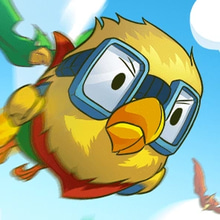
There is something funny about how bird flying games always pretend to be charming before they become vicious. Tweety Fly absolutely has that energy. The little bird theme makes everything look light, colorful, harmless even. Then the obstacle pattern tightens, your altitude gets messy, and suddenly the game reveals its true identity: a reflex trap with feathers. That contrast is part of why it works so well. If this were just a generic square floating through pipes, it would still be functional. But a bird with a playful look trying to survive a sky that clearly hates it? Much better. The cuteness makes the frustration funnier. Every crash feels slightly more personal, and every clean stretch feels strangely heroic for something so small and chaotic.
💥 Why every mistake feels louder than it should
The beauty of Tweety Fly is that failure is instant and obvious. You do not lose because of some hidden rule. You lose because your timing slipped, your line drifted, or you chased something you should have ignored. That honesty is what makes flappy games so addictive. The reason is right there. You can feel the better run immediately. You know the mistake. You know the correction. And because the controls are so direct, your next attempt always feels possible. Dangerous, but possible. That is the loop. Crash, reset, improve by a millimeter, repeat. A game built on distance and obstacles does not need much more than that if the feedback is quick and the movement stays readable. Tweety Fly seems to understand that perfectly.
🧲 Upgrades turn a simple flyer into a real chase
The upgrade angle gives the game an extra layer of personality. Outside descriptions mention gadgets and bonuses like magnets, shields, and rocket-style boosts, which means the run is not just about raw survival but also about growing your ability to stay alive and push farther. That helps a lot. Without progression, a flying arcade game can live or die entirely on score-chasing. With upgrades, there is a second reason to keep coming back. One more run does not only mean one more chance at a high score. It also means one more push toward better tools, smoother flights, and a stronger sense that the next attempt might open up in a new way. Progression always makes failure easier to swallow. You crash, sure, but you leave with something. Coins, upgrades, momentum, hope. Very dangerous combination.
🌤️ A browser game that understands instant fun
On Kiz10, Tweety Fly fits beautifully because it belongs to that perfect browser category of immediate-action games. You open it, understand it, and start struggling instantly. That is a compliment. There is no dead space between curiosity and challenge. This kind of design is ideal for short sessions, but it is even better at creating accidental long sessions. You sit down for a minute, promise yourself two or three attempts, and then suddenly your entire mood depends on whether you can beat a score that should not matter this much. That is the signature of a good arcade flyer. It respects your time by getting to the point fast, then quietly steals more of that time by making improvement feel constantly within reach.
🧠 Easy to learn, annoyingly hard to master
That phrase gets thrown around too much, but here it actually fits. Tweety Fly is easy to understand in seconds. Stay in the air. Avoid obstacles. Collect what helps. Keep going. But mastery lives in tiny corrections, clean altitude control, and the ability to stay calm when the screen starts crowding your route. Players who enjoy reaction games, endless runners, bird games, and casual arcade challenges will probably feel the hook immediately. Not because the game overwhelms them, but because it does the opposite. It narrows everything down to a single skill and then keeps asking for slightly better execution. That is how a small game becomes sticky. Not by shouting, but by staying sharp.
🚀 Final flap before the next crash
Tweety Fly on Kiz10 is a bright, fast, highly replayable flying arcade game built around one-touch control, obstacle dodging, distance chasing, and just enough collectible temptation to make every run feel risky in a new way. It is light on explanation, heavy on rhythm, and extremely good at turning a tiny bird into the center of a serious personal struggle against gaps, bad timing, and your own overconfidence. For anyone who enjoys flappy games, flying skill games, bird arcade challenges, and that very specific browser-game madness where one more run always sounds reasonable, Tweety Fly is a strong fit. Cute bird, rude sky, excellent problems.



 4.7 (9 votes)
 Share
Share
 Embed
Embed


