⚔️🌲 No armor for your ego out here
Wilds Io sounds like the sort of game that does not care whether you were ready. The title alone already gives away the mood: not a polished tournament arena with safe edges and neat little lanes, but a rough, lawless place where survival belongs to whoever swings first, moves smarter, and panics a little less. That is exactly the kind of .io game setup that works best. No giant backstory. No dramatic preamble. Just a dangerous arena, real-time opponents, and the quiet understanding that somebody is about to get flattened for making one overconfident move.
That is what gives a game like Wilds Io its bite. The “wilds” part matters. It suggests a battlefield that feels raw, unstable, and slightly unfair in the best possible way. Not unfair because the design is broken, but unfair because survival games and arena brawlers are always supposed to feel a bit cruel. You should never be fully comfortable. A clean opening can become a disaster in seconds. A wounded enemy can suddenly become bait. A fight that looked easy can turn into the moment you realize two other players had the exact same terrible idea at the same time.
And that is the joy of it. Wilds Io feels like the kind of multiplayer arena game where combat is not elegant unless it becomes elegant by accident. It should be noisy, close, fast, and full of ugly little decisions that somehow add up to great stories. One more swing. One more dodge. One more risky chase into an area that probably is not as empty as it looks. Very smart. Very stupid. Very fun.
🪓🔥 The arena is a place where mistakes stay visible
The reason .io combat games remain so addictive is that failure is always easy to understand. You got greedy. You committed too hard. You chased into the wrong angle. You ignored your spacing. You picked a fight you should have left alone. Games like Wilds Io thrive on that kind of clear punishment because it makes every loss feel immediately fixable, which is exactly how they get players to restart and keep fighting.
A good arena brawler does not need huge complexity to create tension. It just needs movement, pressure, and the constant possibility of sudden reversal. Wilds Io, by title and style, clearly belongs to that lane. You enter, you survive if you can, and the map becomes a test of whether your aggression has any discipline behind it. That is what keeps the whole thing from turning into random button mashing. Chaos is part of the appeal, sure, but the strongest players in games like this are not just wild. They are controlled at the exact moment control matters most.
And that makes every fight feel more personal than it should. A ranged game lets you fail from a distance. A close combat arena makes you fail in public. Right there. In front of everyone. You swing, miss, overcommit, and now your opponent has about half a second to turn your run into a lesson. Excellent design. Painful, but excellent.
The arena itself becomes part of the psychology too. Open space is never truly open in a multiplayer survival game. It is a stage where somebody might spot you first. Tight spaces are not safe either. They are ambushes pretending to be cover. Every route is a question: do I own this path, or am I about to walk into somebody else’s confidence?
🧠⚡ Close-range combat is half mechanics, half nerve
The best thing about melee-heavy arena games is how direct they feel. There is no polite buffer between you and the danger. If Wilds Io is doing its job properly, every duel should feel like a tiny emergency. You are close enough that spacing matters instantly. Timing matters instantly. Commitment matters instantly. One good hit can swing the whole encounter, but so can one wrong approach. That makes combat much more intense than games where players have too much room to hide behind distance.
And that is where the skill starts to show. At first, everyone looks aggressive. But real aggression is not the same as random swinging. Real aggression in a game like this means knowing when to enter, when to pressure, when to fake retreat, and when to stop being stubborn enough to die for a bad fight. That judgment is what separates players who survive from players who just create loud little deaths.
Wilds Io sounds like the kind of arena where those distinctions matter. Not a place where raw speed solves everything, but one where movement and timing combine into this sharp little survival language. Step in, strike, reposition, reset. Or do the opposite and become someone else’s quick highlight. Both outcomes are possible at all times, which is exactly what keeps the matches alive.
There is also something especially satisfying about improvement in games like this. You can feel it. Your routes become cleaner. Your instincts stop shouting panic every time another player gets close. You start reading body language, or whatever the game’s version of body language is. You sense overcommitment earlier. You stop entering every encounter like a man possessed. Maybe. Growth in close-combat games always feels good because it makes the chaos look slower without actually making it slower. You are just finally keeping up.
🌪️🏹 Survival gets harder the better you do
One of the smartest loops in .io arena games is that success creates fresh danger. The longer you survive, the more visible you become. The more fights you win, the more likely you are to attract the attention of people who would very much like to undo that success. Wilds Io should absolutely lean into that. Survival games become flat when they let the strong stay too comfortable. They stay exciting when the strong start feeling hunted too.
That creates a beautiful tension. You want power, but power paints a target on you. You want to dominate, but domination is noisy. You want to chase down weaker players, but every chase is a chance for someone else to collapse on top of the fight and turn your momentum into a corpse run. The game keeps balancing confidence and vulnerability against each other, and that is exactly why the loop remains compelling.
The “wild” atmosphere helps this a lot. A clean, polished arena suggests fairness. Wild spaces suggest opportunism. They suggest third-party attacks, messy recoveries, and players surviving through ugly choices that somehow work. That is a good thing. A game like this should produce stories with dirt on them. Not perfect duels every time, but frantic scrambles, narrow escapes, accidental genius, and deeply avoidable mistakes.
And because matches in this genre are usually short and sharp, every run gets to feel meaningful without turning into a giant commitment. That is a huge advantage. You lose, but the loss is clear. You restart, but the restart feels promising. One better decision and that whole chain of events looks different. That loop is extremely hard to resist.
🏆🩸 Why Wilds Io fits Kiz10’s arena lane so well
I could not verify a dedicated live Kiz10 page for Wilds Io itself in current search results, so this long description is an original title-based interpretation rather than a page-specific rewrite. But the exact lane it belongs to is clearly active on Kiz10. The site has live .io and arena survival pages such as Brutes.io Online, Narwhale Io, Shark io, Star Stars Arena, and Conquer.io, all built around fast real-time pressure, survival, and outplaying other people in dangerous spaces.
That matters because Wilds Io feels like a natural part of that ecosystem. Kiz10 clearly supports games where players jump into an arena, learn quickly, die quickly, improve slowly, and keep coming back because the next run always feels one good decision away from greatness.
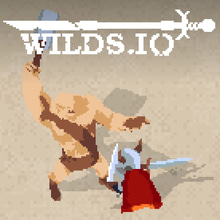
So what is Wilds Io, really? It is a brutal multiplayer arena survival game about close combat, risky momentum, and the very old rules that the wild never rewards hesitation for long. It is sharp, messy, competitive, and exactly the kind of .io chaos that can turn one tiny duel into a full personal feud. Which is usually a sign the game is doing something right.



 4.2 (14 votes)
 Share
Share
 Embed
Embed